
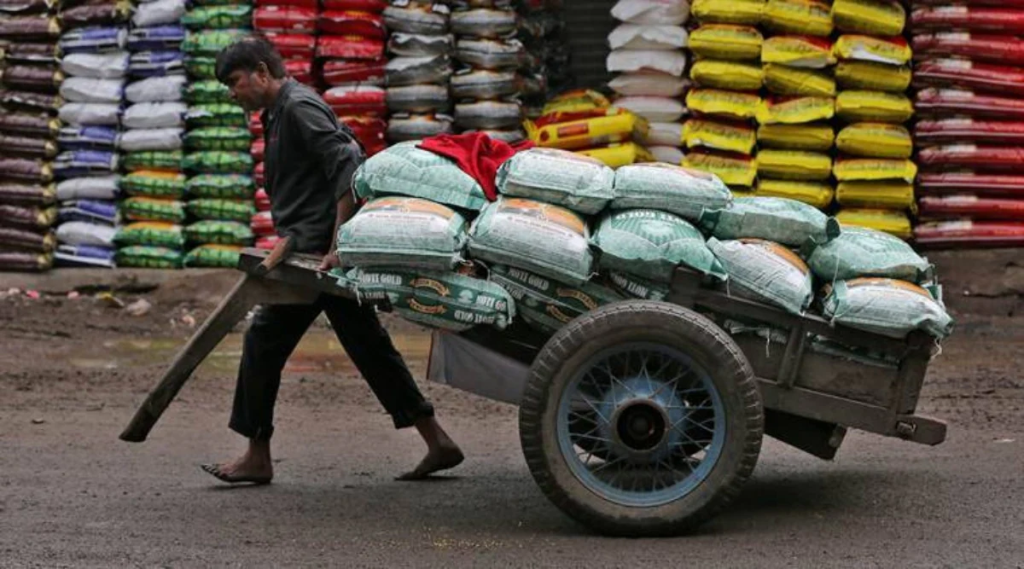
Present Status
- India’s informal sector employs over 90% workforce and contributes nearly 50% of GDP.
- Over 400 million workers are engaged in low-paying and precarious jobs without social security.
- Around 80% workers are concentrated in rural areas, reflecting its agrarian linkage.
- Agriculture employs nearly 50% workforce, while construction and manufacturing account for 15–20%.
- Only 10% workers earn above ₹10,000 monthly, with significant gender and regional wage disparities.
- Less than 20% workers have access to social security benefits like pensions and insurance.
- India has over 100 million migrant workers, facing issues of mobility, housing, and job security.
- The gig economy is expanding but remains unregulated with issues of algorithmic control.
Significance of Informal Sector in India
- Acts as a major driver of employment generation, absorbing surplus labour.
- Supports economic growth through low-cost production and flexible labour supply.
- Serves as a shock absorber during crises like COVID-19.
- Facilitates urban growth, with migrants supporting industrial and service sectors.
- Functions as a social safety net in absence of formal employment opportunities.
- Preserves cultural heritage, including handlooms employing over 4.3 million workers.
- Enhances women’s participation, especially in domestic work and self-employment.
Key Challenges Faced by Informal Sector
- Over 76% workers lack access to formal social security systems.
- Workers face low wages and exploitative conditions, often below minimum wage.
- High prevalence of unsafe workplaces, with around 48,000 annual workplace deaths.
- Weak implementation of labour laws limits institutional protection.
- Sector is highly vulnerable to economic shocks, as seen during COVID-19.
- Lack of legal coverage excludes many workers from labour protections.
- Hazardous occupations expose workers to serious health risks.
Government Initiatives
- MGNREGA ensures wage employment for rural households, acting as a livelihood safety net.
- Pradhan Mantri Rojgar Protsahan Yojana (PMRPY) incentivises employers to generate formal jobs and shift workers into organised sector.
- Aatmanirbhar Bharat Rozgar Yojana (ABRY) promotes job creation and provides social security support, especially post COVID-19 disruptions.
- e-Shram Portal creates a national worker database to improve targeting of welfare schemes.
- Provides e-Shram card with unique identification.
- Enables better tracking and delivery of benefits to workers.
- Insurance schemes such as PM Jeevan Jyoti Yojana (PMJJBY) and PM Suraksha Bima Yojana (PMSBY) provide risk coverage against life and accidental hazards.
- Pension schemes like PM Shram Yogi Maan-Dhan (PM-SYM) & NPS-Traders ensure old-age security for unorganised workers.
- Pradhan Mantri Garib Kalyan Yojana (PM-GKAY) provides food security to vulnerable populations during crises like COVID-19.
Conclusion
- India’s informal sector remains central to its economy but continues to face structural vulnerabilities. A balanced approach combining social protection, legal reforms, and inclusive growth is essential to transform it into a sustainable pillar of development.