
Syllabus: Conservation, environmental pollution and degradation, environmental impact assessment
Concept and Evolution
- Joint Forest Management (JFM) is a community-based forest conservation and management approach in India.
- It emerged in response to forest degradation and the need for sustainable forest use.
- JFM marked a shift from state-centric control to community participation in forest governance.
- It was initiated under the National Forest Policy, 1988 to involve local communities.
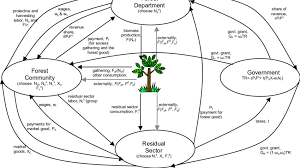
- Forest Departments support forest-dwelling and fringe communities to protect and manage forest resources.
- Communities receive shares from final and intermediate forest products of regenerated forests.
- These shares are higher than traditional entitlements under earlier forest revenue settlements.
Joint Forest Management Committees (JFMCs)
- JFMCs are the core village-level institutions implementing Joint Forest Management.
- They function as democratic bodies representing local forest-dependent communities.
- Forest Departments and village communities act as partners in JFMC operations.
- The General Body includes all willing adult villagers and elects a President.
- An Executive Body manages daily work, led by the same President.
- Policy guidelines ensure meaningful participation of women and weaker sections.
- JFMCs are called FPC, VFC, or VSS in different States.
Micro Planning and Activities
- Each JFMC prepares a Micro Plan for five to ten years of activities.
- The plan records village data and locally identified development priorities.
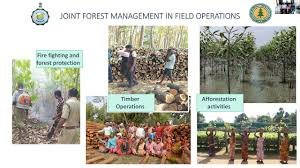
- Activities include afforestation, nursery raising, soil conservation, forest protection, and awareness.
- Livelihood improvement and forest development are also integrated in Micro Plans.
Benefits of JFM
- Provides fuelwood, timber, and non-timber produce supporting marginalised households.
- Acts as substitute income during agricultural distress periods.
- Generates employment, asset creation, and poverty reduction through wage work.
- Improves forest cover, soil moisture, and crop protection while reducing erosion.
- Promotes livelihood security through SHGs, bamboo crafts, honey processing, and eco-tourism.
- Encourages women’s participation, supporting equitable growth and social inclusion.
Key Challenges
- Weak Gram Panchayats often lack capacity for effective forest management.
- Benefit-sharing disputes create tensions within communities.
- Technical knowledge gaps limit sustainable forest practices.
- Encroachment and illegal activities undermine conservation efforts.
Conclusion
- JFM has improved forest health, livelihoods, and conflict reduction through community partnership.
- Addressing governance and capacity gaps is vital for its long-term sustainability.
