
Why in News: The Karnataka High Court recently delivered a landmark judgment emphasizing the need to identify juvenile offenders early in criminal cases to prevent minors from being wrongly imprisoned in adult jails.
1. Introduction
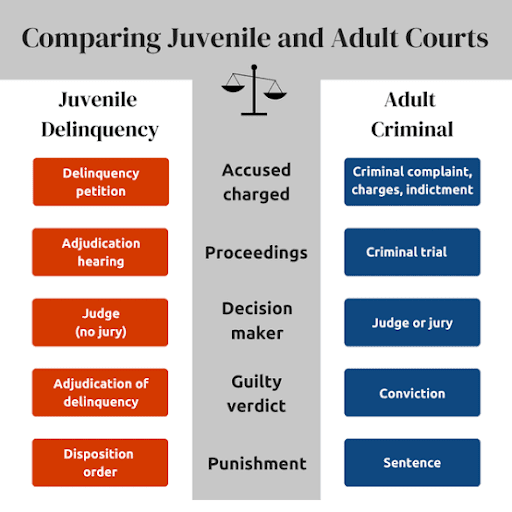
- The Juvenile Justice (Care and Protection of Children) Act (JJ Act) aims to provide a rehabilitative and reformative environment for minors accused of crimes.
- The purpose of the JJ Act is undermined when juveniles are wrongly treated as adults and sent to adult prisons.
2. Landmark Karnataka High Court Judgment
- In the criminal appeal of 2019, the Karnataka High Court emphasized the importance of early identification of juvenile offenders by police and magistrates.
- The court reiterated that proper vigilance at the outset of criminal proceedings can prevent minors from being wrongly imprisoned with adults.
- The High Court ruled that the law in force at the time of the offence (JJ Act, 2000) applies, and juvenility pleas can be raised at any stage, even post-trial.
Legal Provisions on Juvenile Justice and Juvenility Claims
- JJ Act (2000 & 2015): Governs juveniles under 18 at the time of offence; law at offence time applies (Section 25, JJ Act 2015).
- Juvenile Justice Board (JJB): Juveniles must be tried by JJB, not adult courts or prisons.
- Plea of Juvenility: Can be raised anytime during trial or after conviction to claim minor status.
- Age Determination: Based on official documents (birth certificate, school records); courts adopt a cautious approach.
- Police & Magistrate Role: Must identify juveniles early to prevent wrongful adult imprisonment.
- Protection: Juveniles should be kept in observation homes, not adult jails, to avoid abuse and trauma.
- Compensation: Courts can award damages for wrongful imprisonment in adult jails.
- Sensitisation: Training of police, judges, and JJB members on updated JJ rules is essential.
Challenges in Providing Justice for Juveniles
- Late Identification: Police and magistrates often fail to identify juveniles early, leading to wrongful adult trials.
- Delayed Juvenility Pleas: Juvenility claims are sometimes raised years after conviction, complicating justice.
- Wrongful Adult Imprisonment: Many juveniles are kept in adult jails, risking abuse, trauma, and criminal hardening.
- Lack of Awareness: Police, magistrates, and judges often lack training on juvenile laws and updated rules.
- Age Verification Issues: Inconsistent or missing documents make accurate age determination difficult.
- Judicial Delays: Slow inquiries prolong wrongful detention in adult prisons.
- Legal Rights Violations: Juveniles frequently denied bail and proper legal safeguards when treated as adults.
Way Forward: Justice for Juveniles
- Close procedural gaps and ensure speedy juvenile case resolution.
- Enable easy reporting through parents and civil society for victim support and rehabilitation.
- Improve conviction rates to strengthen child safety.
- Provide specialized training to magistrates, police, advocates, and judges on juvenile laws and updated rules.
- Enhance coordination among Child Welfare Committees, Juvenile Justice Boards, Child Care Institutions, child protection units, and juvenile police units.
- Strictly enforce JJ Act provisions: minors must be presented before Juvenile Justice Boards, not adult prisons.
- Increase systemic awareness and judicial oversight to prevent juveniles from being treated as adults.
UPSC Relevance:
GS Paper 2: Polity & Governance
- Juvenile Justice Act, 2015 — legal framework and constitutional provisions.
GS Paper 1: Social Issues
- Child rights and protection mechanisms in India.
Practice Question:
Q. What are the social challenges faced by juveniles in conflict with law? Suggest measures to promote rehabilitation and reintegration of juvenile offenders.
PRELIMS Quicks Facts
Highlights of Juvenile Justice (Care and Protection of Children) Act, 2015
Age and Trial:
- Juveniles aged 16-18 years involved in heinous crimes can be tried as adults after assessment.
Adoption Law:
- Replaces earlier laws (Hindu Adoptions and Maintenance Act, 1956 & Guardians and Wards Act, 1890) with a more accessible, uniform adoption framework.
Central Adoption Resource Authority (CARA):
- Made a statutory body to regulate and streamline adoption procedures nationally.
Child Care Institutions (CCI):
- Mandatory registration of all CCIs (government or NGO-run) within 6 months of the Act’s commencement.
Provisions of Juvenile Justice (Care and Protection of Children) Amendment Act, 2021
Non-Cognisable Offence:
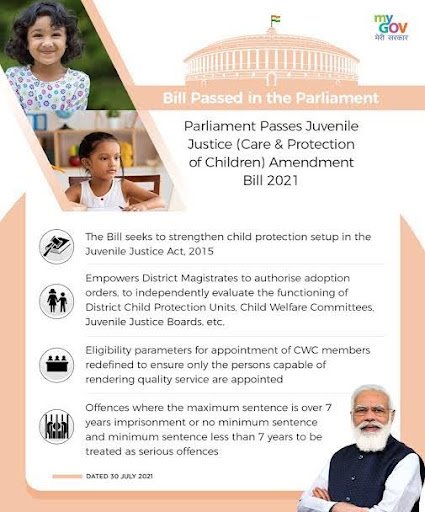
- Crimes against children with imprisonment of 3 to 7 years under “Other Offences Against Children” chapter are now treated as non-cognisable offences.
Adoption:
- To expedite pending adoption cases, the power to issue adoption orders is transferred to the District Magistrate (DM), enabling faster resolution.