
Reform Background and Objectives
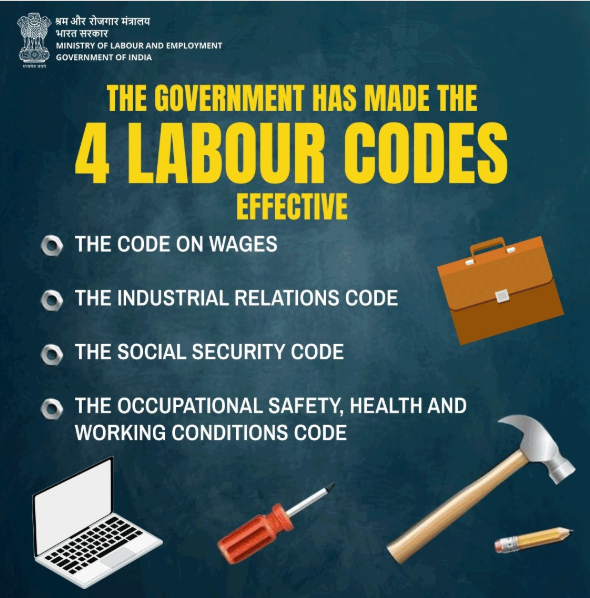
- India’s four Labour Codes came into force in November 2025, consolidating 29 central labour laws.
- Reforms aim to simplify compliance, universalise minimum wages, and expand social protection.
- Labour being on the Concurrent List earlier caused uneven enforcement across States.
- Informal, contract, and casual workers were largely outside regulatory protection frameworks.
Youth Employment Profile and Challenges
- India’s median age under 30 contrasts with China’s 40 and Japan’s 50.
- PLFS 2023–24 shows youth labour participation at 46.5%, versus 76.4% for adults.
- Youth unemployment stands at 10.2%, compared to below 1% among older workers.
- Female youth participation is 28.8%, far below 63.5% for young men.
- Urban youth female unemployment reached 20.1%, highlighting sharp gendered labour gaps.
- Nearly 90% of young workers remain in informal employment.
Contractual and Social Security Gaps
- 66.1% of young regular workers lack written contracts, higher than older workers.
- Only 16.5% of youth hold long-term contracts exceeding three years.
- 60.5% of young salaried workers lack social security coverage.
- NITI Aayog projects gig workforce growth from 77 lakh to 2.35 crore by 2029–30.
Key Provisions Affecting Youth
- Statutory national floor wage may raise entry-level youth earnings.
- Fixed-term employees receive parity in wages and benefits with permanent workers.
- Appointment letters and wage payments during leave enhance baseline job security.
- Social Security Code extends welfare to unorganised, gig, and platform workers.
- Gig workers gain legal recognition, registration from age 16, and welfare boards.
- Mandatory vacancy reporting improves labour market transparency.
Persisting Implementation Gaps
- Coverage mirrors 2008 Act, excluding many workers in enterprises above 10 employees.
- 42.7% of youth still lack written contracts, limiting legal protection reach.
- Weak definitions of platform employment complicate effective worker identification.
- Slow progress on labour data systems and proactive worker registration remains evident.