

UPSC MainsGS Paper IIFederalism & Rural Development
MGNREGA to VB-G RAM G Transition
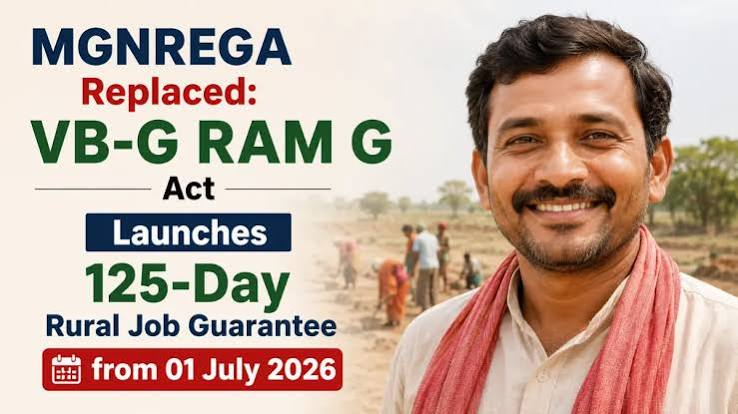
📰 The Centre’s renaming and 60:40 funding overhaul of MGNREGA into VB-G RAM G has triggered a Centre-State federalism row, even as protesting states quietly fund their share.
General States Funding Split
60:40 (Centre:State)
Himalayan & NE States Split
90:10 (Centre:State)
Karnataka’s FY27 Allocation
₹9,516 Crore
📰
VB-G RAM G Political Row: News
- The Centre rechristened MGNREGA as Viksit Bharat Guarantee for Rozgar and Ajeevika Mission (VB-G RAM G).
- The Centre changed the funding pattern from 100% Central funding to a 60:40 Centre-State sharing arrangement.
- Opposition-ruled states — Karnataka, Telangana, Punjab, Tamil Nadu, Himachal Pradesh and Jharkhand — protested loudly against the change.
- Despite protests, Opposition states have embraced realpolitik and made budget allocations for the scheme.
📋
About VB-G RAM G: Key Provisions
Funding Structure
- The new Centre-State funding split is 60:40 for general states under VB-G RAM G.
- For Himalayan and Northeastern states, the split is more favourable at 90:10.
- For Union Territories without legislatures, the Centre provides 100% funding.
- Earlier under MGNREGA, the Centre provided the entire wages amount for all states.
- Under the new system, states must provision 40% of the scheme’s cost from state budgets.
Employment Provisions
- The scheme continues to be an “employment right” for rural workers — not a welfare dole.
- NREGA has, over 20 years, brought about a silent revolution in rural villages.
- The NREGA job card has been used by employers to deny work offers with wages lower than NREGA wages.
- The scheme provides minimum income security to poor farmers and labourers who cannot get other employment.
💰
State Budget Allocations (2026-27)
| State | Allocated (₹ Crore) | Share of Required 40% |
|---|---|---|
| Karnataka | 3,806.61 | 40% (full share) |
| Telangana | 2,550.21 | 40% (full share) |
| Jharkhand | 1,853 | 40% (full share) |
| Tamil Nadu | ~5,056.8 (of ₹12,642 total) | 40% (full share) |
| Punjab | 608 | 27% (first-phase, partial) |
| Kerala | 1,422 | 27% (partial) |
| Himachal Pradesh | 50.94 | 4% (well below required 10%) |
⚠️
Issues with VB-G RAM G’s Provisions
- Fiscal Stress on States: State finances have sticky and inflexible expenditure commitments, leaving little room for additional mandates.
- Federal Asymmetry: The Centre changed funding rules mid-stream without adequate consultation with states — a cooperative federalism violation.
- Decentralisation Principle: Opposition states argue the change undermines decentralised governance principles embedded in the MGNREGA framework.
- Electoral Motive Concern: The scheme was introduced by the UPA and never seen as transformative by the BJP — renaming signals political appropriation.
- Minimum Wages Concern: Nobody questions the scheme’s value, but Minimum Wages Act compliance worries states facing wage floor obligations.
- Political Opposition: Opposition parties see the change as fiscally unsustainable promises made to win elections, now shifted onto state budgets.
100% Wage Commitment Broken: Earlier, the Centre paid 100% of wages — the new 60:40 split breaks this original commitment to rural workers, shifting fiscal risk onto states with far less capacity to absorb it.
🧭
Way Forward for Balanced Rural Employment Guarantee
Restore 100% Wage Funding
Centre must restore 100% Central funding for wages while allowing states to share administrative costs.
Consultation Mechanism
Any future funding pattern changes must involve structured Centre-State consultation through the Inter-State Council.
Minimum Wages Integration
Harmonise VB-G RAM G wages with state minimum wages to prevent exploitation of rural workers.
150 Days Provision
Tamil Nadu’s initiative to provide 150 days employment at its own cost must be considered as a national model.
Grievance Mechanism
Strengthen grievance redressal for delayed MGNREGA wages, which currently attracts compensation payments.
Outcome Monitoring
Shift focus from days of employment to asset creation quality and rural income improvement outcomes.
VB-G RAM G illustrates how changing funding rules mid-scheme disrupts federalism and rural welfare delivery. States are, at the end of the day, putting their money where their mouths are despite political protests — but a genuinely cooperative federal approach would have redesigned the scheme together, rather than imposing a new cost-sharing formula unilaterally.
📰
Source: Indian Express
