
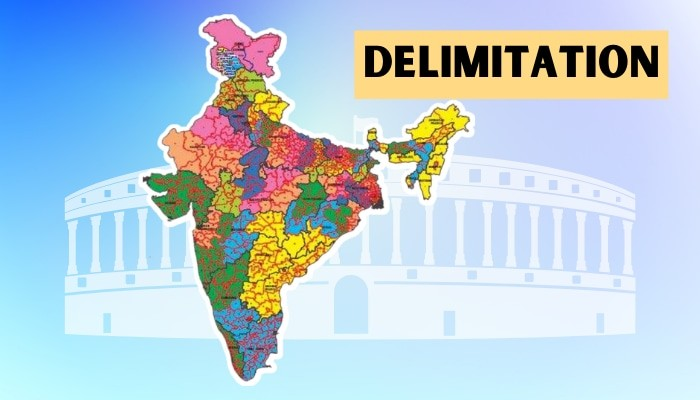
Context: India’s development trajectory is increasingly marked by a widening North–South divide, especially in the backdrop of the upcoming Census and delimitation exercise, raising concerns about economic and political imbalance.
Nature of the Divide: Two Indias within One Union
- India reflects a sharp divide between Peninsular States and the Hindi heartland (Great Indian Plain).
- Southern States have per capita incomes nearly double that of northern counterparts. The human development indicators in States like Tamil Nadu and Kerala are comparable to upper-middle income countries.
- However, the northern States such as Uttar Pradesh, Bihar, and Madhya Pradesh lag behind, with conditions comparable to sub-Saharan Africa.
- While the North dominates in population and fertility, the South leads in economic and social development.
- Political Economy Implications
- Delimitation based on population may reduce the South’s political representation despite higher economic contribution.
- It creates a mismatch where economic power is decoupled from political power.
- Further, there is a risk of a scenario where a productive minority subsidises a politically dominant majority.
- Historical parallels are drawn with USSR and Yugoslavia, where such asymmetries led to instability.
- Potential for rising regional tensions and perception of the South as an “extractive colony”.
Challenges Associated
- Internal Challenges within the South
- Southern States face a middle-income trap, with growth not translating into broad-based welfare.
- Significant income inequality, where economic gains are concentrated among a narrow elite. Example: Tamil Nadu’s per capita income is three times Bihar’s, but wage differences remain limited.
- Persistent social issues such as caste discrimination, patriarchy, and weak rule of law.
- Development remains regionally concentrated, with wealth clustered in few urban districts.
- Failure to convert economic growth into social transformation.
- Limitations of Natural Convergence
- Economic convergence between North and South is unlikely in the near future due to 300% income differential.
- Migration from North to South creates “internal outsiders”, not integrated citizens.
- Migrants continue to influence politics in their home States, limiting impact on southern representation.
- Southern growth alone is insufficient to pull the rest of India due to institutional weaknesses.
Suggested Approach: Balancing Representation and Unity
- Concept of digressive proportionality can balance population with equitable representation.
- Larger States get more seats but fewer per capita; smaller States get relatively higher representation per person.
- This approach can help maintain federal balance and national unity.
Way Forward: Towards a New Social Compact
- Move beyond regional rhetoric and foster cooperative federalism through dialogue.
- Southern States must focus on inclusive growth, ensuring benefits reach the poorest sections.
- Address structural inequalities by improving human capital and social cohesion.
- Strengthen institutions and ensure adherence to rule of law for sustainable growth.
- Develop a broader national social contract that balances economic contribution with fair representation.
Conclusion
- The North–South divide is not merely an economic disparity but a deeper structural challenge to India’s unity. Bridging this gap requires a balance between economic equity, political representation, and social transformation, ensuring that development is both inclusive and sustainable.