

UPSC MainsGS Paper IIPolity & Governance
Personality Cults in Democracy
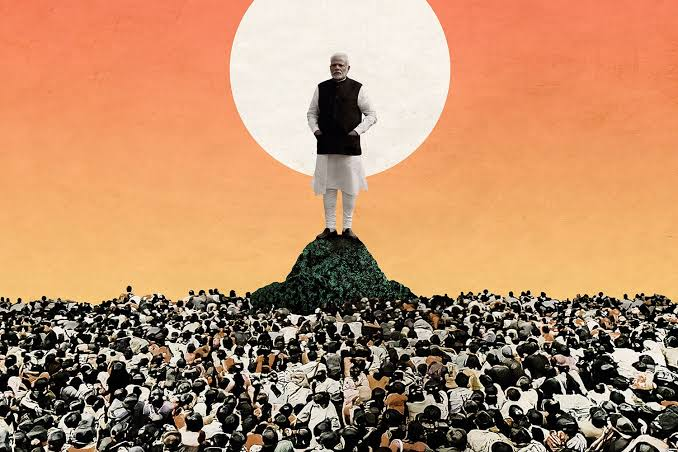
📰 A global resurgence of personality-centred leadership — from Trump to Modi to Türkiye and Hungary — has revived debate on institutional erosion in formally democratic systems.
Term Origin
Khrushchev, 1956
Constituent Assembly Warning
Ambedkar, 1949
Countries Showing the Pattern
US, India, Türkiye, Hungary, Russia
📰
Personality Cult Debate: News
- Global democratic politics is witnessing a resurgence of personality-centred leadership.
- Trump’s return to power in the US, Modi’s electoral dominance in India, and similar trends in Türkiye, Hungary and Russia reflect this pattern.
- Scholars and democratic theorists are raising renewed concerns about personality cults in formally democratic systems.
- India’s Opposition parties have raised concerns about centralisation of power around one individual.
Meaning of Personality Cult
- A personality cult is a phenomenon where a leader is elevated to near-infallible status.
- Followers ascribe to the leader extraordinary personal qualities beyond ordinary political accountability.
- The leader’s image, decisions and pronouncements become the central reference point for governance.
- Personality cults differ from popular leadership — they actively suppress internal dissent and institutional checks.
- In democracies, personality cults emerge through media dominance, weakening of party structures and emotional voter mobilisation.
- The term originates from Khrushchev’s 1956 denunciation of Stalin’s cult of personality within the Soviet Union.
✅
Appeal of Personality Cults (Perceived Advantages)
Decisive Leadership
Personality-centric leaders are perceived as capable of cutting through bureaucratic gridlock quickly.
Crisis Management
Strong individual leadership appears more effective during national security crises and emergencies.
Aspirational Symbol
Leaders become symbols of national identity, pride and civilisational ambition for followers.
Anti-Establishment Appeal
Personality cults often emerge as reactions against entrenched, corrupt political establishments.
Policy Continuity
Centralised leadership can ensure long-term policy continuity without coalition disruptions.
Voter Simplification
Personality-based politics simplifies complex choices for voters unfamiliar with policy nuances.
⚠️
Disadvantages of Personality Cults
- Institutional Erosion: Personality cults subordinate constitutional institutions to the leader’s personal preferences over time.
- Accountability Vacuum: When the leader is seen as infallible, mechanisms of democratic accountability lose their effectiveness.
- Succession Crisis: Systems built around one individual face acute instability when that individual exits power.
- Sycophancy Culture: Surrounding officials practice sycophancy rather than honest advice, distorting governance quality.
- Policy Personalisation: Policies become personal legacies rather than evidence-based governance choices, reducing quality.
- Free Press Suppression: Personality cults are often accompanied by pressure on independent media and critical journalism.
- Opposition Delegitimisation: Political opponents are framed as enemies of the nation rather than legitimate competitors.
Historical Pattern: Stalin, Mao, Mussolini and Hitler all began within formally legitimate political systems before dismantling them — a reminder that institutional erosion around a single leader is a gradual, not sudden, process.
🏛️
India’s Context: Constitutional Morality
- Ambedkar warned that “hero worship is a sure road to degradation” in his final Constituent Assembly speech.
- Constitutional Morality: The Constitution established institutions, not individuals, as repositories of sovereign power.
The strength of a republic lies in institutions that outlast individuals — not individuals who outlast institutions. Ambedkar’s warning remains timeless: “devotion to a great man is a path to dictatorship.”
📰
Source: The Hindu
