

PIB Snippets
1 Topic
UPSC Prelims & Mains
PIB Snippets — August 24, 2026
Today’s official release — the National Zoological Park’s Citizen Science bird and tree walk, and the nesting of 150+ Painted Storks signalling healthy wetlands
🦩
NZP Nature Walks, Citizen Science & Painted Stork
News Context
- The National Zoological Park (NZP), New Delhi organised its 2nd Tree Walk and 11th Sunday Bird Walk on 23 August 2026 under its Citizen Science Initiative.
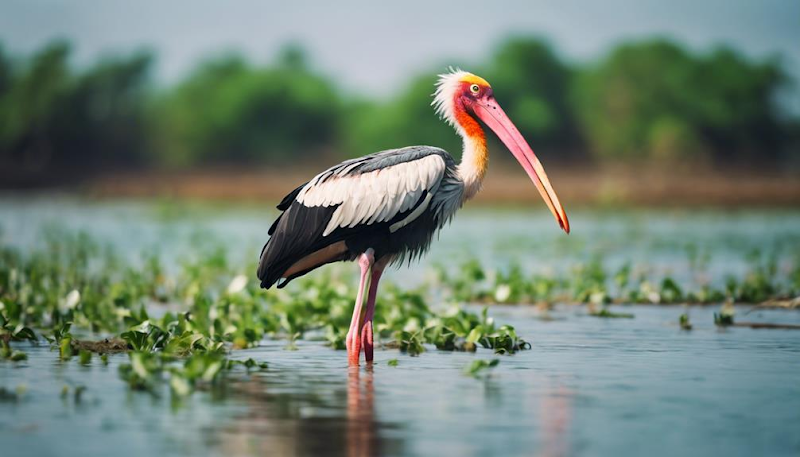
- Participants recorded 42 bird species and 40 tree species; the nesting of over 150 Painted Storks was a key highlight, indicating good ecological health of the zoo’s wetlands and tree habitats.
NZP — Key Facts for Prelims
- Located in New Delhi, near the Purana Qila (Old Fort), along Mathura Road; established 1 November 1959.
- Called the “Delhi Zoo” until 1982, when it was renamed the National Zoological Park and made a national model for other Indian zoos.
- A key centre for ex-situ conservation and conservation breeding of species like the Asiatic Lion, Royal Bengal Tiger (white tiger lineage), Indian Rhinoceros, and Sangai/Brow-antlered Deer.
Central Zoo Authority (CZA)
Statutory body (1992) under the Wild Life (Protection) Act, 1972 (Chapter IV-A); functions under MoEFCC; HQ New Delhi; Chairman is the Union Environment Minister (ex-officio).
CZA Key Functions
Grants recognition to zoos, sets minimum animal-upkeep/healthcare standards under the Recognition of Zoo Rules, 1992, and regulates exchange of Schedule I/II animals between zoos.
Painted Stork — Key Facts for Prelims
- Scientific name: Mycteria leucocephala; family Ciconiidae (stork family); a large wader.
- IUCN status: Near Threatened (NT); migratory status: Resident (non-migratory) — makes only short-distance local movements based on water and food availability.
- Habitat: freshwater wetlands, marshes, ponds, lakes and flooded fields across tropical Asia, south of the Himalayas.
- Identification: pink tertial (flight) feathers, a heavy yellow down-curved bill, a bare orange/red head, and a black breast band.
- Behaviour: a colonial nester (nests in large groups on trees near water); feeds by tactile foraging, sensing fish by touch with its half-open beak.
- Ecological significance: an indicator species for the health of wetland ecosystems.
Exam trap: the Painted Stork is often confused with migratory waterbirds — but it is a resident species in India, undertaking only short local movements, not long-distance migration.
Source: PIB
