
Why in News: Talks in Geneva among 180 countries failed to agree on a binding treaty on plastic pollution due to differences over scope, funding, and health impacts.
Geneva talks (2025): ~180 countries failed to agree on a legally binding treaty on plastic pollution.
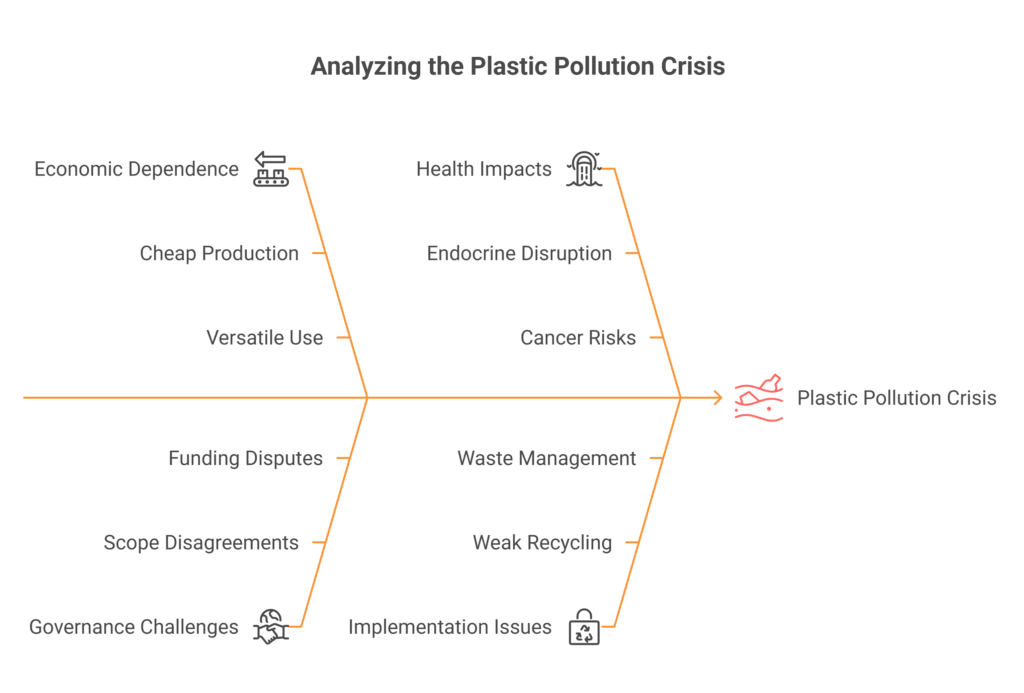
Divisions over:
- Scope – waste vs. production.
- Funding – developed vs. developing countries.
- Health impacts – include in treaty or leave to WHO.
- Draft treaty rejected despite UNEP resolution.
Definition
- Plastics: Synthetic polymers derived mainly from fossil fuels, moulded into diverse products.
- Characteristics: Cheap, versatile, non-biodegradable, persistent in environment for centuries.
Threats from Plastics
- Plastics = fossil-fuel derived synthetic polymers.
- Persistence: Non-biodegradable, remain for centuries.
- Ubiquity: Cheap, versatile → widespread use in packaging, healthcare, aviation, electronics.
- Pollution: Prime source of litter, marine waste, and microplastics.
Chemicals in Plastics
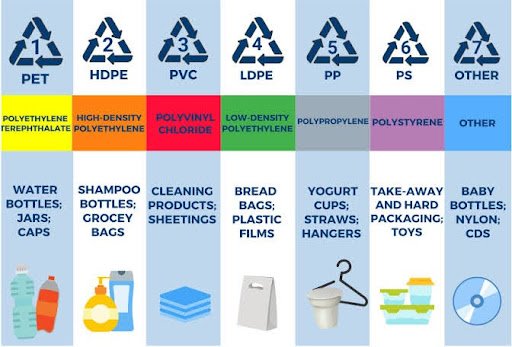
- Monomers & additives: Ethylene, propylene, styrene, bisphenols, phthalates, PFAS, PCBs, PBDEs.
- Applications: Bottles, food containers, toys, IV bags, cosmetics, paints, electronics.
- Scale: 16,000+ chemicals; 10,000+ poorly studied; 4,000+ identified as “chemicals of concern.”
Health Impacts
- Endocrine disruption: Bisphenols, phthalates → thyroid dysfunction, fertility issues.
- Cancers: Styrene, PCBs → kidney, testicular cancer.
- Metabolic disorders: PFAS → hypertension, diabetes, obesity.
- Neurological impact: PBDEs → cognitive and developmental issues.
- Microplastics: Detected in blood, placenta, breast milk, bone marrow; linked to inflammation and metabolic stress.
Challenges
- Economic: Dependence on cheap, versatile plastic.
- Scientific: Limited toxicity data for the majority of chemicals.
- Governance: North–South divide on scope, funding, and responsibility.
- Implementation: Weak recycling and waste management systems.
India’s Position
Domestic actions:
- Ban on single-use plastics in ~20 States.
- Extended Producer Responsibility (EPR) framework for collection/recycling.
Limitations: Treats plastics mainly as a waste management issue, not health.
International stance: Opposed inclusion of health impacts in treaty; suggested WHO as appropriate forum.
Way Forward:
- Global binding treaty covering production, use and waste.
- Funding & technology transfer for developing nations.
- Promote circular economy and biodegradable alternatives.
- Invest in long-term health studies on plastic exposure.
- Strengthen domestic regulations and public awareness.
Conclusion
Plastic pollution is both an environmental and a public health crisis. The Geneva stalemate highlights difficulty of reconciling economic dependence with sustainability and health protection.
UPSC RELEVANCE
GS Paper III – Environment, Ecology & Health
- Plastic pollution as a triple planetary crisis issue (climate, biodiversity, pollution).
MAINS PRACTICE QUESTION
Q. Plastic pollution is no longer just an environmental problem but a public health crisis. Discuss with special reference to microplastics and their health impacts.