

UPSC Prelims4 TopicsPrelims Pinpointer
Prelims Pinpointer — 10 August 2026
📰 Today’s Prelims-focused round-up: Delimitation, NPS exit rules, glueball physics and invasive alien species.
🗳️
India’s Delimitation Debate
News Context
- The BJP moved a Constitutional amendment in April 2026 to expand Lok Sabha seats to 850 and conduct a fresh delimitation, but could not secure a two-thirds majority.
- Key proposals: 850 Lok Sabha seats, seat distribution based on the 2011 Census, and one-third reservation for women.
Delimitation: Key Facts for Prelims
- Delimitation is the process of redrawing boundaries of Lok Sabha constituencies and reallocating seats among states.
- Articles 81 and 82 mandate a fresh delimitation after data from the first Census after 2026 (i.e., the 2027 Census) is published.
- No Constitutional amendment is required for fresh delimitation — it is automatically triggered after Census data publication.
- Women’s reservation (one-third of seats) can be rolled out only along with delimitation.
- Maximum Lok Sabha seats permitted by the Constitution is 550.
- Current seat distribution is based on the 1971 Census population.
Historical Delimitation Exercises: Key Facts
- The last Delimitation Commission was set up on July 12, 2002 after the 2001 Census.
- Its recommendations were implemented in 2008, and the 2009 Lok Sabha elections used the newly drawn constituencies.
- The last reallocation of Lok Sabha seats among states occurred in 1973, based on the 1971 Census.
- Delimitation was frozen in 1976 and 2001 to avoid penalising states that had stabilised their populations.
Seat Allocation Dynamics: Concepts for Prelims
- Present seat distribution reflects 1971 population ratios; southern states have had slower population growth since then.
- Southern states (Kerala, Tamil Nadu, Andhra Pradesh) are likely to lose seats in fresh delimitation.
- Hindi-speaking states (UP, Bihar, Rajasthan) are likely to gain seats due to higher population growth.
- A Kerala MP currently represents ~14 lakh electors, while a UP or Bihar MP represents ~19 lakh electors — reflecting the distortion in “One Vote, One Value.”
Gerrymandering: Key Facts
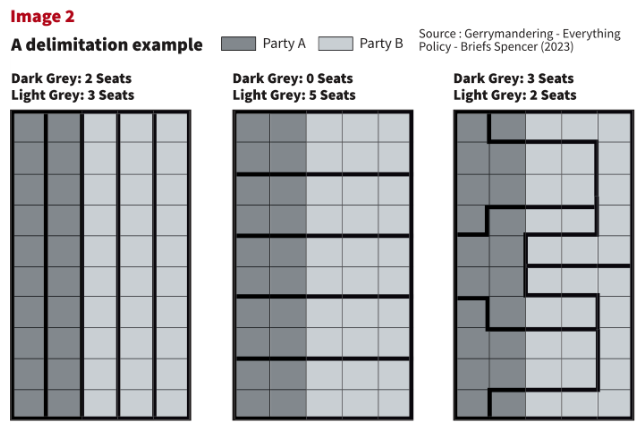
- Gerrymandering is the manipulation of constituency boundaries to favour a particular political party or group.
- Cracking: Spreading a party’s supporters thinly across constituencies so they cannot win any seat.
- Packing: Concentrating a party’s supporters in a few constituencies, causing wasted votes and letting opponents win more seats overall.
Source: The Hindu
💰
NPS Exit Rules and PFRDA

News Context
- PFRDA revised NPS exit rules, allowing subscribers with a corpus of up to ₹8 lakh to withdraw the full amount without purchasing an annuity.
- Previously, a portion of the corpus was compulsorily used to buy an annuity.
National Pension System (NPS): Key Facts for Prelims
- NPS was launched on January 1, 2004 for new government recruits (excluding armed forces).
- Extended to all Indian citizens (including unorganised sector workers) from May 1, 2009 on a voluntary basis.
- Each subscriber receives a unique PRAN (Permanent Retirement Account Number), portable across employment, city, or state.
- PFRDA is the governing body for NPS.
NPS Account Structure & Exit Rules: Concepts for Prelims
- Tier I Account: Non-withdrawable, dedicated to retirement savings; eligible for tax benefits.
- Tier II Account: Voluntary savings account; freely withdrawable but no tax benefits.
- If corpus is up to ₹8 lakh, the subscriber can withdraw the full amount without buying an annuity.
- If corpus exceeds ₹8 lakh, at least 40% must be used to purchase an annuity for lifelong pension.
- The remaining 60% can be withdrawn as a lump sum and is exempt from tax.
- Annuity is a pension product offered by IRDAI-regulated life insurance companies.
PFRDA: Key Facts for Prelims
- PFRDA is a statutory regulatory body established under the PFRDA Act, 2013 (enacted 2014).
- It comes under the Ministry of Finance; headquartered in New Delhi.
- Objective: Promote old-age income security by establishing, developing and regulating pension funds.
- PFRDA consists of a Chairperson, three whole-time members, and three part-time members, all appointed by the Central Government.
Source: The Hindu
⚛️
Glueball: Quantum Chromodynamics
News Context
- Scientists at the BESIII experiment in Beijing have provided the strongest evidence to date that a particle called X(2370) is a glueball.
- This potentially represents the first evidence of matter made entirely from carriers of a fundamental force.
- X(2370) was first observed in BESIII data in 2011 with properties consistent with a glueball.
Fundamental Forces of Nature: Key Facts for Prelims
| Force | Carrier Particle | Role |
|---|---|---|
| Gravity | Graviton (theoretical) | Attraction between masses |
| Electromagnetism | Photon | Electric and magnetic phenomena |
| Weak Force | W and Z Bosons | Radioactivity |
| Strong Force | Gluon | Holds protons and neutrons in nucleus |
QCD and Glueballs: Concepts for Prelims
- Quantum Chromodynamics (QCD) is the theory describing strong interactions between particles.
- In QCD, the strong force is carried by gluons, similar to how the electromagnetic force is carried by photons.
- Unlike photons, gluons carry a “colour charge” allowing them to interact with each other.
- Glueballs are composite particles formed when gluons bind together, predicted by QCD.
- They are extremely short-lived and quickly decay into lighter particles, making them difficult to detect.
- X(2370) is the leading glueball candidate with a mass consistent with QCD predictions.
Protons and Quarks: Key Facts
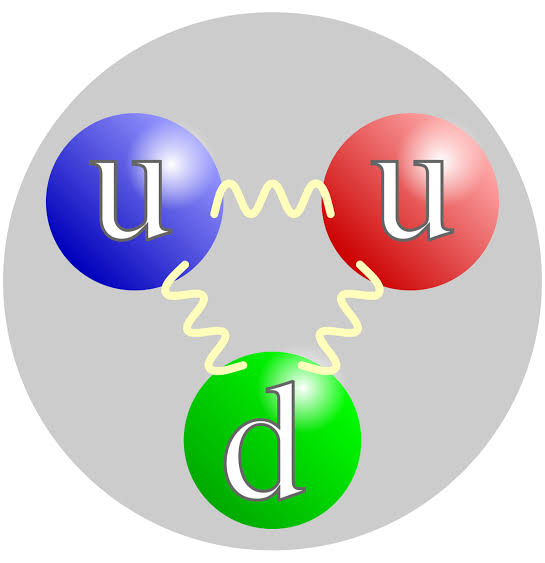
- Protons are made up of three smaller particles called quarks.
- Quarks are held together by the strong interaction mediated by gluons.
- Neutrons are also made of three quarks held together by gluons.
Source: The Hindu
🐟
Invasive Alien Species in India
News Context
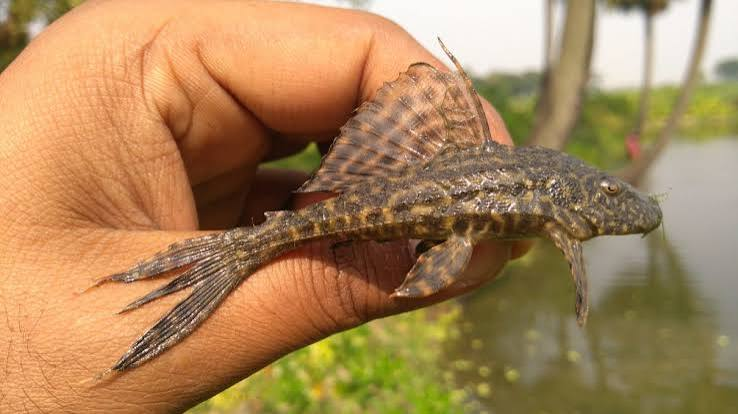
- The BNHS (Bombay Natural History Society) launched India’s first community-driven removal programme for invasive alien species at Ujani reservoir, Maharashtra.
- Suckermouth catfish accounts for 30-40% of Ujani reservoir’s total fish population, displacing native species.
Invasive Alien Species (IAS): Key Facts for Prelims
- IAS are species whose introduction and spread outside their natural range threaten biodiversity, as defined by the Convention on Biological Diversity (CBD).
- CBD summarises IAS characteristics as “Arrive, Survive, and Thrive.”
- Approximately 37,000 established alien species have been introduced globally, with ~200 new species introduced annually.
- Since the 17th century, IAS have contributed to nearly 40% of all animal extinctions.
- Global economic cost of IAS exceeded $423 billion in 2019.
Common IAS in India: Key Facts
- Common IAS: Lantana camara, Prosopis juliflora, Water hyacinth, African catfish, Viper grass, Cotton Mealy Bug, Primrose Willow.
- African catfish in Keoladeo National Park, Rajasthan preys on native waterfowl and migratory birds.
- Cotton mealybug has devastated cotton crops in the Deccan region.
IAS Control Initiatives: Key Facts
- CBD Aichi Target 9: Identify, prioritise, and manage invasive alien species globally.
- CBD Article 8(h): Requires parties to prevent introduction and control or eradicate IAS already introduced.
- IUCN SSC Invasive Species Specialist Group (ISSG): Aims to reduce IAS threats by promoting prevention, control, and eradication.
- Bonn Convention (CMS): Considers IAS as a threat to migratory species.
- Ramsar Convention COP 7: Addressed IAS threats to wetland ecosystems.
Source: Indian Express
