

UPSC Prelims5 TopicsPrelims Pinpointer
Prelims Pinpointer — 11.08.2026
📰 Today’s five prelims-relevant stories — satellite imagery AI, tribunal reforms, green energy transmission, forest rights, and public procurement.
🛰️ Google Earth AI Rollback
⚖️ Tribunals Reforms Bill
⚡ Green Energy Corridor
🌳 Agasthyamalai Biosphere
🛒 GeM 2.0
🛰️
Google Earth AI Satellite Image Feature
News Context
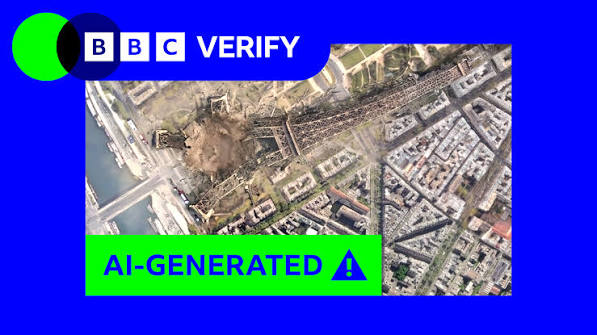
- Google Earth rolled back an AI-powered satellite image enhancement feature after concerns emerged about image accuracy and manipulation risks.
- The feature used AI to fill gaps in satellite imagery caused by cloud cover, shadows, and low-resolution capture.
AI Satellite Image Feature: Key Facts for Prelims
- Google Earth uses satellite imagery from providers like Maxar Technologies and Airbus Defence and Space.
- AI enhancement used Generative AI (Diffusion Models) to reconstruct obscured or missing image areas.
- Synthetic Aperture Radar (SAR) can capture images regardless of cloud cover or lighting conditions, unlike optical satellites.
- Remote sensing is the science of obtaining information about objects from a distance using electromagnetic radiation.
Risks of Satellite Image Deepfakes: Concepts for Prelims
- AI-manipulated satellite images could be used for geopolitical disinformation, falsifying military positions or environmental data.
- A 2019 study showed that AI could generate convincing fake satellite images of locations, including military bases.
- Fake satellite imagery poses risks to disaster response, infrastructure planning, and national security.
Satellite Imagery Limitations: Key Facts
- Optical satellites cannot capture images through thick cloud cover or at night.
- Revisit time (how often a satellite images the same spot) limits real-time monitoring.
- Planet Labs, ISRO’s Cartosat, and Maxar are key satellite imagery providers used globally.
Source: The Hindu
⚖️
Tribunals Reforms Bill, 2026

News Context
- The Tribunals Reforms Bill, 2026 was introduced in Lok Sabha to establish a National Tribunals Commission (NTC) as an independent oversight body for tribunals in India.
- The Bill follows the Supreme Court’s repeated concerns about executive control over tribunals undermining their independence.
National Tribunals Commission: Key Facts for Prelims
- NTC will be an independent body overseeing appointment, removal, and service conditions of tribunal members.
- NTC will also supervise functioning, infrastructure, and performance audit of all tribunals.
- It addresses the conflict of interest where ministries controlled tribunals adjudicating disputes against those same ministries.
- Funding of tribunals will be routed through NTC, not through parent ministries.
Tribunals in India: Concepts for Prelims
- Tribunals were added to the Constitution by the 42nd Constitutional Amendment Act, 1976 through Articles 323A and 323B.
- Article 323A: Provides for Administrative Tribunals adjudicating disputes related to recruitment and service conditions of public servants.
- Article 323B: Provides for tribunals for other matters like tax, elections, and industrial disputes.
- L. Chandra Kumar case (1997): SC held that tribunal decisions are subject to High Court judicial review under Article 226/227.
Source: The Hindu
⚡
Green Energy Corridor (GEC)
GEC Phase III: News Context
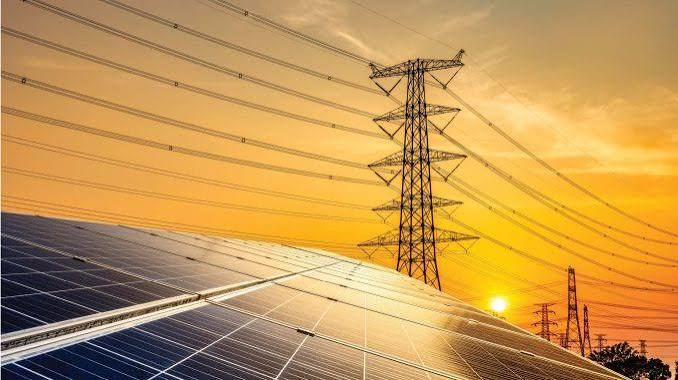
- The Union Cabinet approved Green Energy Corridor Phase III to strengthen inter-state transmission infrastructure for renewable energy evacuation.
- GEC Phase III targets addition of approximately 10,000 circuit kilometres of new transmission lines by 2030.
- The project will enable evacuation of renewable energy from solar and wind-rich states to high-demand regions.
Green Energy Corridor: Key Facts for Prelims
- GEC is a dedicated transmission infrastructure project to evacuate renewable energy from generation-rich to consumption-heavy states.
- Implemented by Power Grid Corporation of India Limited (PGCIL) and State Transmission Utilities (STUs).
- Funded through a combination of central grants, state contributions, and multilateral loans (from KfW, Germany and ADB).
- The scheme is overseen by the Ministry of New and Renewable Energy (MNRE).
GEC Phase 1 & Phase 2: Key Facts
- GEC Phase 1: Sanctioned to evacuate 33 GW of renewable energy from eight renewable-rich states — Andhra Pradesh, Gujarat, Himachal Pradesh, Karnataka, Madhya Pradesh, Maharashtra, Rajasthan, and Tamil Nadu; ~9,700 circuit km funded with KfW and ADB assistance.
- GEC Phase 2: Focuses on Intra-State Transmission System (InSTS) in seven states — Gujarat, Himachal Pradesh, Karnataka, Kerala, Rajasthan, Tamil Nadu, and Uttar Pradesh — aiming to integrate ~20 GW of renewable energy by 2026, with 33% central financial assistance.
Source: The Hindu
🌳
Agasthyamalai Biosphere Reserve Case
Agasthyamalai Evictions: News Context
- Tribal communities in the Agasthyamalai Biosphere Reserve faced eviction threats despite holding valid Forest Rights Act (FRA) claims.
- The Kerala High Court intervened, directing that no eviction should occur without proper FRA claim processing.
- The case highlighted gaps in implementation of FRA 2006 in Protected Areas and Biosphere Reserves.
Agasthyamalai Biosphere Reserve (ABR): Key Facts for Prelims
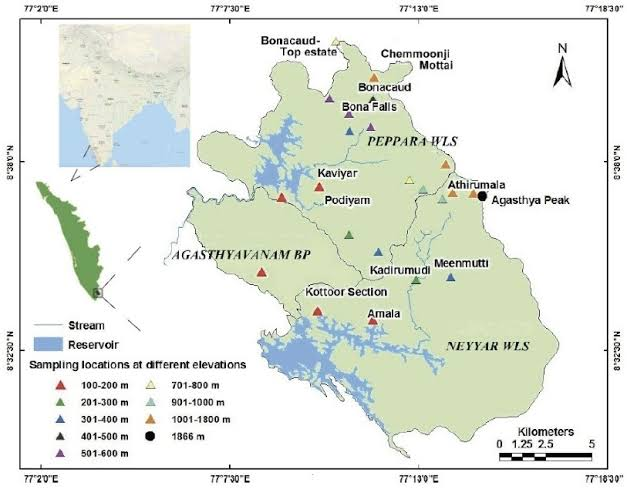
- ABR is located in Kerala and Tamil Nadu in the Western Ghats.
- Designated as a UNESCO Biosphere Reserve in 2016.
- Encompasses Kalakad-Mundanthurai Tiger Reserve (Tamil Nadu) and Shendurney, Peppara, and Neyyar Wildlife Sanctuaries (Kerala).
- Part of the Western Ghats, one of the world’s eight “hottest” biodiversity hotspots.
Forest Rights Act, 2006: Key Facts for Prelims
- FRA 2006 recognises pre-existing rights of forest-dwelling communities on forest land occupied before December 13, 2005.
- Two categories of beneficiaries: Scheduled Tribes and Other Traditional Forest Dwellers (OTFDs) — those residing in forests for at least three generations (75 years).
- Individual Forest Rights (IFR): Rights over land for livelihood and habitation.
- Community Forest Rights (CFR): Rights over community forest resources for livelihood, grazing, and intellectual property.
FRA Institutional Framework: Concepts for Prelims
- Forest Rights Committees (FRCs) at Gram Sabha level are the first authority for receiving and processing FRA claims.
- Sub-Divisional Level Committee (SDLC): Reviews FRC recommendations.
- District Level Committee (DLC): Final authority for approving or rejecting FRA claims.
- No eviction from forest land is permissible until all FRA claims are settled, as per Section 4(5) of FRA.
Exam trap: FRA rights vest through Gram Sabha-level FRCs, not the Forest Department — a frequently tested distinction on institutional authority.
Source: The Hindu
🛒
Government e-Marketplace (GeM)

GeM 2.0 Upgrade: News Context
- Commerce Minister Piyush Goyal called for expanding GeM to local bodies, municipal corporations, and panchayats to boost procurement volumes.
- GeM 2.0, an AI-powered upgrade being developed by TCS (Tata Consultancy Services), will roll out in the next few months.
GeM: Key Facts
- GeM (Government e-Marketplace) is India’s national public procurement portal, launched in 2016 by the Ministry of Commerce and Industry.
- It facilitates procurement of goods and services for Central and State Government Ministries, Departments, PSUs, and affiliated organisations.
- Annual procurement grew from ₹422 crore (2016-17) to over ₹5 lakh crore presently.
- Sellers grew from 3,339 to 25.45 lakh; buyer organisations from 1,707 to 1.37 lakh.
GeM Features: Concepts for Prelims
- Fully digital, cashless, and system-driven platform with end-to-end procurement solutions.
- Offers multiple procurement modes: Direct purchase, bidding with reverse e-auction, e-bidding, and direct reverse auction.
- Uses AI-powered tools and a multilingual Learning Management System (LMS) for seller onboarding.
- Features voice-enabled navigation and region-specific training modules for remote and underserved sellers.
- Mandates Central and State Ministries to procure through GeM.
Source: Financial Express
