
Western Disturbance
Context: The parts of Delhi received light rain thusbringing respite from prevailing hot conditions.
What is a Western Disturbance?
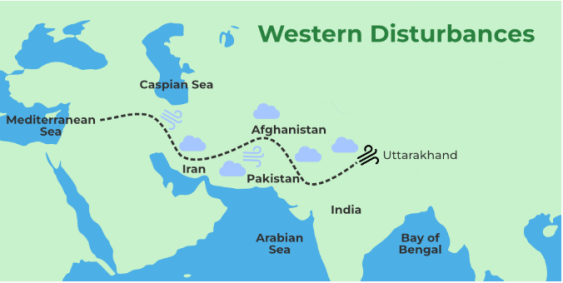
- Extra-tropical low-pressure system originating over the Mediterranean region
- Travels eastward across Middle East, Iran, Afghanistan, and Pakistan
- Origin
- Develops over the Mediterranean Sea region
- Receives moisture from Caspian Sea and Black Sea
- Formation Mechanism
- Cold polar air interacts with warm moist Mediterranean air
- Forms extra-tropical depression system
- Guided by Subtropical Westerly Jet Stream toward Indian subcontinent
- Himalayan barrier forces uplift, causing condensation and precipitation
Impacts on India
- Winter Precipitation
- Primary source of non-monsoonal winter rainfall in India
- Causes snowfall in Western Himalayas and rain in northern plains
- Agricultural Effects
- Benefits Rabi crops like wheat, mustard, and gram
- Causes hailstorms and crop damage during intense disturbances
- Temperature Effects
- Raises night temperatures before arrival due to cloud cover
- Triggers cold waves after departure due to northerly winds
- Water Security
- Feeds Himalayan glaciers and perennial river systems
- Supports Ganga, Yamuna, and Indus river flows
Bharat Ratna
Overview
- India’s highest civilian honour, established in 1954
- Maximum 3 awards per year, conferred on the Prime Minister’s suggestion to the President
- Recipients receive a Sanad (certificate) signed by the President and a medallion, with no monetary endowment
- Posthumous provision was added in the 1966 statute, as the original 1954 statute had no such provision
- 53 awardees till date
Eligibility
- No formal requirement that the award be granted only to Indian nationals
- Initially limited to literature, science, arts, and public services
- Criteria expanded in 2011 to include “any field of human endeavour”
- Awardees cannot use Bharat Ratna as prefix or suffix, as per Article 18(1) of the Constitution which abolishes titles
Medallion Design
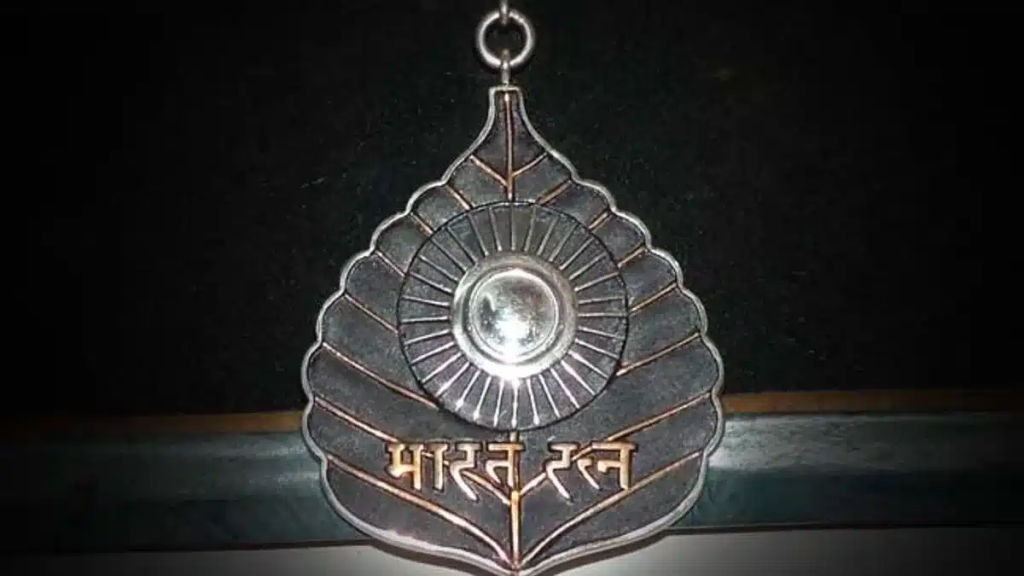
- Cast in Bronze and shaped like a Pipal leaf
- Features a sunburst in the centre with “Bharat Ratna” engraved below it
- The reverse side carries the Emblem of India with “Satyameva Jayate” inscribed in Devanagari script
Notable Awardees
- First recipients (1954): Sarvapalli Radhakrishnan, C.V. Raman, and Chakravarti Rajagopalachari
- First sportsperson and youngest recipient was Sachin Tendulkar
- Non-Indian awardees include Khan Abdul Ghaffar Khan (1987) and Nelson Mandela (1990)
- Mother Teresa (Agnes Gonxha Bojaxhiu), a naturalised Indian citizen, received it in 1980
- Posthumous Awards
- Generally not conferred posthumously, though granted in exceptional cases
- 18 posthumous awards have been given, including to Dr. B.R. Ambedkar, Lal Bahadur Shastri, Morarji Desai, and M.G. Ramachandran
- In 1992, Subhash Chandra Bose was posthumously awarded, but his family refused to accept it due to lack of concrete evidence of his death
Removal of Chief Election Commissioner (CEC)
Constitutional Basis
- Governed by Article 324(5) of the Constitution
- The CEC can be removed only in the same manner and on the same grounds as a Supreme Court judge
- Service conditions cannot be altered to his disadvantage after appointment
- Other Election Commissioners or Regional Commissioners can be removed only on the recommendation of the CEC
- The removal is further governed by the Chief Election Commissioner and other Election Commissioners (Appointment, Conditions of Service and Term of Office) Act, 2023
- Note
- The Constitution reserves the term “impeachment” exclusively for the President (Article 61)
- For the CEC and judges, the correct constitutional term is “removal”
- Grounds for Removal: Limited to only two grounds: proved misbehaviour or incapacity
Removal Procedure
- Step 1 (Initiation of Motion)
- Motion can be introduced in either House of Parliament
- Requires signatures of 100 members in Lok Sabha or 50 members in Rajya Sabha
- Submitted to the Speaker (Lok Sabha) or Chairman (Rajya Sabha)
- Step 2 (Admission and Investigation)
- Speaker/Chairman may admit or refuse the motion
- If admitted, a three-member committee is formed comprising a Supreme Court Judge, a High Court Chief Justice, and a Distinguished Jurist
- The CEC has the right to defend themselves during investigation
- Step 3 (Report Submission)
- If charges are not proved, the motion is dropped
- If the CEC is found guilty, the report is submitted to the House where the motion was originally introduced
- Step 4 (Voting in Parliament)
- Requires Special Majority in both Houses during the same session
- Special Majority means majority of total membership of the House and at least two-thirds of members present and voting
- Step 5 (Presidential Order)
- If the motion passes both Houses, a formal address is presented to the President
- The President then issues the official order for removal
Sangita Kalanidhi Award
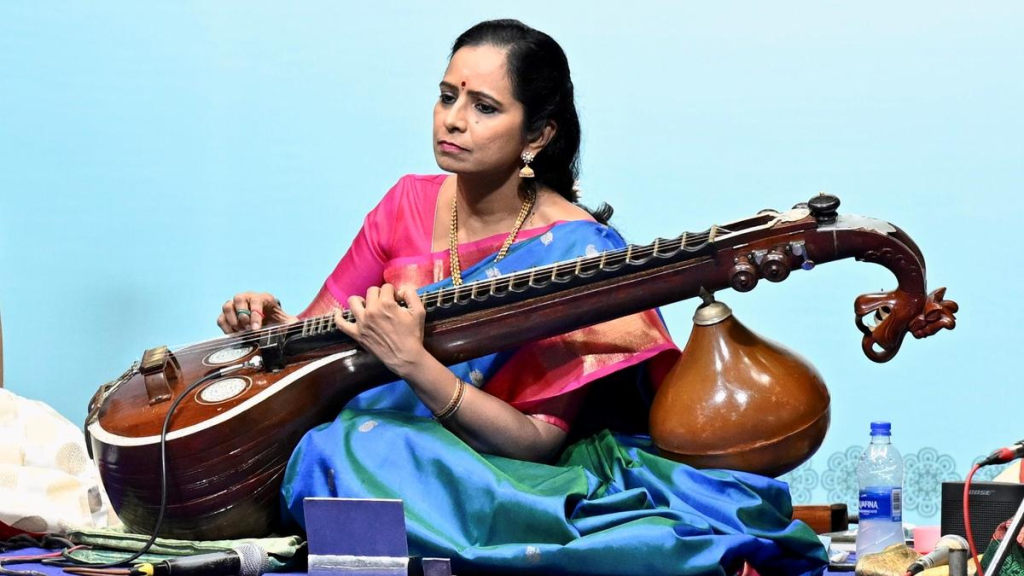
Context: The 100th Conference and Concerts of The Music Academy, Chennai, beginning in December 2026, will be marked by conferment of the Sangita Kalanidhi award on renowned veena player Jayanthi Kumaresh. Bharatanatyam dancer Narendra G. will receive the Nritya Kalanidhi award, announced Music Academy President N. Murali on Sunday.
Sangita Kalanidhi Award
- Translates as “Treasure of Music and Art”
- The highest honour in Carnatic music
- Awarded annually by the Madras Music Academy
- Recipients receive a gold medal and a birudu patra (citation)
- Since 2005, the awardee also receives the MS Subbulakshmi Award instituted by The Hindu
About The Music Academy
- Established in 1928
- Founded following a decision taken at the Indian National Congress session in Chennai in December 1927
- Objective was to promote Carnatic music and Bharatanatyam
- Lawyer, freedom fighter, and artiste E. Krishna Aiyar played a key role in reviving Bharatanatyam, which had suffered from its association with devadasis
Carnatic Music
- Classical music tradition of South Indian states including Andhra Pradesh, Karnataka, Kerala, Tamil Nadu, Telangana, and southern Odisha
- Emphasises vocal music, intricate melodies, rhythms, and improvisations based on ragas and talas
- Rooted in ancient Hindu traditions, particularly the Samaveda
- One of the two main classical music traditions of India, the other being Hindustani music
- Key instruments: Violin, Mridangam, Tambura, Ghatam, and Veena
- Uses the Melakarta system, a classification of 72 parent ragas (janaka ragas)
Choosing State DGPs
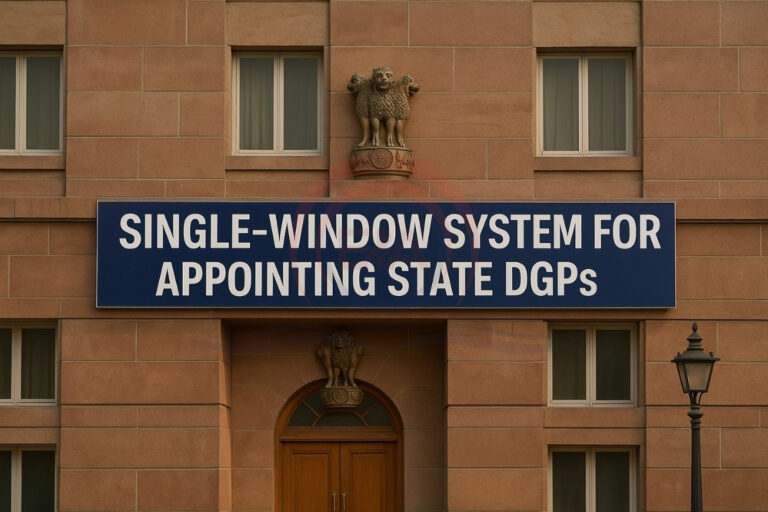
Context: The UPSC has revised rules for empanelment of State Director-General of Police (DGP) and Head of Police Force. The state governments must now obtain Supreme Court consent for any delay in submitting the list of DGP-rank officers to UPSC for empanelment.
Appointment of State DGPs
- Legal Basis
- Process follows the Prakash Singh vs. Union of India (2006) Supreme Court judgment
- Further governed by UPSC guidelines of 2009
- Centre has recently introduced a Single Window System for appointing State DGPs
- Appointment Process
- States must send a list of eligible officers to UPSC at least 6 months before the incumbent DGP retires
- The UPSC Empanelment Committee selects a panel of:
- 3 officers for regular states
- 2 officers for smaller states
- Selection is based on merit
- The State Government then chooses the DGP from this panel
- Eligibility Criteria
- Minimum 30 years of service, or the rank of police chief (and one rank below) as stipulated for that state
- Officers with less than 6 months left to retire are not eligible
Jnanpith Award
Basic Facts
- India’s oldest and most prestigious literary award, instituted in 1961 by Bharatiya Jnanpith
- Recognises authors for exceptional contributions to literature in Indian languages as well as English
- No posthumous category i.e. it honours only living writers
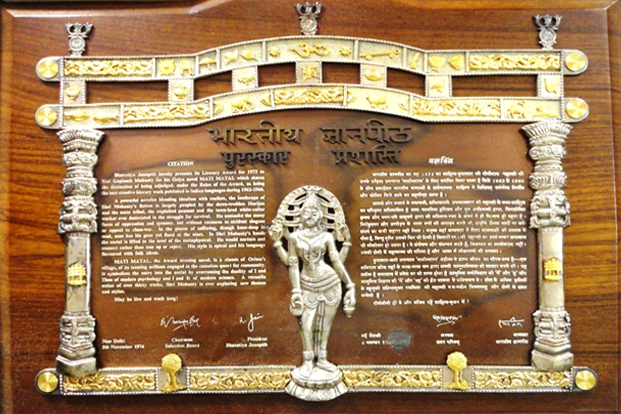
- Recipients receive a cash prize of ₹11 lakh, a statue of Vagdevi (Saraswati), and a citation
Evolution
- Originally recognised the “most outstanding work” with a citation plaque, cash prize, and bronze replica of Saraswati
- Criteria later shifted to works published in the preceding twenty years
- Cash prize increased to ₹1.5 lakh in 1981 and further to ₹11 lakh by 2015
Selection Process
- Nominations received from literary experts, critics, universities, and language associations
- An advisory committee for each language constituted every three years, comprising three literary critics and scholars
- Jnanpith Award Selection Board evaluates nominations based on advisory committee recommendations
- 60th Award Selection Committee was chaired by noted writer Pratibha Ray
Notable Recipients
| Year | Recipient | Language | Significance |
| 1965 | G. Sankara Kurup | Malayalam | First ever recipient; awarded for Odakkuzhal (The Bamboo Flute) |
| 1975 | P.V. Akilan | Tamil | First Tamil writer to receive the award |
| 1976 | Ashapoorna Devi | Bengali | First woman recipient; awarded for Prothom Protishruti (The First Promise) |
| 2002 | D. Jayakanthan | Tamil | Second Tamil writer to receive the award |
| 2025 | R. Vairamuthu | Tamil | Third Tamil writer; first Tamil poet to receive the award |
60th Jnanpith Award: R. Vairamuthu (2025)
- Tamil poet, lyricist, and writer born on July 13, 1953 in Tamil Nadu
- Literary career spanning more than four decades
- Authored more than 37 books including poetry collections, essays, and novels
- Announced by Bharatiya Jnanpith in March 2026
- Third Tamil writer and first Tamil poet to receive the award, 23 years after Jayakanthan (2002)
- Notable Works
- Kallikattu Ithikasam → also won Sahitya Akademi Award (2003)
- Karuvachi Kaaviyam
- Thanneer Desam
- Moondraam Ulagapor
- Awards & Honours
- National Film Award for Best Lyrics won 7 times
- Padma Shri (2003)
- Padma Bhushan (2014)
- Kalaimamani awarded by Government of Tamil Nadu
FASTag

What is FASTag?
- A device employing Radio Frequency Identification (RFID) technology for making toll payments directly while the vehicle is in motion
- Valid for 5 years from the date of issuance
- Available in seven different colour codes
- NHAI launched two mobile apps: MyFASTag and FASTag Partner to facilitate availability
Benefits of FASTag
| Beneficiary | Benefit |
| Road Users | Near non-stop movement through toll plazas; cashless payment; reduced commute time |
| Toll Operators | Lower operating costs; better audit control via centralised accounts; improved capacity without new infrastructure |
| Government | Fuel savings; reduced emissions from idling; improved transparency of toll transactions |
About RFID
- A technology that uses radio waves to passively identify a tagged object
- Has two basic components: tags and readers
- The reader emits radio waves and receives signals from the RFID tag, while the tag communicates its identity and other information back via radio waves
About NHAI
- Constituted by an Act of Parliament in 1988 under the Ministry of Road Transport and Highways
- Became operational in February 1995
- Mandated to develop, maintain, and manage National Highways
- Composition: Full-time Chairman, not more than 5 full-time Members and 4 part-time Members, all appointed by the Central Government
