
Digital Personal Data Protection (DPDP) Act, 2023
Purpose
- DPDP Act, 2023 establishes India’s legal framework for protection of digital personal data. It ensures personal data is processed only with lawful consent and defined purposes.
- The act balances individual privacy rights with legitimate data use in digital economy.
- The act is rooted in recommendations of Justice B. N. Srikrishna Committee on data protection and it replaced earlier framework proposed under Personal Data Protection Bill, 2019.
Applicability
- Applies to processing of digital personal data within territory of India.
- Covers data collected online or offline and later digitised.
- Extends to processing outside India offering goods or services domestically.
Key Stakeholders
- Data Principal refers to individuals whose personal data is being processed.
- Data Principal must provide informed consent for collection and usage.
- Consent can be withdrawn anytime by the Data Principal.
- A Data Fiduciary is any entity that collects, stores, or uses personal data and decides why and how it will be used.
- Income Tax Department → collects PAN, income details, bank data.
- Banks → collect KYC details, financial transactions, credit history.
- Social media companies → collect profile, contacts, behaviour data.
- Government may classify certain entities as Significant Data Fiduciaries.
- Data Processor processes data on behalf of Data Fiduciary.
- Significant Data Fiduciaries must appoint a Data Protection Officer (DPO).
Rights of Individuals
- Individuals enjoy right to information regarding data processing activities.
- They possess right to correction and erasure of personal data.
- Act guarantees grievance redressal mechanisms for privacy violations.
- Individuals may nominate representatives to exercise rights upon death or incapacity.
Institutional Mechanism & Penalties
- Act establishes Data Protection Board of India as adjudicatory authority.
- Board investigates breaches and imposes monetary penalties for violations.
- Appeals against Board orders lie before the High Courts.
- Act prescribes financial penalties only, without criminal punishment provisions.
- Maximum penalty may extend up to ₹250 crore for severe non-compliance.
Denotified, Nomadic and Semi-Nomadic Tribes (DNTs)
Who are Denotified Tribes (DNTs)?
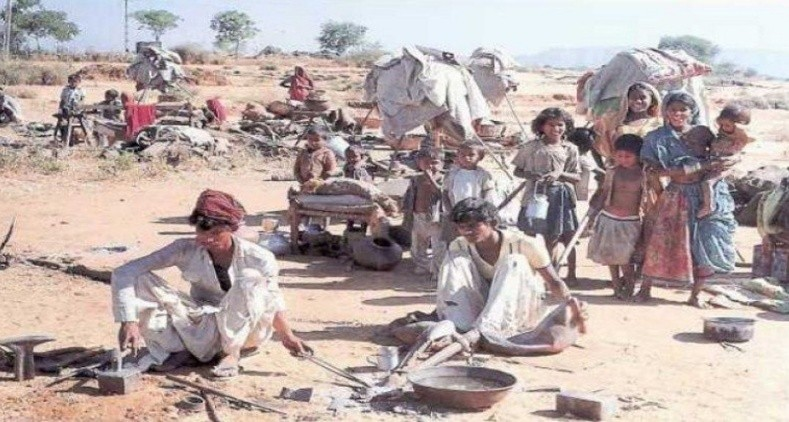
- Denotified Tribes are communities once listed as “criminal tribes” under British laws.
- They were notified under the Criminal Tribes Acts (1871–1947) during colonial rule.
- Entire communities were labelled hereditary criminals without individual evidence.
- Members had to compulsorily register with local authorities and faced strict surveillance.
Denotification After Independence
- The Criminal Tribes Act was repealed in 1952 after Independence.
- These communities were officially “denotified,” giving them the present name Denotified Tribes.
- Nomadic and Semi-Nomadic Tribes
- Many DNT groups are nomadic or semi-nomadic by lifestyle.
- Nomadic tribes move place to place in search of livelihood.
- They traditionally depended on forests, grazing lands, crafts, trade, and itinerant occupations.
- Most lacked private land ownership or permanent housing.
- Status and Population
- DNTs are estimated to form roughly 10% of India’s population.
- Across India, 1,200+ communities fall under DNT, Nomadic, and Semi-Nomadic categories.
Commissions and Institutional Measures
- Renke Commission (2008)
- First major commission to identify and list DNT communities.
- National Commission for DNTs (NCDNT) – 2014
- Set up under Ministry of Social Justice and Empowerment.
- Chaired by Bhiku Ramji Idate.
- Mandate included:
- Preparing state-wise list of DNT communities.
- Suggesting welfare and development measures.
- Submitted report in January 2018.
- Identified 1,235 communities as DNTs.
Trade Deficit
What is Trade Deficit?
- A trade deficit occurs when a country’s imports exceed its exports in value.
- It reflects a negative Balance of Trade (BoT) position.
- Indicates that the country buys more goods/services than it sells globally.
- Formula
- Balance of Trade (BoT) = Total Exports – Total Imports
- If result is negative → Trade Deficit.
- If result is positive → Trade Surplus.
Types of Trade Deficit
- Merchandise Trade Deficit
- Difference between goods exports and goods imports.
- Includes oil, gold, machinery, electronics, etc.
- Services Trade Balance
- Gap between services exports and imports.
- Countries like India often run a services surplus.
- Bilateral Trade Deficit
- Trade gap with a specific country.
- Example: Deficit with major trading partners.
Key Features
- Shows whether a country is a net buyer or seller globally.
- Moves with economic growth and domestic demand.
- Influenced by oil prices, gold imports, exchange rates.
- Import of capital goods may support future industrial growth.
Gene Editing

What is Gene Editing?
- Gene editing is a biotechnology technique used to alter DNA sequences at specific genomic locations.
- It enables scientists to add, remove, or modify genetic material within living organisms.
- The technology helps correct genetic defects and develop organisms with desirable biological traits.
- Core Processes Involved
- Insertion involves introducing a new gene or DNA fragment into the genome.
- Deletion refers to removal of an undesired or defective genetic sequence.
- Modification alters an existing gene to change its biological function or expression.
Types of Gene Editing
- Somatic Genome Editing
- Somatic editing targets non-reproductive body cells such as liver, skin, or muscle cells.
- Genetic changes produced through somatic editing are not transmitted to future generations.
- It is widely used in therapies for cancers, blood disorders, and genetic diseases.
- Germline Genome Editing
- Germline editing modifies reproductive cells, embryos, or gamete-producing tissues.
- Genetic alterations introduced here can be inherited by subsequent generations.
- This form raises significant ethical, legal, and biosafety concerns globally.
Major Gene Editing Techniques
- ZFNs (Zinc Finger Nucleases)
- ZFNs use engineered zinc finger proteins to recognise specific DNA sequences.
- DNA cleavage is carried out by the FokI restriction enzyme.
- It represents one of the earliest targeted genome editing technologies.
- TALENs
- TALENs employ TALE proteins derived from plant bacteria for DNA targeting.
- DNA cutting function is again performed by the FokI nuclease enzyme.
- They are easier to design and more flexible than ZFN systems.
- CRISPR–Cas9
- CRISPR uses guide RNA molecules to identify complementary DNA sequences.
- The Cas9 enzyme precisely cuts DNA at the targeted genomic site.
- Derived from bacterial immune defence, it is fast, economical, and highly accurate.
Applications of Gene Editing
- Medical Applications
- Gene editing enables development of advanced therapies for HIV, cancer, and genetic disorders.
- It is used in correcting mutations responsible for Sickle Cell Disease.
- The technology significantly accelerates precision drug discovery and personalised medicine.
- Agricultural Applications
- Gene editing develops drought-tolerant crop varieties enhancing climate resilience in agriculture.
- Biofortified crops like Vitamin-A enriched bananas improve nutritional security.
- It supports livestock improvements such as hornless cattle reducing animal injury risks.
- Industrial Applications
- Gene editing enables production of high-strength spider-silk fibres through modified silkworms.
- Engineered algae are used for large-scale sustainable biofuel production.
- It also supports development of advanced nano-carriers for targeted drug delivery.
- Environmental Applications
- Modified microbes improve biofuel efficiency under extreme environmental conditions.
- Gene editing contributes to cleaner renewable energy generation systems.
- It aids development of tools for pollution tracking and environmental monitoring.
Mahila Samman Savings Certificate (MSSC) Scheme
Nature of Scheme
- Mahila Samman Savings Certificate is a one-time small savings scheme announced in Union Budget 2023.
- The scheme is time-bound and remains operational only till March 2025.
- It is a Government-backed risk-free savings instrument dedicated to women investors.
- The scheme aims to promote financial inclusion and formal savings among women.
Eligibility Provisions
- The scheme is open to all individual women investors without age restrictions.
- Girl children are eligible beneficiaries under the scheme.
- A guardian is authorised to open and operate accounts on behalf of minors.
Deposit / Investment Conditions
- The minimum deposit amount under MSSC is ₹1,000.
- Deposits can be made in multiples of ₹100 thereafter.
- The maximum deposit limit is ₹2 lakh per investor.
- The deposit ceiling applies collectively across all MSSC accounts held by an individual.
- Multiple Account Facility
- The scheme permits opening of multiple accounts by the same investor.
- A second MSSC account can be opened after a minimum gap of three months.
- However, the aggregate deposit across accounts cannot exceed ₹2 lakh.
- Interest Rate Features
- MSSC offers a fixed interest rate of 7.5% per annum.
- Interest under the scheme is compounded on a quarterly basis.
- The accrued interest is credited periodically to the account.
Tenure / Maturity Provisions
- The maturity period of MSSC is two years from account opening date.
- The scheme carries a fixed lock-in period of two years.
- Withdrawal Rules
- Partial withdrawal facility is available under the scheme.
- Account holders can withdraw up to 40% of the account balance.
- Partial withdrawal is permitted only after completion of one year.
- Taxation Aspect
- Deposits under MSSC do not qualify for any tax benefits.
- The scheme does not provide tax deduction or tax exemption advantages.
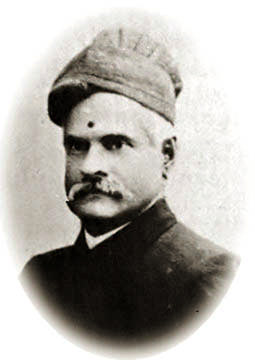
Raja Ravi Verma (1848–1906)
Birth & Background
- Raja Ravi Verma was born on 29 April 1848 at Kilimanoor in erstwhile Travancore.
- Kilimanoor is located in present-day Kerala.
- He was born into an aristocratic family linked with the Travancore royal lineage.
Artistic Identity
- Raja Ravi Verma is regarded as the pioneer of the Modern School of Indian Painting.
- The school was termed “modern” due to strong Western artistic influence.
- He introduced European realism into Indian painting traditions.
- His works represent a fusion of Indian themes with Western techniques.
Style & Technique
- Ravi Verma combined South Indian painting traditions with Western academic realism.
- He used oil painting techniques extensively in Indian mythological depictions.
- His paintings popularised naturalistic human figures in Indian art.
- He integrated Indian iconography with Western perspective and shading.
Patronage & Training
- He received royal patronage from Ayilyam Thirunal, Maharaja of Travancore.
- Under royal support, he began formal artistic training.
- He was trained in water painting by Rama Swami Naidu.
- He learned oil painting from British portraitist Theodore Jenson.
Themes of Paintings
- Ravi Verma is widely known for religious depictions of Hindu deities.
- His works drew heavily from Indian epics and Puranas.
- He illustrated scenes from the Mahabharata and Ramayana.
- His mythological paintings made divine characters relatable to common people.
International Recognition & Awards
- Ravi Verma gained global acclaim after winning an award at the Vienna Exhibition (1873).
- His paintings were displayed at the World’s Columbian Exposition, Chicago (1893).
- These exhibitions established his international artistic reputation.
Titles & Honours
- He received the Kaisar-i-Hind Gold Medal in 1904.
- The medal was awarded by Viceroy Lord Curzon on behalf of the British Crown.
- Lord Curzon also conferred upon him the honorary title of “Raja.”
Famous Paintings
- “Episodes from the Story of Dushyanta and Shakuntala” is among his celebrated works.
- He painted “Nala and Damayanti” based on Mahabharata narratives.
- “Ravana Kidnapping Sita” is a noted Ramayana depiction.
- “Lady in the Moonlight” reflects his portrait excellence.
- “Galaxy of Musicians” portrays women from diverse musical traditions.
- “Parsi Lady” is one of his well-known portrait paintings.
