

Green Hydrogen
Context
- Andhra Pradesh Chief Minister declared Kakinada as the “Green Hydrogen Valley of India.” The announcement made during the bhumi puja of a ₹15,600-crore Green Hydrogen and Green Ammonia Complex by AM Green (Greenko Group) on a 495-acre campus.
About Green Hydrogen
- What it is?
- Green hydrogen is hydrogen produced by electrolysing water using renewable energy sources like solar, wind or hydel power.
- The process splits H₂O into hydrogen and oxygen without emitting greenhouse gases.
- It is a zero-emission, clean energy carrier and highly combustible, colourless, odourless gas.
- National Context- India
- Anchored under the National Green Hydrogen Mission.
- Objectives include:
- Reducing dependence on imported fossil fuels.
- Creating export opportunities.
- Supporting India’s Net Zero by 2070 target.
- Advantages of Green Hydrogen
- Energy storage: Enables long-term storage of renewable energy, supporting grid stability.
- Flexible energy carrier: Usable across power, transport, industry and chemicals sectors.
- Emission reduction: No greenhouse gas emissions during production and use.
- By-product value: Oxygen from electrolysis can be monetised for industrial and medical use.
- Global integration: Can be blended with natural gas for gradual energy transition.
- Disadvantages
- High production cost: Electrolysis using renewables remains capital-intensive.
- High energy requirement: More electricity needed compared to conventional fuels.
- Safety risks: Highly flammable and volatile, requiring strict handling protocols.
- Production Methods
- Alkaline Electrolysis:
- Uses alkaline solution (KOH/NaOH) as electrolyte.
- Mature, cost-effective, but relies on expensive electrode materials.
- Proton Exchange Membrane (PEM) Electrolysis:
- Uses solid polymer membrane.
- Faster response and higher efficiency, but high membrane and catalyst costs.
- Solid Oxide Electrolysis:
- Operates at very high temperatures (700°C–1000°C).
- High efficiency and supports co-electrolysis, but technologically complex.
- Alkaline Electrolysis:
- Applications of Green Hydrogen
- Transportation: Fuel for Fuel Cell Electric Vehicles (FCEVs), trains, ships and aviation.
- Energy storage and grid balancing: Stores excess solar and wind energy for later use.
- Industrial use:
- Replaces coal in green steel production.
- Used in green ammonia and fertiliser manufacturing.
- Residential and commercial use: Power generation, heating and cooking via fuel cells.
- Hydrogen blending: Mixed with natural gas in pipelines to lower carbon footprint.
- Global trade: Enables export-based energy economy for renewable-rich countries.
Central Vigilance Commission (CVC)
Context
- Shri Praveen Vashista, IPS (Bihar cadre, 1991 batch) appointed as Vigilance Commissioner in the CVC.
- He took oath on 16 January 2026, strengthening leadership in India’s apex vigilance body.
About CVC
- Apex vigilance and integrity institution of the Government of India.
- Promotes transparency, accountability and corruption prevention in Central Government organisations.
- Establishment and Legal Status
- Established: 1964 by executive resolution of Government of India.
- Statutory status: Central Vigilance Commission Act, 2003.
- Historical Background
- Originated from recommendations of the Santhanam Committee (1962–64).
- Initially lacked statutory authority, limiting enforcement capacity.
- Became an independent statutory body in 2003, strengthening oversight powers.
- Composition and Appointment
- Chairperson: Central Vigilance Commissioner.
- Members: Up to two Vigilance Commissioners.
- Appointing Authority: President of India.
- Selection Committee:
- Prime Minister (Chair)
- Union Home Minister
- Leader of Opposition in Lok Sabha
- Tenure: Four years or 65 years of age, whichever is earlier.
- Organisational Structure
- Secretariat: Headed by a Secretary.
- Chief Technical Examiners’ Wing (CTE): Examines technical aspects of works contracts.
- Commissioners for Departmental Inquiries (CDIs): Act as inquiry officers.
- Chief Vigilance Officers (CVOs): Posted in ministries, PSUs, banks as extended arm.
- Jurisdiction
- Covers All India Services and Group ‘A’ officers of Central Government.
- Includes officials of CPSUs, Public Sector Banks, RBI, NABARD, SIDBI, LIC, General Insurance Companies.
- Covers specified societies and autonomous bodies under Union control.
- Exercises superintendence over CBI investigations under Prevention of Corruption Act, 1988.
- Conducts inquiries on Lokpal-referred complaints for Group A, B, C and D officials.
- Key Functions
- Supervises and coordinates vigilance machinery across Central organisations.
- Inquires or orders investigations into corruption-related complaints.
- Issues vigilance advice to ministries, departments and PSUs.
- Reviews progress of investigations and pendency of prosecution sanctions.
- Recommends senior appointments in CBI and Directorate of Enforcement.
- Acts as authority under PIDPI Resolution for whistle-blower protection.
Coconut Root Wilt Disease
Context
- Coconut Root Wilt Disease is rapidly spreading across major coconut-growing regions of Kerala, Tamil Nadu and Karnataka.
- The outbreak is affecting lakhs of palms, threatening livelihoods and regional coconut productivity.
About Coconut Root Wilt Disease
- A chronic, non-fatal phytoplasma disease of coconut causing long-term decline and severe yield loss.
- Infected palms remain alive and act as persistent inoculum sources for further transmission.
- Origin and Spread
- First reported: Over 150 years ago from Erattupetta, Kerala.
- Endemic persistence: Continues as a major disease in southern India.
- Spread drivers:
- Vector-borne transmission in continuous coconut belts.
- Wind-assisted movement of insect vectors.
- Abiotic stress: Temperature extremes weakening palms.
- Biotic stress: New sucking pests like whiteflies increasing susceptibility.
- Vector
- Transmitted by sap-sucking insect vectors.
- Commonly cited vectors in endemic zones:
- Stephanitis typica
- Proutista moesta
- Key Symptoms
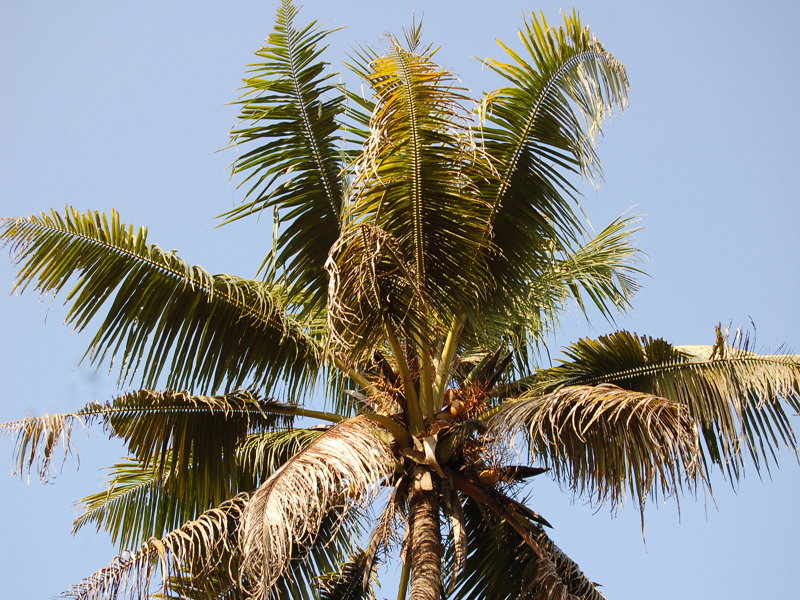
- Drooping leaves: Leaflets lose stiffness and hang down.
- Tip yellowing: Yellowing begins at leaf tips and spreads inward.
- Leaf curling: Leaflets cup inward, giving a ribbed appearance.
- Poor flowering: Reduced inflorescence and premature nut fall.
- Chronic decline: Root decay, poor growth, and tapered trunk top in advanced stages.
- Management and Solutions
- Select tolerant palms: Identify high-yielding, disease-tolerant palms and multiply through nurseries.
- Field sanitation: Remove severely affected, low-yielding palms to limit inoculum sources.
- Soil and water management: Ensure green manuring, proper irrigation and drainage.
- Organic nutrition: Apply farmyard manure, green manure and neem cake annually.
- Stress reduction: Follow intercropping practices to improve soil health and palm resilience.
- Significance
- Major threat to coconut productivity and farmer livelihoods in southern India.
- Highlights need for vector control, tolerant varieties and sustainable plantation management.
Sammakka–Saralamma Jatara
Context
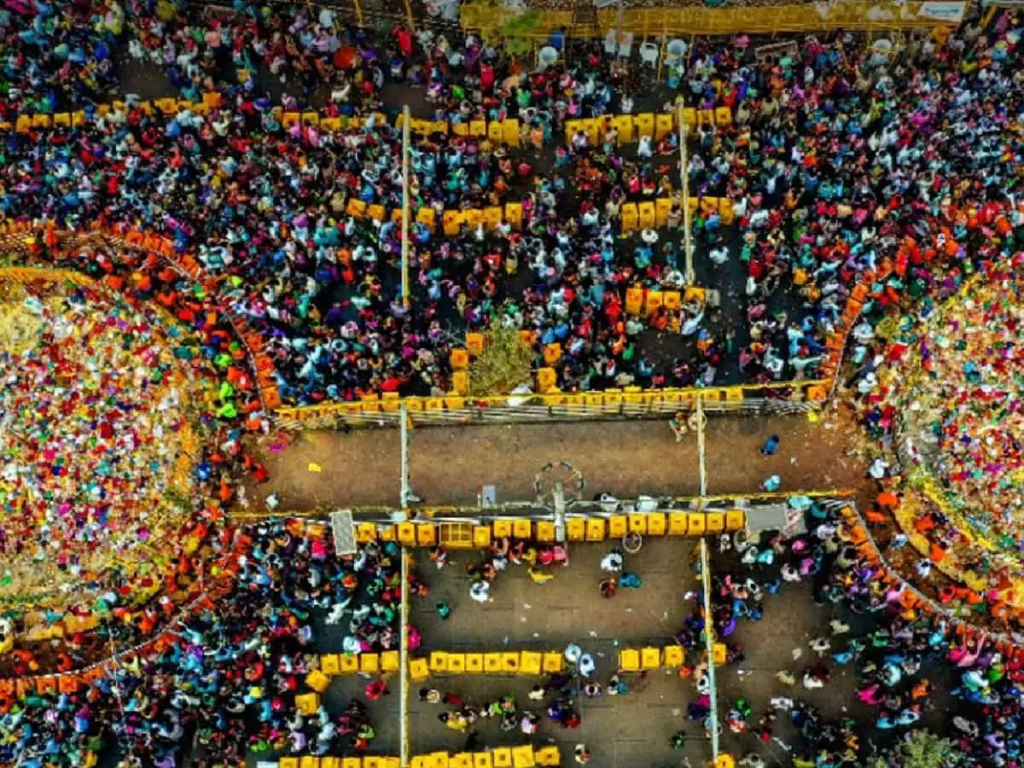
- Telangana is preparing for the biennial Sammakka–Saralamma Jatara beginning 28 January 2026.
- The State is undertaking large-scale redevelopment of the sacred precinct at Medaram to manage massive pilgrim inflow.
About Sammakka–Saralamma Jatara
- What it is?
- A biennial tribal spiritual festival honouring Sammakka and Saralamma, ancestral goddesses of the Koya Adivasi community.
- Recognised as Asia’s largest tribal festival and among the largest human congregations globally.
- Location and Timing
- Venue: Medaram village, Mulugu district, Telangana.
- Setting: Inside Eturnagaram Wildlife Sanctuary, part of the Dandakaranya forest belt.
- Time: Celebrated during the full moon of Magh (Hindu calendar).
- Origin and Tradition
- Rooted in Koya tribal legend of Sammakka and her daughter Saralamma.
- Tradition recalls their resistance to Kakatiya rulers’ tax oppression and martyrdom.
- Deities are symbolically brought from the forest, not housed in permanent temples.
- Key Features
- Ritual leadership: Conducted exclusively by Koya tribal priests.
- Offerings: Devotees present “Bangaram” (jaggery) instead of money or gold.
- Worship style: Focus on sacred trees, bamboo totems, clan symbols and flags (dalgudda), not idols.
- Scale: Attracts over one crore devotees, second only to the Kumbh Mela in India.
- Infrastructure: Expanded platforms, arches and granite flooring for crowd management.
Chatham Islands
Context
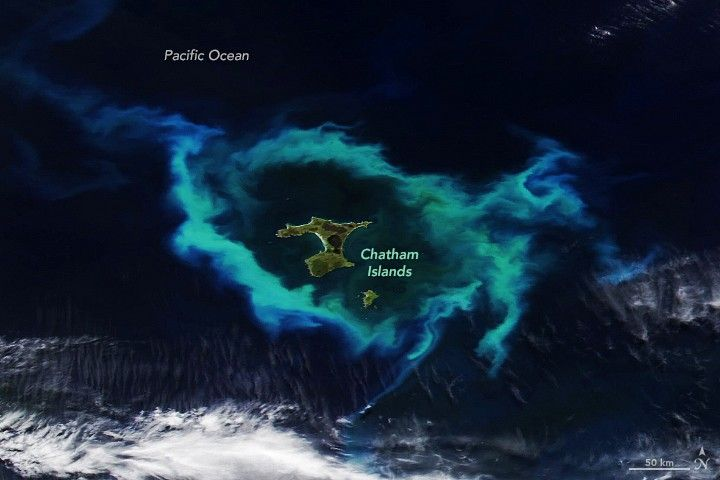
- A phytoplankton bloom encircled the Chatham Islands during the recent austral summer, visible through satellite imagery.
- The event highlights marine ecosystem productivity and ocean–atmosphere interactions in the South Pacific.
- Phytoplankton blooms act as carbon sinks, influencing regional climate regulation and fisheries productivity.
About Chatham Islands
- A remote island group in the South Pacific Ocean, forming New Zealand’s easternmost territory.
- Located about 800 km east of mainland New Zealand.
- Composition: Group of 10 islands, primarily of volcanic origin, with limestone areas indicating past geological linkage to New Zealand.
- Main inhabited islands:
- Chatham Island (largest):
- High southern tableland with cliffs.
- Northern lowlands with waterways, peatlands and sandy beaches.
- Pitt Island:
- Forested interior with rugged cliffs, headlands and beaches.
- Chatham Island (largest):
- Surroundings: Smaller islands lie within a 50 km radius of the two main islands.
- Astronomical Significance: The first inhabited place on Earth to see the sunrise each day.
Womaniya Initiative
Context
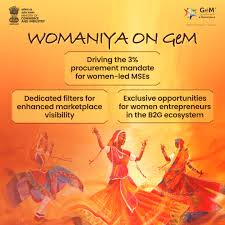
- The Government e-Marketplace (GeM) marked seven years of the Womaniya Initiative, highlighting its role in integrating women-led MSEs and SHGs into public procurement.
- The initiative underscores the government’s push towards gender-inclusive economic participation through digital platforms.
- Womaniya operates as a dedicated marketplace segment on GeM, offering direct access to government buyers.
About Womaniya Initiative
- A flagship programme to strengthen participation of women-led Micro and Small Enterprises (MSEs) and Self-Help Groups (SHGs) in government procurement.
- Provides a direct, transparent and fully digital interface between women entrepreneurs and public buyers.
- Launch and Administration
- Launched on: 14 January 2019
- Implemented through: Government e-Marketplace (GeM)
- Nodal Ministry: Ministry of Commerce and Industry
- Objectives
- Expand market access for women entrepreneurs in government procurement.
- Reduce entry barriers and intermediary dependence.
- Promote formalisation and financial inclusion of women-led enterprises.
- Support gender-inclusive economic growth.
- Key Features
- Dedicated platform segment: Exclusive visibility for women sellers on GeM.
- Digital onboarding: Simplified registration and compliance process.
- Direct government linkage: Enables sales to Ministries, Departments, PSUs and institutions.
- Transparency: Online pricing, bidding and order tracking.
- Nationwide reach: Access to buyers across Central and State Governments.
About Government e-Marketplace (GeM)
- A national digital public procurement platform for buying and selling goods and services.
- Launch and Ministry
- Launched: August 2016
- Ministry: Ministry of Commerce and Industry
- Coverage: Used by Central and State Government Ministries, Departments, PSUs and affiliated bodies.
- Purpose
- Improve efficiency, transparency and speed in public procurement.
- Promote competition, cost-effectiveness and accountability.
Aquatic Biodiversity Conservation
Context
- Multiple aquatic biodiversity initiatives were launched at Wildlife Institute of India, Dehradun, under the Namami Gange Mission.
- Focused on strengthening freshwater species protection, habitat restoration, and scientific monitoring along the Ganga basin.
- Initiatives emphasise Gangetic dolphins, gharials, Indian skimmers, and river ecosystem restoration.
Key Initiatives Launched
- Aqua Centre – Aqua Life Conservation Monitoring Centre
- Established as a national research and policy hub for freshwater biodiversity conservation.
- Operates under the Namami Gange Programme framework.
- Houses laboratories for ecotoxicology, aquatic ecology, spatial ecology, and microplastics analysis.
- Dolphin Response System
- Dolphin Rescue Ambulance launched for rapid emergency response to distressed Gangetic dolphins.
- Aims to improve species survival and real-time field intervention capacity.
- Indian Skimmer Conservation Project
- Launched in collaboration with Bombay Natural History Society (BNHS).
- Focuses on habitat protection and population monitoring of Indian Skimmer birds.
- Gharial Habitat Frameworks
- Introduced new conservation frameworks for critically endangered gharial habitat restoration.
- Supports riverine sandbank protection and breeding ground recovery.
- Afforestation Campaign
- ‘Ek Ped Maa Ke Naam’ launched to strengthen river ecosystem conservation through tree plantation.
- Links community participation with riparian zone restoration efforts.
About Namami Gange Mission
- A Central Sector Programme to rejuvenate the River Ganga and its tributaries.
- Launch and Administration
- Launched: 2014
- Implementing Agency: National Mission for Clean Ganga (NMCG)
- Ministry: Ministry of Jal Shakti
- Core Objectives
- Pollution abatement through sewage and effluent treatment.
- River rejuvenation, including biodiversity and ecological conservation.
- Strategic Pillars (8)
- Sewerage infrastructure development.
- Biodiversity conservation and habitat protection.
- Afforestation and catchment area treatment.
- Riverfront development and cultural integration.
- Ganga Gram and rural sanitation initiatives.
- Industrial effluent monitoring and compliance.
- Public awareness and community participation.
- River-surface cleaning and waste management.
- Mission Extension: Extended up to March 2026 as Namami Gange Mission-II.
