

Directorate General of Civil Aviation (DGCA)
Context: The DGCA has proposed amendments to empower airlines to directly impose a 30-day flying ban on unruly passengers without referring to an independent committee. This aims to streamline safety protocols and enable swift action against disruptive behavior that jeopardizes flight operations and passenger safety.
About DGCA
- The Directorate General of Civil Aviation (DGCA) is India’s apex civil aviation regulator.
- It functions under the Ministry of Civil Aviation.
- DGCA ensures safe, orderly, and efficient civil aviation operations in India.
- It regulates airlines, aircraft operations, and aviation personnel standards.
Functions of DGCA
- Safety Regulation & Oversight
- Ensures safety of passengers and crew on all civil flights.
- Conducts periodic safety inspections of airlines and aircraft.
- Enforces compliance with aviation safety and operational standards.
- Accident & Incident Investigation
- Investigates aviation accidents occurring within Indian airspace.
- Examines causes and recommends preventive safety measures.
- Air Traffic Regulation
- Regulates civil air traffic operations across Indian airspace.
- Works with Airports Authority of India for traffic management.
- Promotes safe and efficient air navigation systems.
- Infrastructure & Technology Support
- Supports development of new airports and aviation infrastructure.
- Encourages modernization of air traffic control technologies.
- Licensing & Certification
- Issues licenses to commercial and private pilots.
- Certifies aircraft maintenance engineers.
- Grants approvals for aviation personnel and aircraft airworthiness.
INS Vikrant
Basic Overview
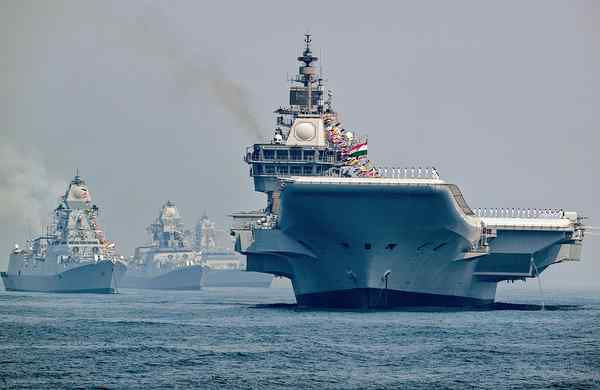
- INS Vikrant is India’s first indigenously built aircraft carrier. It symbolises India’s push for Aatmanirbhar defence manufacturing.
- Designed by the Indian Navy’s Warship Design Bureau and built by Cochin Shipyard Limited.
- It is the largest warship ever constructed in India.
- It was commissioned on 2 September 2022 at Kochi.
- Historical Legacy: Revives legacy of earlier INS Vikrant (R11) aircraft carrier. The original carrier served in the 1971 Indo-Pak War.
Key Technical Specifications
- Length is about 262.5 metres.
- Displacement is nearly 45,000 tonnes.
- Powered by four gas turbines.
- Maximum speed reaches about 28 knots.
- Can operate around 30 aircraft.
- Uses STOBAR system with ski-jump take-off.
Vibrant Villages Programme–II (VVP–II)
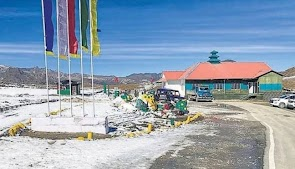
Context: The second phase of Vibrant Village Programme (VVP-II) will cover 1,954 strategic villages along land borders with Pakistan, Nepal, Bangladesh, Bhutan, and Myanmar across 15 States and 2 Union Territories.
Vibrant Villages Programme–II (VVP–II)
- Basic Overview of VVP–II
- Vibrant Villages Programme–II (VVP–II) is a Central Sector Scheme with 100% Union Government funding.
- Covers strategic villages along International Land Borders (ILBs).
- Implemented across 17 States and Union Territories.
- Excludes northern border blocks already covered under VVP–I.
- VVP-I was initially launched in 2023 to assist developmental needs of villages along the China border in northern regions.
- Objectives
- Aims to improve living conditions in remote border villages.
- Seeks to generate sustainable livelihood opportunities.
- Works to control trans-border crime and illegal activities.
- Integrates local populations as “eyes and ears” for internal security.
Key Features & Implementation Mechanism
- Infrastructure Development
- Focus on roads, housing, sanitation, and drinking water facilities.
- Promotes SMART classrooms in border educational institutions.
- Ensures all-weather connectivity under Pradhan Mantri Gram Sadak Yojana (PMGSY–IV).
- Livelihood & Value Chain Development
- Supports Self-Help Groups (SHGs) and cooperative institutions.
- Promotes border-specific economic and outreach activities.
- Welfare Scheme Convergence
- Ensures saturation coverage of existing Central welfare schemes.
- Uses convergence approach for efficient service delivery.
- Cultural & Tourism Promotion
- Organises fairs, festivals, and awareness campaigns.
- Celebrates national events to strengthen cultural integration.
- Promotes border tourism and local heritage economies.
- Implementation Support
- Programme implementation aligned with PM Gati Shakti framework.
- Ensures coordinated infrastructure planning and monitoring.
Loggerhead Turtle
Basic Overview
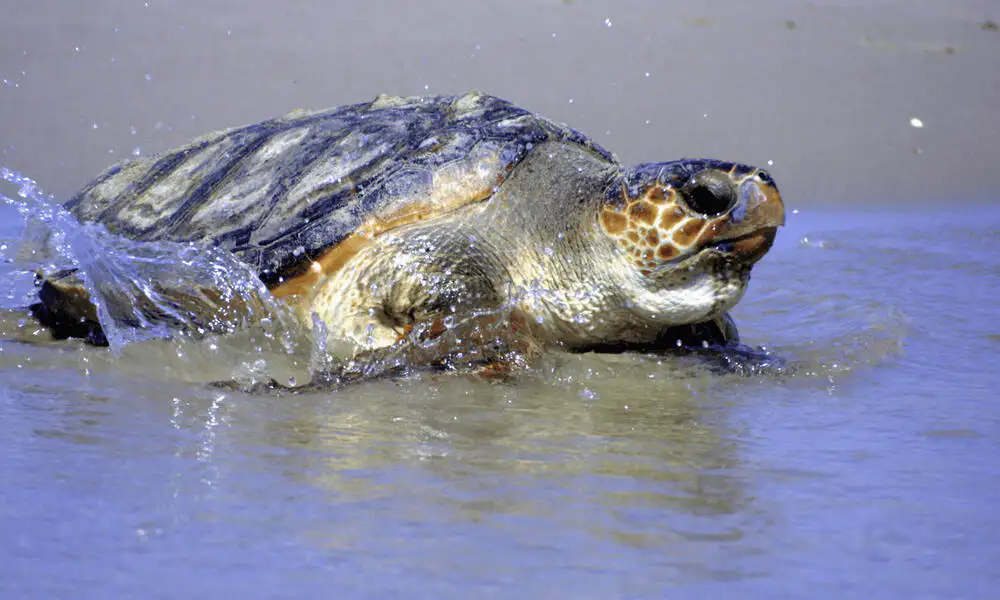
- The Loggerhead Turtle is a widely distributed marine turtle species.
- Scientifically known as Caretta caretta.
- Named for its large head and powerful crushing jaws.
- Adapted to feed on hard-shelled marine organisms.
Habitat & Distribution
- Found across Atlantic, Pacific, and Indian Oceans.
- Also present in the Mediterranean Sea.
- Prefers coastal waters, bays, and estuaries.
- Occasionally inhabits open oceanic zones.
- Major nesting beaches include Florida, Oman, and Greece.
- Loggerheads are omnivorous marine feeders.
- Primarily consume crustaceans, molluscs, jellyfish, and fish.
- Strong jaws help crush crabs, conchs, and shellfish.
Navigation & Migration
- A highly migratory sea turtle species.
- Travels thousands of kilometres between feeding and nesting grounds.
- Uses Earth’s geomagnetic field for long-distance navigation.
- Returns repeatedly to same natal nesting beaches.
- Possesses magnetic map and magnetic compass mechanisms.
Major Threats
- Coastal development causes nesting habitat destruction.
- Accidental capture occurs through fishing gear bycatch.
- Climate change alters beach temperatures and sex ratios.
- Marine plastic ingestion threatens turtle survival.
Conservation Status
- Listed as Vulnerable on the International Union for Conservation of Nature Red List.
- Protected under CITES international trade regulations.
- Conservation focuses on nesting beach protection.
Competition Commission of India
Context: The Competition Commission of India (CCI) vs WhatsApp case represents a pivotal battle in regulatory evolution, addressing whether dominant digital platforms can impose unilateral policy changes on users.
Competition Commission of India (CCI)
- It is India’s statutory competition regulator established under the Competition Act, 2002.
- Formally set up in 2003 and became fully operational in 2009.
- Functions under the Ministry of Corporate Affairs.
- Headquarters located in New Delhi.
- Composition & Appellate Authority
- Comprises a Chairperson and six Members.
- Members are appointed by the Central Government.
- Appellate authority is the National Company Law Appellate Tribunal.
Core Functions & Powers of CCI
- Prevent Anti-Competitive Practices
- Eliminates practices causing adverse effect on market competition.
- Can restrain firms from imposing unfair platform restrictions.
- Consumer Interest Protection
- Protects consumers from abuse of dominant market position.
- Acts against unfair data-sharing and exploitative practices.
- Investigative & Quasi-Judicial Powers
- Can inquire, investigate, and impose penalties on violators.
- Enjoys powers equivalent to a civil court.
- Merger & Acquisition Regulation
- Regulates mergers to prevent market concentration and monopolies.
- Evaluates impact on pricing, competition, and consumer welfare.
- Advisory Role
- Advises government on competition-related policy matters.
- Develops toolkits to assess competition impact of laws.
- Digital Market Regulation
- Established Digital Markets Division for technology-driven competition issues.
- Studies impact of digital platforms on market fairness.
