

Line of Actual Control (LAC)
Basic Overview
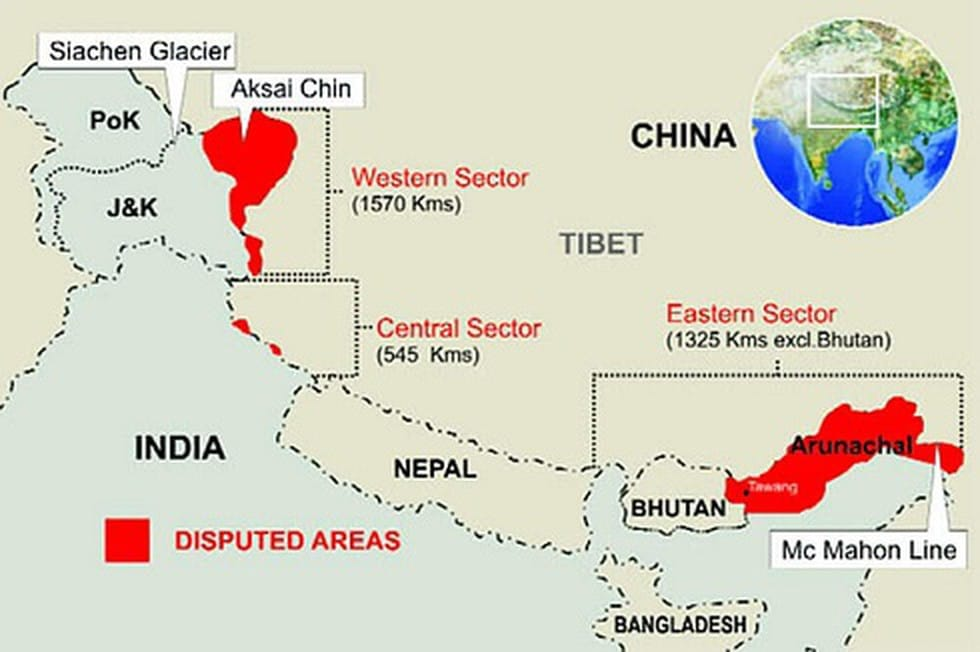
- The Line of Actual Control (LAC) is the de facto boundary between India and China.
- It separates Indian-administered areas from Chinese-controlled territories.
- It is not an officially recognised international boundary.
- It functions as a military control line based on ground positions.
- Different perceptions of alignment cause frequent border tensions.
Length & Sectoral Division
- India considers the LAC approximately 3,488 kilometres long.
- China claims the LAC length to be about 2,000 kilometres.
- The LAC is divided into Western, Middle, and Eastern sectors.
- Western Sector covers Ladakh, and remains highly disputed.
- Middle Sector includes Himachal Pradesh and Uttarakhand.
- Eastern Sector runs through Arunachal Pradesh and Sikkim.
Historical Background
- Border tensions emerged after India’s Independence in 1947.
- India inherited colonial boundaries including the McMahon Line.
- China asserted control over Tibet in the early 1950s.
- The 1962 India–China War reshaped the border situation.
- Post-war, both sides maintained status quo without formal demarcation.
LAC vs McMahon Line
- The LAC represents actual military control positions after 1962.
- It is based on ground realities, not a formal treaty.
- The McMahon Line was drawn during the 1914 Simla Convention.
- It marks the boundary between British India and Tibet.
- India accepts the McMahon Line; China disputes it.
World Monuments Fund (WMF)

Basic Overview
- The World Monuments Fund (WMF) is an independent global heritage conservation organisation.
- Established in 1965 to safeguard culturally significant sites worldwide.
- Headquarters located in New York City.
- Works to preserve sites of historical, architectural, and cultural importance.
Global Presence & Work
- WMF has supported conservation at over 700 heritage sites.
- Its projects span across more than 112 countries.
- Operates through a global network of heritage experts and partners.
- Follows international conservation standards in restoration practices.
- Approach & Contemporary Focus
- Collaborates with local communities, governments, and donors.
- Uses heritage conservation to address climate change challenges.
- Focuses on issues like imbalanced tourism and underrepresentation.
- Supports heritage recovery in post-crisis and conflict situations.
WMF India
- WMF India was established in 2015.
- Registered under India’s Companies Act framework.
- Aligns with India’s policy linking heritage conservation and CSR initiatives.
World Monuments Watch Programme
- The World Monuments Watch is a nomination-based heritage programme.
- Conducted once every two years.
- Highlights heritage sites facing serious risks or neglect.
- Mobilises global awareness and financial support for conservation.
- The 2025 Watch will include 25 selected heritage sites.
- Each listed site reflects an urgent local issue with global relevance.
West Bank
Geographical Aspect
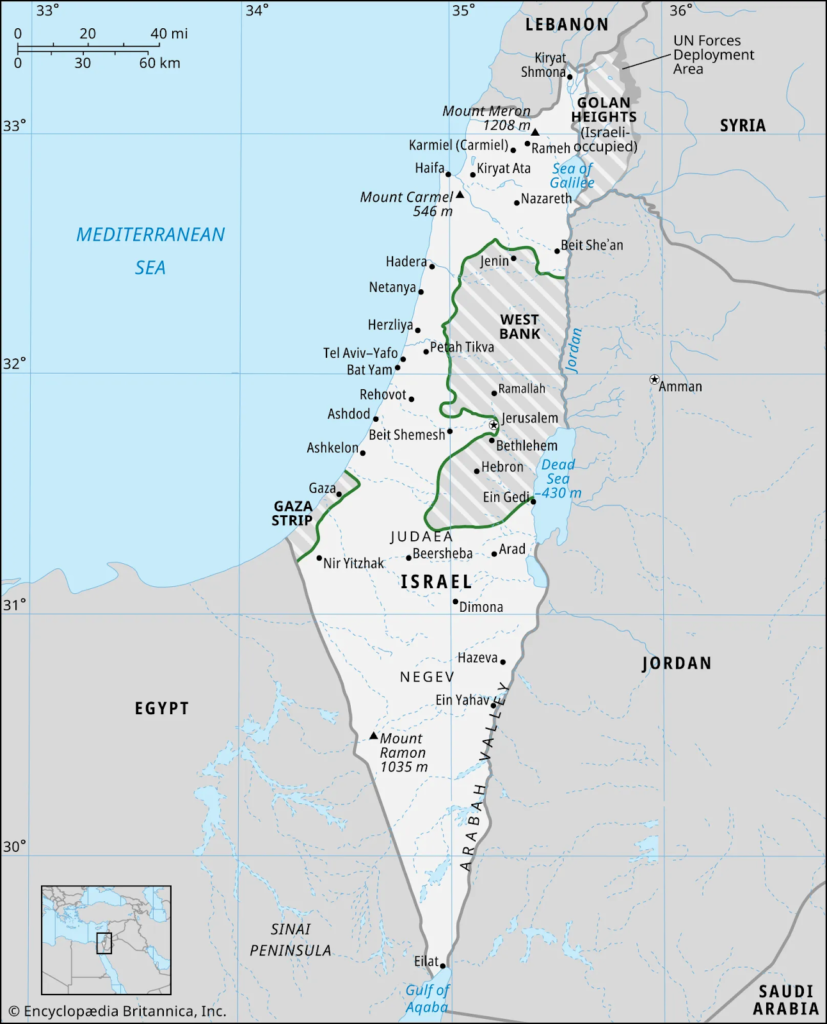
- The West Bank is a landlocked territory in Western Asia.
- It forms the major part of the Palestinian territories.
- Bordered by Jordan and the Dead Sea to the east.
- Surrounded by Israel to the north, west, and south.
- Located near the Mediterranean coastal region.
Historical Background
- Captured by Jordan after the 1948 Arab–Israeli War.
- Israel occupied the West Bank during the Six-Day War (1967).
- Since 1967, Israel has maintained military occupation over the territory.
- Ramallah functions as the de facto administrative capital of Palestine.
Oslo Accords (1993–1995)
- The Oslo Accords were agreements between Israel and the PLO.
- Oslo I Accord was signed in Washington D.C. in 1993.
- Oslo II Accord was signed in Taba, Egypt, in 1995.
- Led to creation of the Palestinian National Authority (PNA). PNA granted limited self-governance in parts of West Bank and Gaza.
- The accords did not establish a sovereign Palestinian state.
Nilgiri Tahr
About the Species
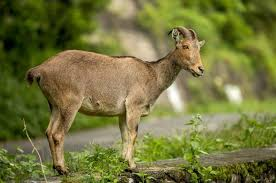
- The Nilgiri Tahr is also known as the Nilgiri Ibex.
- It is an endemic mountain ungulate of southern India.
- Recognised as the State Animal of Tamil Nadu.
- Adult males develop a light grey “saddle” patch on the back. Such males are commonly called “Saddlebacks.”
Conservation Status
- Listed as Endangered by the International Union for Conservation of Nature.
- Included under Schedule I of the Wildlife (Protection) Act, 1972.
- Schedule I status ensures highest legal protection and penalties.
Habitat & Distribution
- Found in open montane grasslands of rainforest ecosystems.
- Endemic to the Nilgiri Hills and southern Western Ghats.
- Distributed mainly across Tamil Nadu and Kerala.
Major Threats
- Habitat degradation due to domestic livestock grazing pressure.
- Spread of invasive plant species affects grassland quality.
- Faces risk from poaching activities.
- Small and isolated populations increase local extinction vulnerability.
- Climate change threatens fragile montane ecosystems.
Swami Ramakrishna Paramahamsa
Basic Overview
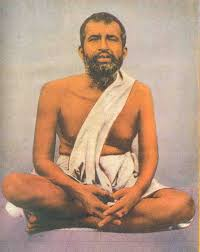
- Ramakrishna Paramahamsa was born as Gadadhar Chattopadhyaya on 18 February 1836 in Bengal.
- He is a prominent 19th-century Indian mystic and spiritual leader.
Religious Philosophy
- Deeply devoted to Goddess Kali throughout his life.
- Served as a priest at the Dakshineswar Kali Temple.
- Practised diverse traditions including Tantric and Bhakti paths.
- Also followed Vaishnavism and Advaita Vedanta philosophies.
- Emphasised that all religions lead to the same ultimate truth.
Disciples & Institutional Legacy
- His foremost disciple was Narendra Nath Datta.
- Narendra later became Swami Vivekananda.
- Swami Vivekananda founded the Ramakrishna Mission in 1897.
- The Mission spread his teachings in India, America, and Europe.
Documentation of Teachings
- His teachings were recorded by disciple Mahendranath Gupta.
- Compiled in the Bengali text “Sri Sri Ramakrishna Kathamrita.”
- English translation titled “The Gospel of Sri Ramakrishna” (1942).
Rare Earth Magnets

Context:
- India will commence production of rare-earth permanent magnets within this year, announced Union Minister for Mines G. Kishan Reddy on Thursday.
- The Union Cabinet approved a scheme in November 2024 for manufacturing 6,000 metric tonnes annually with a financial outlay of ₹7,280 crore, marking a significant step toward critical mineral self-reliance and reducing import dependence.
About the Magnet
- Rare earth magnets are powerful permanent magnets.
- Made from alloys of rare earth elements.
- Known for exceptionally strong magnetic properties.
- Generate strong magnetic fields despite compact physical size.
- Offer higher performance compared to conventional ferrite magnets.
Key Properties
- Possess high magnetic strength and energy density.
- Provide superior performance in miniaturised electronic systems.
- Generally brittle and prone to corrosion.
- Often coated with nickel plating to prevent oxidation.
Major Types
- Two common types are Neodymium (Nd-Fe-B) magnets.
- The other type is Samarium Cobalt (SmCo) magnets.
- Neodymium magnets contain neodymium, iron, and boron.
- Samarium cobalt magnets contain samarium and cobalt.
- Both types vary in grades and magnetic strength levels.
Uses & Strategic Importance
- Widely used in MRI, X-ray, and PET imaging systems.
- Essential in aviation and national defence technologies.
- Used in smartphones, hard drives, and consumer electronics.
- Critical for electric vehicles and renewable energy systems.
- Global processing capacity is dominated by China (around 90%).
