
Open Garbage Violates the Right to Life
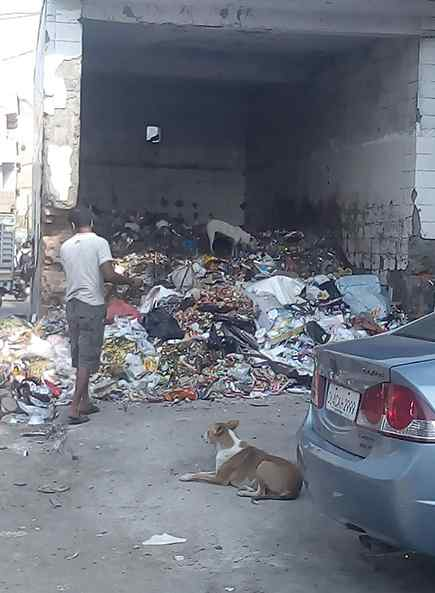
Context: The Delhi High Court ruled that the presence of an open garbage bin and public urinal right next to one’s house violates the right to life under Article 21 of the Constitution.
Article 21 of the Indian Constitution
- Article 21 is part of Part III (Fundamental Rights).
- It guarantees protection of life and personal liberty.
- Text states: No person shall be deprived of life or personal liberty except according to procedure established by law.
- The term “person” includes citizens and non-citizens.
Meaning of Key Terms
- Life
- “Life” means more than mere physical survival or animal existence.
- It includes conditions that make life meaningful and dignified.
- Supreme Court expanded it to include right to dignity, livelihood and health.
- Personal Liberty
- Refers to freedom from unlawful bodily restraint.
- Includes freedom to make choices and move freely.
- Considered essential to the Rule of Law.
- Deprivation
- Article 21 applies only when the State deprives life or liberty.
- It protects against arbitrary State action, not private actions.
Procedure Established by Law
- Originally meant any procedure validly enacted by legislature.
- Protection was procedural, not concerned with fairness initially.
- Maneka Gandhi Case (1978)
- Supreme Court widened interpretation of Article 21.
- Procedure must be just, fair and reasonable.
- Linked Article 21 with Article 14 and Article 19.
- Introduced concept of substantive due process in India.
Scope & Importance
- Article 21 is considered the most expansive Fundamental Right.
- Other rights derive strength from the Right to Life.
- It makes the Constitution a dynamic and evolving document.
- Protects individuals against arbitrary executive and legislative actions.
Decoding India’s Balancing Act in the Middle East
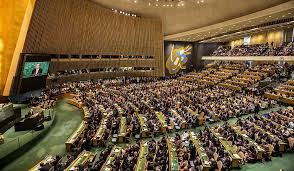
Context: India participated as an “observer” in the first Board of Peace for Gaza meeting held in Washington D.C.
Member State
- Meaning
- A Member State is a sovereign country formally admitted to an organisation.
- Admission occurs through signing and ratifying the founding treaty or charter.
- Rights
- Enjoys full voting rights in decision-making bodies.
- Can propose resolutions and participate fully in debates.
- Eligible to contest for positions in organisational bodies.
- Obligations
- Bound by the charter, rules, and legal framework.
- Required to pay financial contributions or membership dues.
- Expected to comply with resolutions and binding decisions.
- Examples
- The United Nations has 193 Member States.
- Members of the World Trade Organization (WTO) follow trade commitments.
Observer Status
- Meaning
- Observer Status is granted to non-member states or organisations.
- Conferred through a formal decision of the concerned body.
- Rights
- Can attend meetings and participate in discussions.
- Allowed to make statements in sessions.
- Does not possess voting rights.
- Limitations
- Cannot vote on resolutions or binding decisions.
- Not fully bound by membership obligations.
- Purpose
- Enables participation without full political or legal commitment.
- Sometimes used by entities awaiting full membership recognition.
- Examples
- In the UN, the Holy See (Vatican City) holds observer status.
- The State of Palestine is also a UN observer entity.
- In the WTO, countries like Iran hold observer status.
Government Claims vs Reality: Skill Development
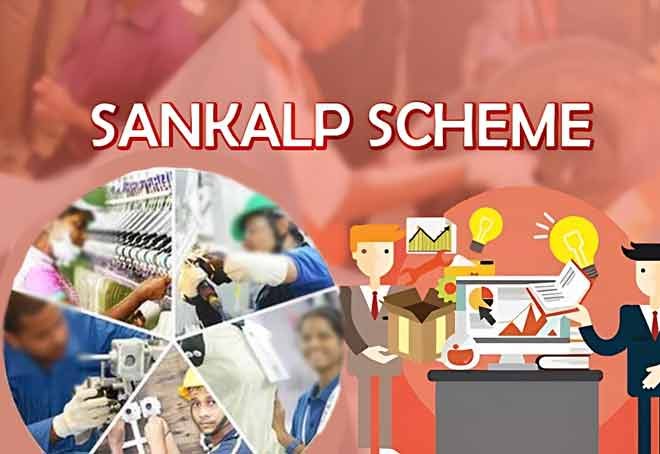
Context: The Public Accounts Committee (PAC) criticized the government for “lackadaisical” implementation of the SANKALP scheme, a flagship programme of the Ministry of Skill Development and Entrepreneurship. The CAG report highlighted significant delays, with only 44% of budgeted provision disbursed between 2017-18 and 2023-24.
About the Scheme
- SANKALP stands for Skills Acquisition and Knowledge Awareness for Livelihood Promotion.
- Launched in 2018 to strengthen India’s skilling ecosystem.
- Implemented by the Ministry of Skill Development and Entrepreneurship.
- It is a World Bank loan-assisted project.
- Aligned with the objectives of the National Skill Development Mission (NSDM).
- Core Objective
- Aims to transform India’s skill development ecosystem.
- Covers both Central and State-level skilling institutions.
- Focuses on improving access, quality, and training outcomes.
- Promotes better participation of women and disadvantaged groups.
- SANKALP identifies four major result areas:
- Institutional Strengthening at national, state, and district levels.
- Quality Assurance of skill development programmes.
- Inclusion of marginalised populations in skilling initiatives.
- Promotion of skills through Public-Private Partnerships (PPPs).
Public Accounts Committee (PAC)
Constitutional & Historical Background
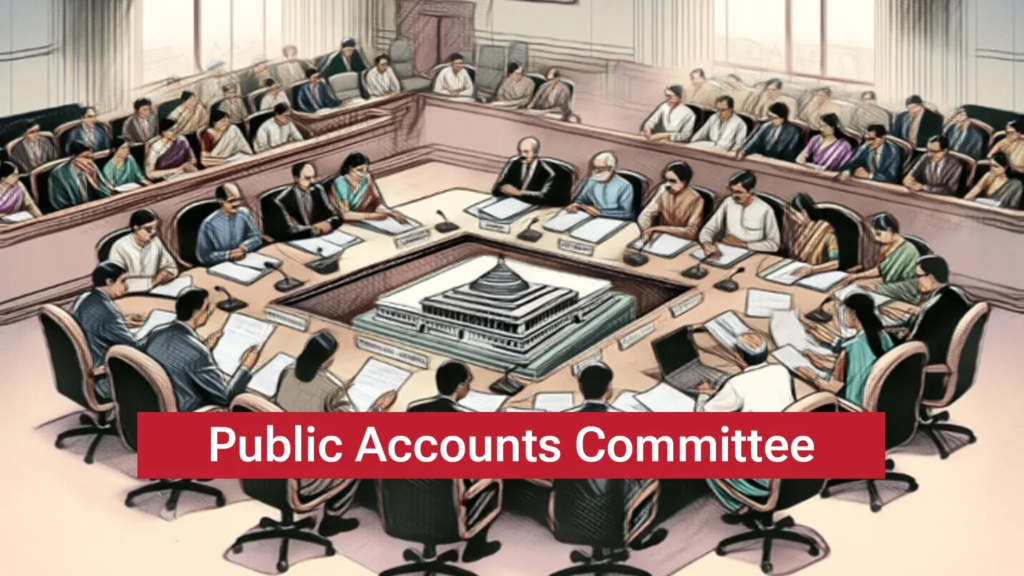
- The Public Accounts Committee (PAC) is a Financial Parliamentary Committee.
- Other financial committees include Estimates Committee and Committee on Public Undertakings.
- First introduced in 1921 under the Government of India Act, 1919.
- The 1919 Act is also known as the Montagu–Chelmsford Reforms.
- Parliamentary committees derive authority from Articles 105 and 118 of the Constitution.
- PAC is constituted annually under Rule 308 of Lok Sabha Rules.
Composition & Appointment
- The PAC consists of 22 members.
- 15 members are elected from the Lok Sabha.
- 7 members are elected from the Rajya Sabha.
- The Chairperson is appointed by the Speaker of Lok Sabha.
- The tenure of members is one year.
- A Minister cannot be a member of the PAC.
- The PAC is an advisory body, not an executive authority.
Core Purpose
- Examines whether public money was spent within the scope of Parliament’s approval.
- Ensures funds granted by Parliament are used for intended purposes.
- Strengthens Parliamentary financial control over the Executive.
Key Functions
- Examines Appropriation Accounts of the Government.
- Scrutinises the Annual Finance Accounts.
- Reviews audit reports of the Comptroller and Auditor General of India.
- Examines CAG reports on revenue receipts and government expenditure.
- Studies accounts of autonomous bodies funded by government.
- Does not examine matters assigned to the Committee on Public Undertakings.
- Treats excess expenditure and incorrect savings equally seriously.
Export Promotion Mission (EPM)
Context
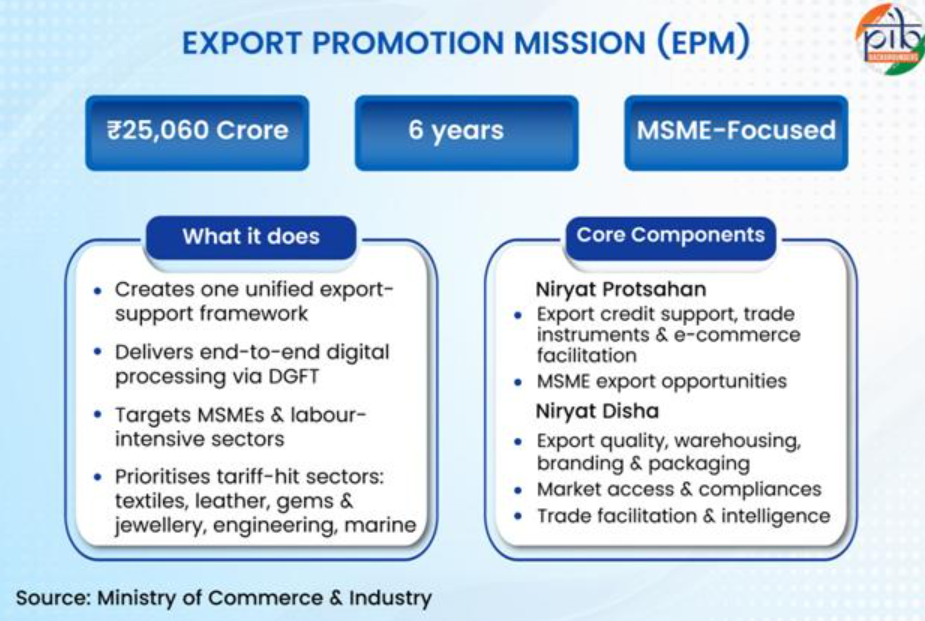
- Government announced 7 additional measures under the Export Promotion Mission. The measures aim to strengthen MSMEs in global export markets.
- The focus on improving access to new and high-risk export markets. It addresses structural constraints faced by Indian exporters.
Basic Overview of Export Promotion Mission
- Export Promotion Mission (EPM) is a flagship export competitiveness initiative.
- Targets MSMEs, first-time exporters, and labour-intensive sectors.
- Allocated ₹25,060 crore from FY 2025–26 to FY 2030–31.
- Implemented by the Directorate General of Foreign Trade.
- Marks shift from multiple fragmented schemes to a single outcome-based framework.
- Operates through collaboration among Commerce, MSME, and Finance Ministries.
Key Objectives
- Reduce high cost of capital for exporters.
- Improve access to diversified trade finance instruments.
- Ease compliance burden in international markets.
- Address logistics disadvantages and market entry barriers.
- Promote diversification of products and export destinations.
Recent Additional Measures (2025)
- Structured Credit Support
- Introduces risk-sharing mechanisms and credit instruments.
- Provides interest subvention of 2.75% for eligible exporters.
- Direct E-Commerce Credit Facility
- Working capital support up to ₹50 lakh.
- Provides 90% credit guarantee coverage.
- Overseas Inventory Credit Facility
- Support up to ₹5 crore.
- Provides 75% credit guarantee coverage.
- Warehouse & Fulfilment Support
- Provides up to 30% of approved overseas project cost.
- Annual benefit capped at ₹15 lakh per applicant.
Sub-Schemes under EPM
- NIRYAT PROTSAHAN
- Focuses on affordable trade finance for MSMEs.
- Uses instruments like interest subvention and collateral guarantees.
- NIRYAT DISHA
- Strengthens export quality and compliance systems.
- Supports international branding, packaging, and export logistics.
Rajya Sabha
Composition & Basic Features
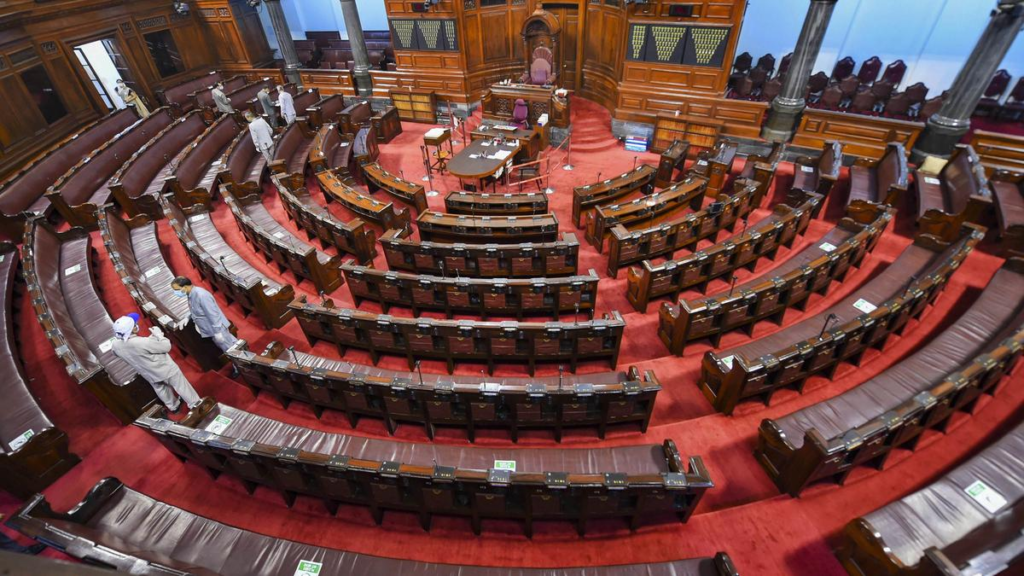
- Rajya Sabha is the Upper House of Parliament.
- It is a permanent House and cannot be dissolved.
- The total strength of the Rajya Sabha is 245 members.
- 233 members represent States and Union Territories.
- 12 members are nominated by the President.
- The members serve a six-year term.
- One-third members retire every two years (biennial system).
- Provision under Article 83(1) ensures continuity.
- Note: Rajya Sabha was first constituted on 3 April 1952 and the first Chairman was Dr. S. Radhakrishnan.
Nominated Members (Article 80)
- Article 80(3) provides for nomination of 12 members.
- Nominated for expertise in literature, science, art, and social service.
- A nominated member may join a political party within six months.
Election of Rajya Sabha Members
- Members are elected by elected MLAs of State Assemblies.
- Election is indirect, not by direct public voting conducted under Article 80(4).
- Follows Proportional Representation by Single Transferable Vote (STV).
- Allocation of seats governed by the Fourth Schedule of Constitution.
- Seat distribution is based on population of states.
- Example: Uttar Pradesh has 31 seats, Goa has 1 seat.
- Eligibility & Legal Changes
- Candidate must be citizen of India.
- Minimum age requirement is 30 years.
- A Minister from Lok Sabha can speak in Rajya Sabha. However, such Minister cannot vote in Rajya Sabha.
Key Powers of Rajya Sabha
- Legislative Powers
- Equal power with Lok Sabha in ordinary and constitutional bills.
- No joint sitting for Constitution Amendment Bills.
- Special Powers (Article 249)
- Can allow Parliament to legislate on State List subjects.
- Requires two-thirds majority of members present and voting.
- Resolution valid for one year, extendable annually.
- Creation of All India Services
- Can authorise creation of All India Services in national interest.
- Emergency Provisions
- Must approve proclamations under Articles 352, 356, and 360.
- If Lok Sabha dissolved, Rajya Sabha approval keeps proclamation valid.
Tenth Schedule: Disqualification Powers of the Speaker
Constitutional Position & Election
- The Speaker of Lok Sabha is the presiding officer of the House.
- Considered the highest authority in the Lok Sabha.
- Institution originated under the Government of India Act, 1919.
- Lok Sabha elects the Speaker from among its members.
- Election requires majority of members present and voting.
- Salary and allowances charged on Consolidated Fund of India.
- Ranks 7th in Order of Precedence.
Tenure & Vacating Office (Article 94)
- Speaker remains in office during the life of the Lok Sabha.
- Does not vacate office on dissolution of Lok Sabha.
- Continues until just before the first meeting of new House.
- Speaker vacates office if:
- Ceases to be a member of Lok Sabha.
- Resigns by written notice to the Deputy Speaker.
- Removed by majority of all members of Lok Sabha.
- While removal motion is under consideration, Speaker cannot preside.
When Speaker is Absent or Post is Vacant
- Deputy Speaker presides in Speaker’s absence.
- If both absent, member from Panel of Chairpersons presides.
- Panel consists of maximum ten members nominated by Speaker.
- If post of Speaker is vacant:
- Deputy Speaker presides.
- If both posts vacant, President appoints a Speaker pro tem.
Pro Tem Speaker
- Appointed by the President after general elections.
- Administers oath to newly elected MPs.
- Presides until a new Speaker is elected.
- Office ends once regular Speaker assumes charge.
Powers & Functions
- Conduct of House
- Presides over sittings and maintains order and decorum.
- Interprets and enforces Rules of Procedure (Article 118).
- Decides agenda in consultation with Leader of the House.
- Can suspend members for misconduct.
- Legislative Powers
- Certifies a Bill as a Money Bill (final authority).
- Refers Bills to Parliamentary Standing Committees.
- Presides over joint sittings of Parliament.
- Voting Powers (Article 100)
- Does not vote in first instance.
- Exercises casting vote in case of tie.
- Decides between voice vote and division vote.
- Disqualification Powers
- Decides on disqualification under Tenth Schedule (Anti-defection law).
- Supreme Court (2020) directed decision within three months, except exceptional cases.
