
Cabinet Committee on Security (CCS)
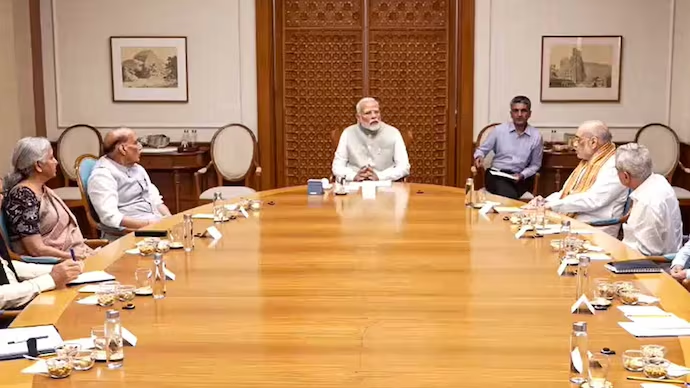
Context: Prime Minister chaired Cabinet Committee on Security meeting to review global situation amid ongoing West Asia conflict.
Basic Features
- Cabinet Committee on Security (CCS) is the apex body for decision-making on national security matters in India.
- It is chaired by the Prime Minister of India.
- Deals with issues related to defence, security, foreign affairs, and strategic policy decisions.
Composition
- Chaired by Prime Minister, with key members including Home, Defence, Finance, and External Affairs Ministers.
- National Security Advisor (NSA) acts as coordinator on security-related matters.
- Cabinet Secretariat maintains records of meetings and proceedings of the committee.
Functions
- Takes decisions on defence policy, security expenditure, and strategic national security issues.
- Deals with matters related to intelligence, nuclear policy, and space-related security aspects.
- Acts as apex authority for appointments in national security institutions.
Section 301 of the Trade Act, 1974

Context: U.S. has initiated Section 301 investigations against India and other countries over excess capacity and forced labour concerns.
Basic Concept
- Section 301 is a U.S. trade law empowering authorities to act against unfair foreign trade practices.
- It authorises the U.S. Trade Representative (USTR) to investigate discriminatory or unjustifiable trade barriers.
- It aims to protect U.S. commerce and domestic industries from harmful external practices.
Key Features
- Provides unilateral authority, allowing U.S. to act without waiting for WTO approval.
- Covers wide areas including subsidies, intellectual property violations, labour practices, and excess production.
- Once initiated, it requires formal investigation with hearings and evidence-based assessment.
- Allows imposition of tariffs, quotas, or other retaliatory measures against offending countries.
- Investigations are generally time-bound, lasting around six to twelve months.
Scope of Current Investigations
- First investigation targets excess manufacturing capacity across 16 economies including India, China, and EU.
- Second investigation focuses on forced labour practices, covering around 60 countries globally.
India-Specific Issues
- U.S. raised concerns about excess production capacity in solar modules, steel, petrochemicals, and automobiles.
- Claims surplus production may lead to dumping of goods in international markets including the U.S..
- Also examining whether India has taken adequate measures to prevent forced labour in supply chains.
Agri-Photovoltaics (AgriPV)
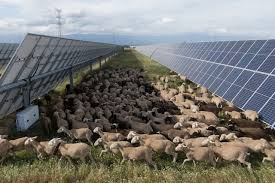
Context: Budget 2026–27 increased PM-KUSUM outlay to ₹5,000 crore, with proposal for National AgriPV Mission.
Basic Concept
- Agri-photovoltaics (AgriPV) is a dual-use system combining solar power generation with agricultural cultivation on same land.
- Solar panels are installed in a way that crops can grow underneath or between them.
- It helps address land-use conflict between food production and solar energy expansion.
Key Features
- Panels are installed at elevated heights, allowing farming activities and machinery movement beneath them.
- Designs include row-based, vertical bifacial panels, and greenhouse-integrated systems.
- Creates micro-climate effect, reducing soil temperature and protecting crops from extreme weather conditions.
- Uses optimized spacing to balance crop sunlight requirement and solar energy generation efficiency.
Benefits / Opportunities
- Provides additional income to farmers through power sales or land leasing arrangements.
- Helps in water conservation by reducing evaporation due to partial shading of crops.
- Supports land neutrality, enabling solar expansion without reducing agricultural land availability.
- Promotes rural infrastructure, such as solar-powered cold storage and processing units.
- Enhances climate resilience by protecting crops from heatwaves and erratic rainfall.
Government Initiatives
- PM-KUSUM scheme promotes decentralized solar energy generation for farmers.
- Proposed National AgriPV Mission aims to achieve around 10 GW solar capacity.
- Government plans Viability Gap Funding (VGF) to offset high initial costs of installations.
- Multiple pilot projects are testing different crop–solar combinations across agro-climatic zones.
Challenges
- High initial cost due to elevated structures and specialized engineering requirements.
- Improper design may lead to reduced crop yield due to inadequate sunlight exposure.
- Lack of clear rules on land classification may create regulatory and taxation issues.
- Farmers face technical skill gap in managing both agriculture and solar systems.
- Limited grid connectivity in rural areas restricts ability to sell surplus electricity.
Gas Pipeline
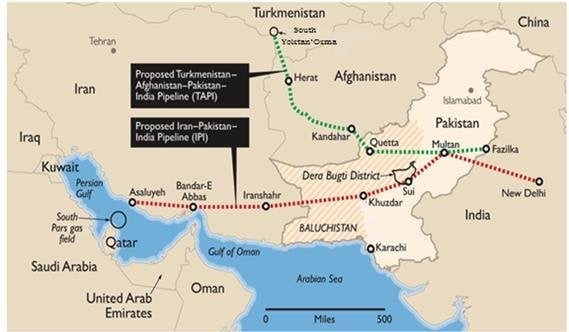
Context: Ongoing West Asia crisis has revived discussions on IPI and TAPI pipelines amid concerns over India’s energy dependence.
Iran–Pakistan–India (IPI) Pipeline
- IPI Pipeline is a proposed transnational gas pipeline connecting Iran, Pakistan, and India.
- It aims to transport natural gas from Iran’s South Pars field to energy-deficient South Asian countries.
- Often referred to as the “Peace Pipeline” due to its regional cooperation potential.
- Key Features
- Total length is about 2,775 km, making it a major cross-border energy infrastructure project.
- Designed to supply around 60 mmscmd of gas each to India and Pakistan.
- Provides a cost-effective alternative to LNG imports, reducing dependence on maritime transport.
- Expected to enhance regional economic interdependence and cooperation.
- Timeline & Status
- Concept originated in 1990s, with major diplomatic progress during 2004–2005 period.
- India withdrew from project in 2007 due to sanctions pressure, pricing issues, and security concerns.
- Pipeline currently remains dormant, with limited progress in recent years.
Turkmenistan–Afghanistan–Pakistan–India (TAPI) Pipeline
- TAPI Pipeline is a trans-regional project transporting natural gas from Central Asia to South Asia.
- Supported by Asian Development Bank (ADB) as part of regional connectivity initiatives.
- Key Features
- Total length is about 1,814 km, shorter than IPI but strategically significant.
- Gas source is Galkynysh gas field in Turkmenistan, one of world’s largest reserves.
- Expected capacity is about 33 billion cubic meters annually.
- Aims to diversify India’s energy sources beyond West Asia dependence.
- Timeline & Status
- India joined project through agreement in 2010, though concept dates back to 1990s.
- Turkmenistan–Afghanistan section was inaugurated in 2025, showing partial progress.
- Extension into Pakistan and India remains stalled due to security and geopolitical challenges.
Chambal River
Basic Facts
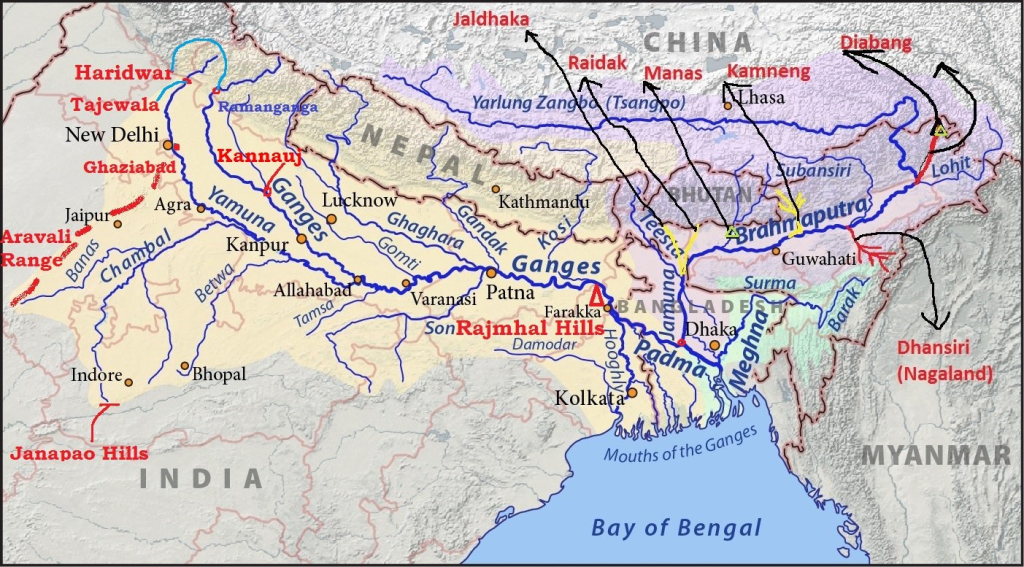
- Chambal River is a perennial, rain-fed river forming part of the greater Gangetic drainage system.
- It is one of the cleanest rivers in India, known for minimal pollution and rich aquatic biodiversity.
- It is the largest tributary of the Yamuna River, joining it at Pachnada in Uttar Pradesh.
Origin & Course
- Originates from Janapav (Vindhya Range) near Mhow in Madhya Pradesh at about 843 metres elevation.
- Flows through Madhya Pradesh, Rajasthan, and Uttar Pradesh.
- Forms a natural boundary between Madhya Pradesh and Rajasthan in several stretches.
- Left bank tributaries include Banas and Mej rivers.
- Right bank tributaries include Kali Sindh, Parbati, Shipra, Kuno, Seep, and Kwari rivers.
Key Physical Features
- Lower course is marked by Chambal ravines, formed due to severe soil erosion and gully formation.
- It is an anterior drainage river, older than the Yamuna and Ganga river systems.
- River forms deep pools during lean seasons, supporting aquatic life during water scarcity.
- Initial course shows steep gradient and gorges, especially near Chaurasigarh region.
Ecological Significance
- Important habitat for Gharial, Ganges river dolphin, and several freshwater turtle species.
- Hosts biodiversity including critically endangered species and aquatic mammals.
- Protected under National Chambal Sanctuary, a major conservation area for riverine fauna.
Sahiwal Cattle
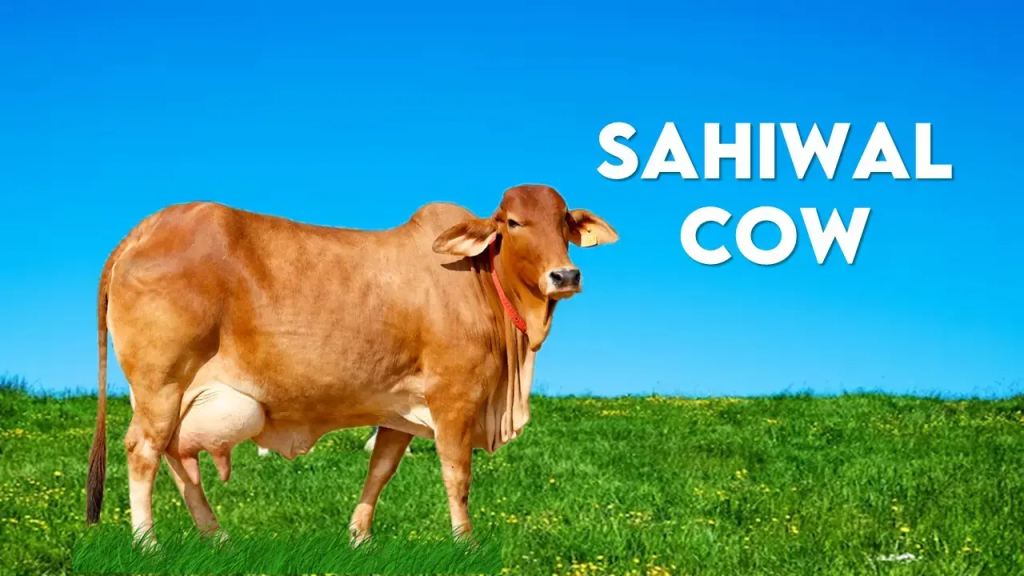
Context: ICAR-IVRI successfully produced Sahiwal calves using OPU–IVF–ET technology, advancing indigenous breed improvement efforts.
About the cattle
- Sahiwal cattle is one of the best indigenous milch breeds known for high milk production.
- Originates from Sahiwal region of Punjab (Pakistan), now widely reared in India.
- Also known as Lambi Bar, Lola, Montgomery, Multani, and Teli.
- Physical Features
- Cows are reddish-brown in colour, ranging from mahogany red to greyish shades.
- Bulls usually have darker extremities, sometimes with small white patches on body.
- Production & Traits
- Average milk yield is about 2325 kg per lactation, with variation between 1600 to 2750 kg.
- Known for heat tolerance, tick resistance, and strong immunity against parasites.
- Well adapted to tropical climates, making it suitable for Indian conditions.
- Distribution & Importance
- Widely exported to Asian countries, Africa, and Caribbean regions due to superior traits.
- Important for dairy productivity and indigenous breed conservation in India.
About OPU–IVF Technology
- Ovum Pick-Up (OPU) is a reproductive technology used to collect eggs from live animals.
- It uses ultrasound-guided needle technique to retrieve oocytes from ovarian follicles.
- Process
- Retrieved oocytes undergo in vitro maturation, fertilization, and embryo culture.
- Developed embryos are transferred to surrogate animals to produce offspring.
- Importance
- Helps in rapid multiplication of superior genetic breeds like Sahiwal cattle.
- Reduces generation interval and improves genetic quality of livestock population.
Chhapgarus Ngankeeae
Context: Zoological Survey of India discovered a new crab species from mangrove ecosystems of Goa.
Overview
- Chhapgarus ngankeeae is a newly identified species of marine crab from India.
- Named in honour of Dr Ngan Kee Ng, a noted marine biologist.
- Found in mangrove habitats along the west coast of India, especially intertidal zones.
- Habitat
- Occurs in muddy intertidal mangrove forests, which experience regular tidal flooding and exposure.
- Mangrove ecosystems provide nutrient-rich and sheltered environment for such small crustaceans.
Key Characteristics
- It is a small-sized crab, measuring around 1.6 cm across its squarish shell.
- Body is brown and hairy, helping in camouflage within muddy mangrove environment.
- Shows narrow abdomen with equal width of second and third segments.
- Tailpiece (telson) is as broad as its length, a distinctive morphological feature.
- Male reproductive organ (gonopod) has unique V-shaped constriction with unequal lobes.
Ecological Significance
- Mangrove crabs play role in nutrient recycling and maintaining productivity of coastal ecosystems.
- They support food chains and overall health of mangrove biodiversity systems.
National Council for Transgender Persons (NCTP)

Context: Union Government held a meeting with National Council for Transgender Persons (NCTP) amid backlash over the Transgender Persons (Protection of Rights) Amendment Bill.
About NCTP
- NCTP is a statutory body constituted under the Transgender Persons (Protection of Rights) Act, 2019.
- It works to protect rights and ensure welfare of transgender persons in India.
- Functions under Ministry of Social Justice and Empowerment.
Objectives
- Ensures effective implementation of provisions of the Transgender Persons Act, 2019.
- Focuses on livelihood, awareness, and social inclusion of transgender community.
- Promotes establishment of transgender welfare boards across states.
- Works to ensure access to housing, healthcare, education, and basic services.
Composition
- Chairperson: Union Minister of Social Justice and Empowerment.
- Vice-Chairperson: Minister of State for Social Justice and Empowerment.
- Includes representatives from multiple central ministries at Joint Secretary level.
- Members from five states/UTs on rotational basis representing different regions.
- Includes five members from transgender community across regions.
- Also includes representatives from NITI Aayog, NHRC, NCW, and other departments.
- Non ex-officio members have tenure of three years.
Functions and Powers
- Monitors and evaluates policies and programmes for transgender welfare and inclusion.
- Advises central government on legislation, schemes, and policy formulation.
- Coordinates activities of various ministries and departments related to transgender issues.
- Addresses grievances and complaints related to rights violations of transgender persons.
- Has power to inquire into complaints and recommend appropriate actions.
Transgender Persons (Protection of Rights) Act, 2019
- Defines transgender person as one whose gender identity differs from gender assigned at birth.
- Includes transmen, transwomen, intersex persons, gender-queer, hijra and kinnar communities.
- Provides right to self-perceived gender identity with certificate issued by District Magistrate.
- Grants right of residence with family, preventing forced eviction or exclusion.
- Prohibits discrimination in education, employment, healthcare, and public services.
- Penal Provisions
- Offences against transgender persons attract imprisonment from six months to two years with fine.
Semaglutide
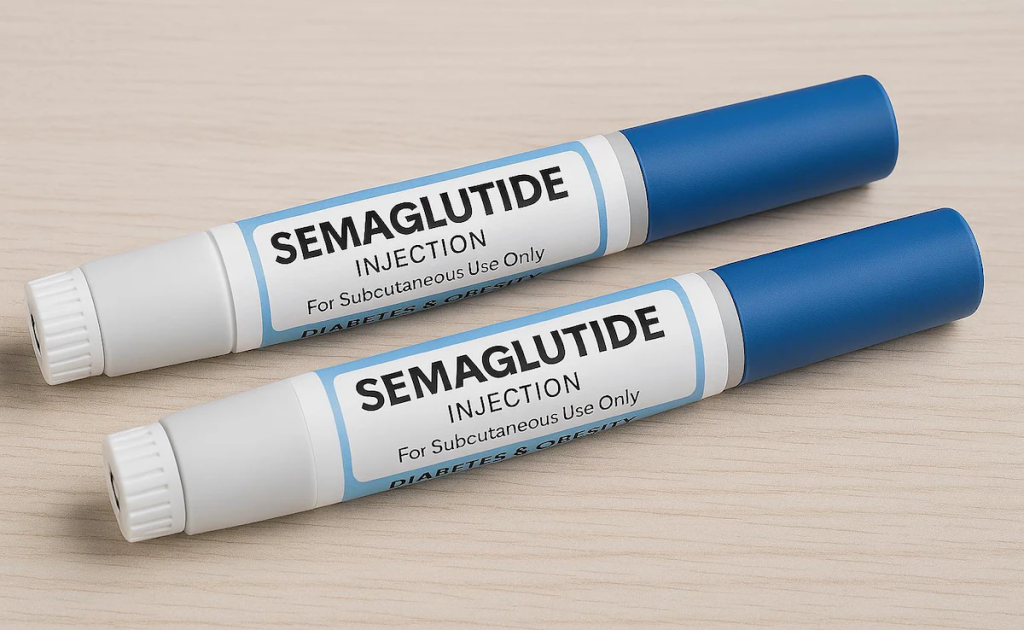
Context: Indian drugmakers launched generic versions of Semaglutide after patent expiry of Novo Nordisk’s drugs (Wegovy, Ozempic).
Basic Concept
- Semaglutide is a drug belonging to class of GLP-1 receptor agonists (GLP-1 RAs).
- It mimics the GLP-1 hormone, which is naturally released in the gut after food intake.
- GLP-1 helps in stimulating insulin secretion, thereby reducing blood glucose levels in the body.
- Semaglutide acts by enhancing insulin release in response to increased blood glucose levels.
- It also helps in regulating appetite and slowing gastric emptying, contributing to weight management.
Uses / Indications
- Used to control blood sugar levels in patients with type 2 diabetes.
- Helps reduce risk of heart attack, stroke, and death in patients with cardiovascular disease.
- Prescribed for weight loss in obese or overweight individuals with related health conditions.
- Helps in reducing risk of kidney disease progression in patients with type 2 diabetes.
Generic Drugs
Overview
- Generic drugs are medicines containing the same active ingredient as corresponding brand-name drugs.
- They produce the same therapeutic effect as brand-name medicines when used in same dosage.
- Key Features
- Generic drugs are identical in dose, strength, safety, quality, and method of administration.
- They work in the same way in the body, ensuring equivalent clinical outcomes.
- Concept of bioequivalence ensures the same effectiveness and safety as brand-name drugs.
- They may differ in inactive ingredients such as colour, flavour, or preservatives.
- Regulatory Aspect
- Generic drugs can be marketed only after expiry of patent of original brand-name drug.
- Approval is based on proving bioequivalence, not through full-scale clinical trials again.
- Cost Advantage
- Generic drugs are significantly cheaper than brand-name drugs due to lower development costs.
- Lower price improves accessibility and affordability of medicines for larger population.
India Revised Earthquake Design Code, 2025 (IS 1893)
About Seismic Zonation Map
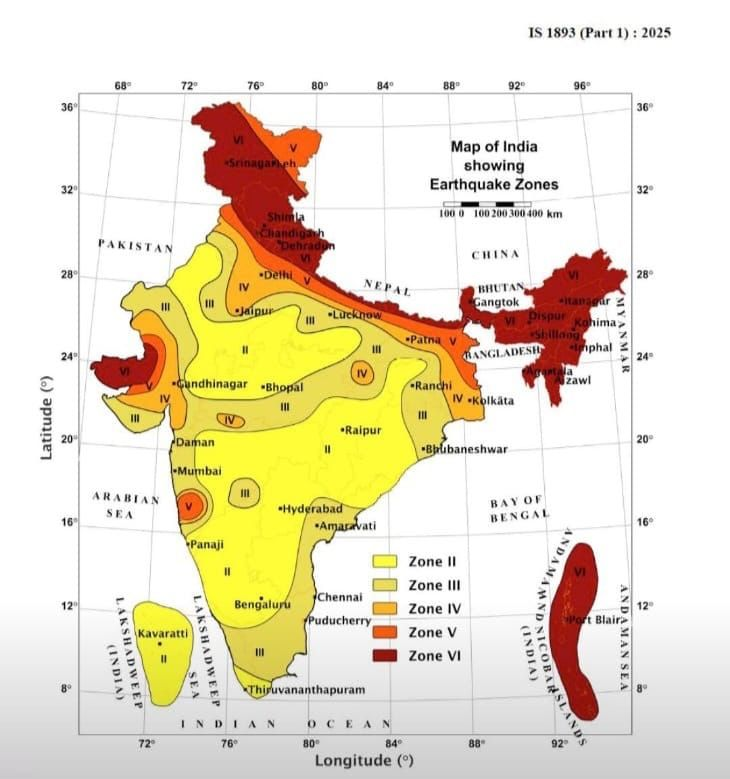
- Seismic zonation map classifies regions based on earthquake hazard to guide structural design requirements.
- It helps determine strength and safety standards of buildings against expected seismic forces.
- Updated map is issued by Bureau of Indian Standards (BIS) under revised Earthquake Design Code, 2025.
- It uses Probabilistic Seismic Hazard Assessment (PSHA) for scientific and risk-based classification.
Key Features of Revised Zonation Map
- Introduction of Zone VI
- A new highest-risk Zone VI has been introduced covering entire Himalayan arc from J&K to Arunachal Pradesh.
- It reflects high tectonic stress along Indian–Eurasian plate boundary.
- Expanded High-Risk Coverage
- About 61% of India now falls under moderate to high seismic hazard zones.
- It is based on scientific modelling of faults, rupture potential, and seismic activity, not just past earthquakes.
- Boundary Rule for Cities
- Cities located between two zones are automatically assigned to higher-risk zone.
- Ensures classification based on geological risk rather than administrative boundaries.
- Rupture Extension Recognition
- Map recognises that Himalayan thrust ruptures can extend into foothill regions like Dehradun.
- Structural Safety Norms
- New norms require securing non-structural elements like ceilings, tanks, façades, and equipment.
- Buildings near faults must withstand strong ground motions typical of near-fault earthquakes.
- Soil and Ground Response Provisions
- Includes provisions for liquefaction, soil flexibility, and site-specific seismic response studies.
- Encourages geotechnical investigations before major construction projects.
- Exposure Mapping (PEMA Method)
- Incorporates population density, infrastructure, and socioeconomic vulnerability into risk assessment.
- Moves towards impact-based seismic hazard evaluation.
Significance
- Enables better earthquake preparedness through improved hazard mapping and updated building standards.
- Highlights need for retrofitting old structures, especially in Himalayan and high-risk regions.
- Ensures uniform hazard classification across Himalayan belt, correcting earlier underestimation.
Lebanon
Location
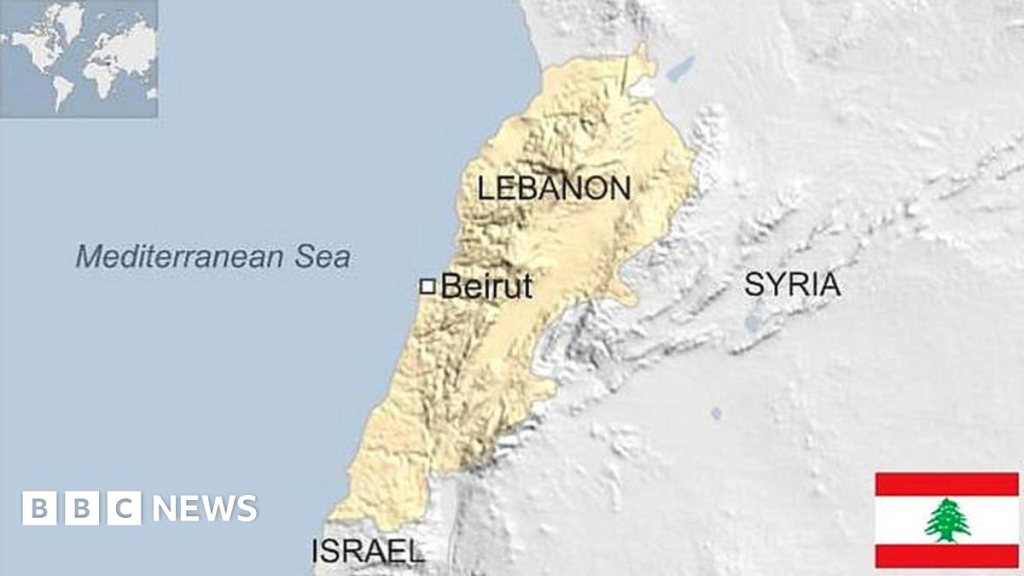
- Lebanon is a country located on the eastern shore of the Mediterranean Sea in West Asia.
- Capital city is Beirut, an important cultural and economic centre in the region.
- It borders Mediterranean Sea (west), Syria (north and east), and Israel (south).
Physical Geography
- Lebanon is a small, narrow country with diverse geographical features.
- Lebanon Mountains run through the country, rising up to about 3,000 metres.
- Anti-Lebanon Mountains form natural boundary between Lebanon and Syria.
- Bekaa Valley lies between mountain ranges and is fertile agricultural region.
- Litani River is the only major river flowing entirely within Lebanon throughout the year.
- Lebanon has a Mediterranean climate with mild, wet winters and hot, dry summers.
Chagos Archipelago and Diego Garcia
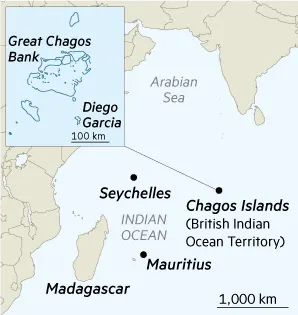
Context: U.K. condemned Iran after an unsuccessful missile attack on the U.K.-U.S. air base at Diego Garcia in the Indian Ocean.
Chagos Archipelago
- Chagos Archipelago is located in the Indian Ocean, about 500 km south of the Maldives.
- It consists of around 58 islands, forming part of a strategically important maritime region.
- Historical Background
- Initially inhabited in the 18th century by enslaved African and Indian labourers under French rule.
- Under Treaty of Paris (1814), France ceded Chagos along with Mauritius to Britain.
- In 1965, Britain separated islands from Mauritius to form British Indian Ocean Territory (BIOT).
- Indigenous Chagossians were forcibly displaced during 1960s–70s to establish military base.
Diego Garcia
- Diego Garcia is the largest island and a coral atoll within the Chagos Archipelago.
- Located about 7° south of the equator, it has major strategic military importance.
- Leased to United States and United Kingdom, and developed into military base in 1986.
- Strategic Importance
- Diego Garcia has been used in Gulf War, Iraq War, Afghanistan War, and post-9/11 operations.
- It serves as a key base for Indo-Pacific military logistics and surveillance operations.
- Recent Developments
- In 2024, UK agreed to transfer sovereignty of Chagos Islands to Mauritius.
- However, Diego Garcia base will remain under UK–US control through a 99-year lease arrangement.
- Move follows 2019 ICJ advisory opinion supporting Mauritius’ sovereignty claim.
Prosopis Juliflora
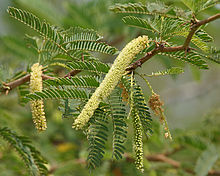
Context: Madras High Court issued directions for eradication of Prosopis juliflora, recognising its harmful ecological impact.
Basic Facts
- Prosopis juliflora is a shrub or small tree belonging to Fabaceae family (mesquite group).
- It is native to Mexico, South America, and the Caribbean region.
- Introduced in India during British period (1920s) for afforestation and land development purposes.
- Known locally as seemai karuvelam, vilayati kikar, gando baval, and Bellary jaali.
Key Characteristics
- Shows high ecological adaptability, growing in sandy, clayey, saline, and alkaline soils.
- Thrives in arid and semi-arid regions with wide rainfall range from 50 mm to 1500 mm.
- Exhibits rapid and aggressive growth, enabling it to outcompete native plant species.
- Can grow across wide altitude range, making it highly resilient invasive species.
Environmental Impacts
- Consumes large amounts of water, depleting groundwater resources in already water-stressed regions.
- Leads to decline of native biodiversity by replacing indigenous vegetation and grasslands.
- Causes habitat loss for animals and birds, reducing ecological balance of ecosystems.
- Contributes to land degradation and erosion due to disappearance of natural grass cover.
- May negatively affect soil and groundwater quality in invaded areas.
Pobitora Wildlife Sanctuary
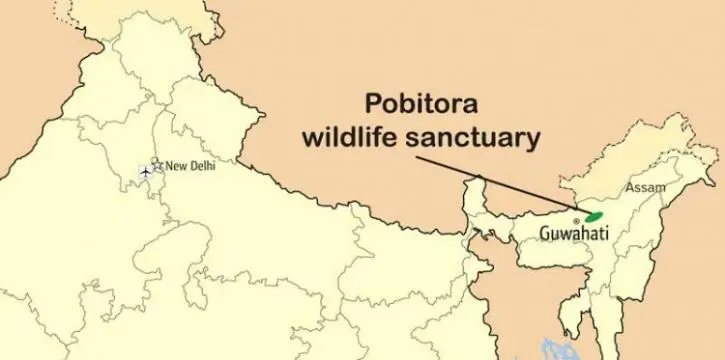
Context: National Board for Wildlife approved proposal to rationalise boundaries of Pobitora Wildlife Sanctuary in Assam.
Location & Establishment
- Pobitora Wildlife Sanctuary is located in the state of Assam.
- It was established in 1998 to protect rich biodiversity of Brahmaputra floodplains.
- Comprises Rajamayong Reserve Forest and Pobitora Reserve Forest.
Physical Features
- Region forms part of floodplains of Brahmaputra River, supporting fertile and dynamic ecosystems.
- Landscape is dominated by alluvial grasslands and tall elephant grass vegetation.
Flora
- Around 72% area consists of wet savannah grasslands with species like Arundo, Saccharum, and Phragmites.
- Water hyacinth is a major invasive species, affecting aquatic ecosystem and waterfowl habitats.
Fauna
- Sanctuary has highest density of Greater One-Horned Rhinoceros in India.
- Other species include leopard, wild boar, barking deer, and wild buffalo.
- Important site under Indian Rhino Vision 2020 programme.
