

PRELIMS
India–Bhutan: Punatsangchhu-II Hydropower Project
Why in News: The 1020 MW Punatsangchhu-II Hydroelectric Project in Bhutan was completed in August 2025 with synchronisation of its final unit (Unit 6, 170 MW). It Marks a major milestone in India–Bhutan clean energy cooperation.
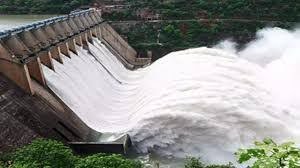
Key Facts about the Project
- Location: Punatsangchhu River, Wangdue Phodrang district, Bhutan.
- Type: Run-of-the-river hydroelectric plant.
- Capacity: 1020 MW (6 units of 170 MW each).
- Funding: Fully funded by India → 30% grant + 70% loan (10% annual interest).
- Contribution: Increases Bhutan’s power capacity by ~40%.
India–Bhutan Hydropower Cooperation
Major projects:
- Chukha (336 MW)
- Kurichhu (60 MW)
- Tala (1020 MW)
- Mangdechhu (720 MW)
- Punatsangchhu-II (1020 MW)
- Bhutan’s total capacity now exceeds 3500 MW.
- Surplus electricity exported to India.
Strategic & Environmental Significance
- Strengthens regional energy security and supports India–Bhutan strategic ties.
- Promotes clean, renewable, and climate-friendly energy.
- Run-of-the-river design → minimal displacement and ecological impact compared to large dams.
Challenges & Delays
- Construction began: Dec 2010; expected completion in 7 years.
- Delays due to: geological challenges, flash floods, COVID-19 pandemic.
- Commissioning rescheduled → completed in Aug 2025.
Future Prospects
- India–Bhutan partnership expanding under 2024 Joint Vision Document.
- Upcoming project: Punatsangchhu-I (1200 MW).
- Model for cross-border clean energy cooperation in South Asia.
Revised National Action Plan on Glanders 2025
Why in News: Department of Animal Husbandry & Dairying (DAHD) launched the Revised National Action Plan on Glanders 2025 to strengthen surveillance, control, and eradication of the disease in equines.

About Glanders
- Causative agent: Burkholderia mallei.
- Affects horses, mules, donkeys; zoonotic → can infect humans.
- Transmission: Direct contact with nasal discharge, contaminated feed, water, equipment.
- Fatality: High if untreated.
- Legal status: Notifiable disease under PCICDA Act, 2009.
- Globally eradicated in many countries but persists sporadically in Asia, Africa, Middle East.
Key Features of the Revised Plan (2025)
Zoning changes:
- Infected zone radius: reduced from 5 km → 2 km.
- Surveillance zone: reduced from 5–25 km → 2–10 km.
- Movement restrictions limited to 10 km.
Enhanced Surveillance:
- Mandatory testing in endemic/high-risk areas.
- Advanced diagnostics + frequent field inspections.
- Emphasis on early detection and reporting.
Quarantine & Movement Control:
- Strict quarantine in affected zones.
- Certification protocols for equine movement (fairs, yatras, interstate transport).
Rapid Response Mechanism:
- SOPs for containment and humane handling.
- Coordination with State Animal Husbandry Departments.
Capacity Building:
- Training for veterinarians, para-vets, field staff on recognition, biosafety, and reporting.
Public Awareness:
- Outreach to horse owners, breeders, stakeholders.
- Awareness campaigns for cooperation in disease control.
Research Support:
- Collaboration with ICAR–National Research Centre on Equines (NRCE), Hisar.
- Focus on advanced diagnostics & epidemiological studies.
Florida’s Python Problem & ‘Robot Rabbits’
Why in News: Florida authorities have adopted robot rabbits to control invasive Burmese python populations threatening the Everglades ecosystem.
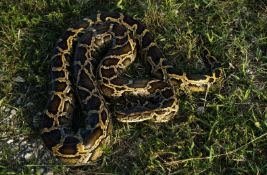
Burmese Python (Python bivittatus)
- IUCN Status: Vulnerable.
- Native Range: Southeast Asia (India, Nepal, Bhutan, Myanmar, Thailand, Vietnam, Cambodia, Laos, southern China, Indonesia).
- Habitat: Grasslands, marshes, swamps, river valleys, forests.
- Size: One of the world’s largest snakes (can grow up to 7 m).
- Diet: Carnivorous – feeds on mammals, birds, reptiles.
- Reproduction: Oviparous, females lay up to 100 eggs.
Florida Everglades
- Location: Subtropical wetlands in southern Florida, USA.
- Significance: Largest subtropical wetland ecosystem in North America; UNESCO World Heritage Site & Ramsar Wetland.
- Biodiversity: Home to endangered species like Florida panther, American crocodile, West Indian manatee.
- Threats: Invasive species (Burmese python, cane toad), climate change, water diversion projects, pollution.
Invasive Alien Species
- Definition: Species introduced outside their natural habitat that spread rapidly, outcompete natives, and cause ecological/economic harm.
- Examples in India:
- Prosopis juliflora (Vilayati babool).
- Lantana camara.
- Parthenium hysterophorus (Congress grass).
- Eichhornia crassipes (Water hyacinth).
International Efforts:
- Convention on Biological Diversity (CBD).
- Ramsar Convention (wetland protection).
Impact of Burmese Pythons in Florida
- Severe decline in native mammals:
- Raccoons ↓ 99.3%
- Opossums ↓ 98.9%
- Bobcats ↓ 87.5% (since 1997)
- Marsh rabbits, cottontail rabbits, foxes almost disappeared.
- Altered food chain → ecosystem imbalance.
Control Measures
- Florida Python Challenge (annual bounty hunt).
- Radio-tracked “scout snakes” to locate breeding females.
- Engagement of Tamil Nadu’s Irula tribal snake catchers.
- Robot rabbits → mimic marsh rabbits with heat, smell, movement & camera alert system.
Samudrayaan Project
Why in News: India is preparing for its Samudrayaan Project, aiming to send three humans to depths of 6,000 metres in the ocean by 2027. Recently, two Indian “aquanauts” travelled aboard the French vessel Nautile into the Atlantic Ocean as part of deep-sea exploration training.
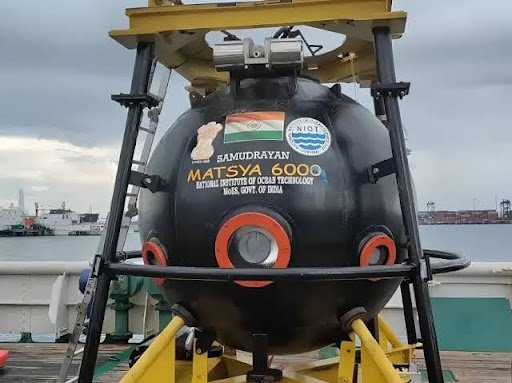
About Samudrayaan Project
- Part of India’s Deep Ocean Mission approved by Cabinet in 2021.
- Objective: Explore deep-sea resources (minerals, biodiversity, energy, freshwater potential).
- Coordinated by National Institute of Ocean Technology (NIOT).
- India will join elite group (US, Russia, China, France, Japan) with deep-sea manned submersibles.
Matsya-6000 Submersible
- Specially designed vehicle to carry aquanauts to 6,000 m depth.
- Titanium alloy sphere (80 mm thick) to withstand 600 times atmospheric pressure.
- Can carry 3 persons for up to 12 hours of normal mission and 96 hours of emergency endurance.
- Equipped with life-support systems, re-breather oxygen systems, CO₂ scrubbers, acoustic communication.
Challenges of Deep-Sea Exploration
- Vessel Development: Precise fabrication needed; even 0.2 mm deviation may collapse structure.
- Maintaining Environment: Oxygen, CO₂ removal, pressure, and harmful gases management critical.
- Aquanaut Health: No food/drink during dives; requires extreme physical and mental fitness.
- Communication: Relies on radio waves, but efficiency reduces in deep-sea conditions.
UPSC Static Info Pointers
- India’s coastline: 7,517 km (mainland + islands).
- Deep Ocean Mission: Six components including Samudrayaan, biodiversity studies, climate services, and exploration of polymetallic nodules.
- Key minerals: Nickel, cobalt, rare earths.
- Global context: Deep ocean research linked to blue economy & strategic security.
India to Become World’s 2nd Largest Economy (PPP) by 2038
Why in News: EY Report (2024), citing IMF data, projects India to emerge as the world’s second-largest economy (PPP terms) by 2038.
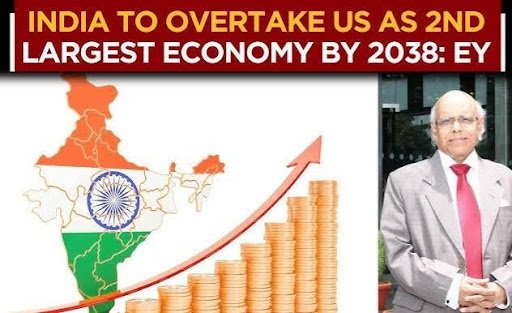
Global Projections
- China: $42.2 trillion (Top position), but facing ageing population & rising debt.
- India: $20.7 trillion (PPP terms) – expected to overtake US, Germany, Japan.
- United States: Resilient economy, but debt >120% of GDP, slower growth.
- Germany & Japan: Struggling with demographic decline and high global trade dependence.
Drivers of India’s Growth
- Demographics: Median age 28.8 years (2025) → young, skilled workforce.
- Savings & Investment: High rates sustaining capital formation.
- Debt Profile: Govt. debt projected to decline from 81.3% (2024) to 75.8% (2030).
Structural Strength:
- Ongoing reforms.
- Investments in critical technologies.
- Strong macroeconomic fundamentals.
About Purchasing Power Parity (PPP)
- Concept: Economic theory comparing currency values via common basket of goods/services.
- Use: More accurate measure of:
- Living standards,
- Economic productivity,
- Income levels across nations (better than market exchange rates).
