

IMD Monsoon Forecast 2026
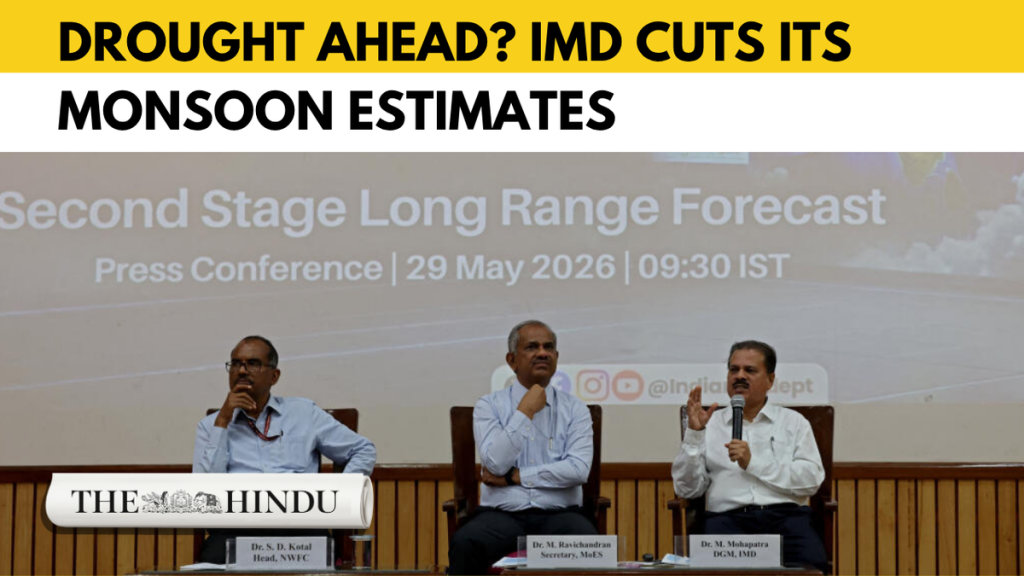
Context: IMD lowered the 2026 southwest monsoon forecast to 90% of the Long Period Average (LPA), down from the earlier 92% projection.
More in News
- IMD put the probability of a “deficient” monsoon (rain under 90% of LPA) at 60%.
- Only the Northeast region is forecast to receive a “normal” monsoon in 2026.
- The northwest, central India, southern peninsula, and monsoon core zone are all expected to fall short.
- IMD put the probability of El Niño conditions during the season at 92%, which is the main reason for the expected shortfall.
- Key factors that could improve rainfall include a positive Indian Ocean Dipole, favourable Madden-Julian Oscillation (MJO), or a timely low-pressure system.
About India Meteorological Department (IMD)
- IMD was established in 1875 and is India’s National Meteorological Service.
- It functions under the Ministry of Earth Sciences (MoES).
- Headquarters are located in New Delhi.
- It is headed by the Director General of Meteorology.
- IMD operates 6 Regional Meteorological Centres located at Mumbai, Chennai, New Delhi, Kolkata, Nagpur, and Guwahati.
- Key Mandates
- It provides weather forecasts and warnings for agriculture, shipping, aviation, and offshore operations.
- It issues warnings for cyclones, duststorms, heavy rains, heat waves, and cold waves.
- It conducts and promotes research in meteorology and allied disciplines.
- International Role
- IMD is one of the six Regional Specialised Meteorological Centres of the World Meteorological Organization (WMO).
- It is responsible for forecasting, naming, and issuing warnings for tropical cyclones in the Northern Indian Ocean region.
- This includes the Straits of Malacca, Bay of Bengal, Arabian Sea, and Persian Gulf.
Babesia Infection
Context
- Eight Asiatic lion cubs died from suspected Babesia infection in Gir Somnath and Amreli districts of Gujarat.
- The Forest Department launched large-scale tick-removal operations and isolated lions within a 10-km radius of affected areas.
About Babesia Infection
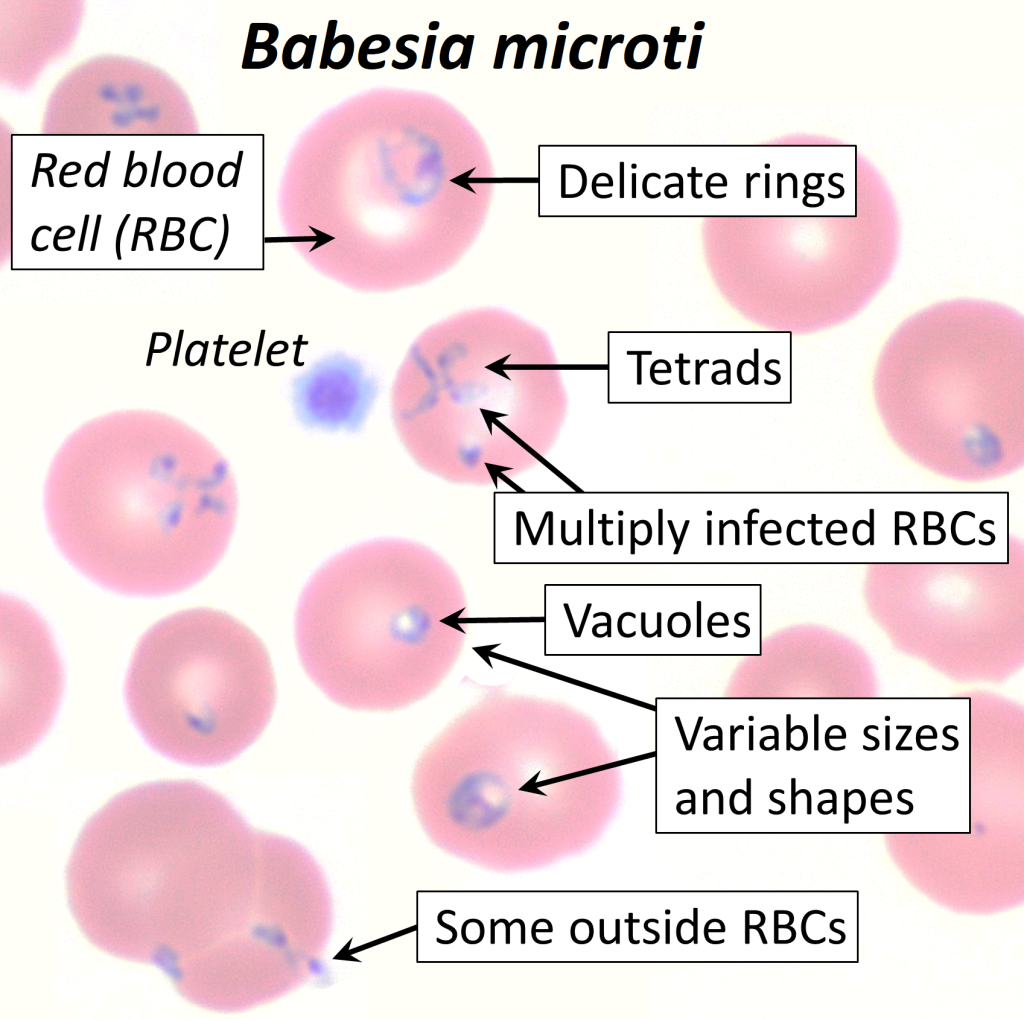
- Babesiosis is a tick-borne disease caused by protozoan parasites of the genus Babesia, belonging to phylum Apicomplexa.
- The parasites invade and multiply inside the red blood cells (erythrocytes) of the host.
- It is prevalent in tropical, subtropical, and temperate zones where tick vectors thrive.
- Transmission
- Primary transmission occurs through bites of infected hard-bodied ticks such as Rhipicephalus, Ixodes, Dermacentor, and Haemaphysalis.
- Infected female ticks can pass the parasite to their eggs through transovarial spread.
- It can also spread through contaminated blood transfusions and poses a zoonotic risk to humans.
- Symptoms
- Key symptoms include high fever, weakness, respiratory distress, and progressive anaemia.
- Severe cases cause intravascular hemolysis (rupture of red blood cells) and hemoglobinuria (dark urine).
- Treatment
- Common treatments include imidocarb dipropionate and diminazene aceturate to clear bloodstream infections.
- Acaricides are used to control tick populations and reduce animal infestations.
Nammazhvar (Nammalvar)
Brief Overview
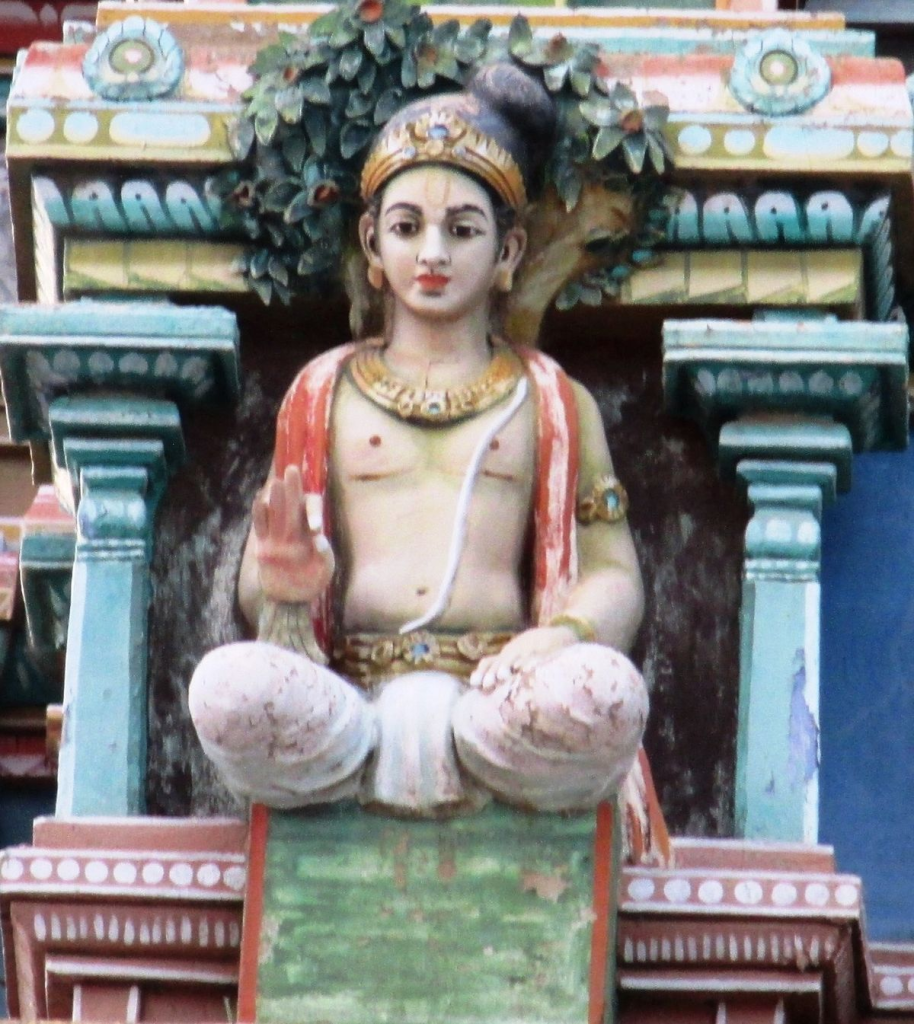
- Nammazhvar was an 8th-century South Indian poet-saint and the most important among the twelve Azhvars (Alvars).
- Azhvars were Vaishnavite singer-poets who popularised the Bhakti (devotional) path through Tamil vernacular compositions.
- He was born into a low Shudra caste, making him a significant figure in the democratisation of Bhakti.
Literary Contributions
- He composed four compilations of hymns believed to contain the essence of the four Vedas.
- His hymns were compiled into the Tiruvaymoli, also known as the “Tamil Veda.”
- Tiruvaymoli presents Bhakti as both passive surrender to God and active cultivation of devotional emotions.
Significance
- His works were written in Tamil vernacular, making Vedic knowledge accessible to the common masses.
- He is considered the most prolific among the Azhvars in terms of devotional output and spiritual depth.
Balance of Payments (BoP)
Context
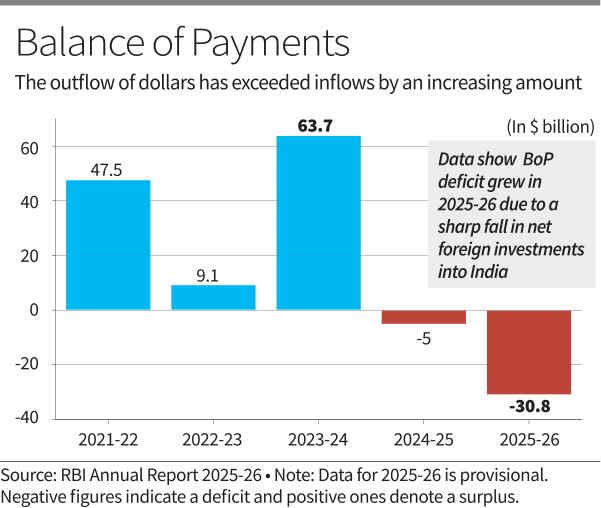
- RBI’s annual report revealed India’s Balance of Payments stood at a deficit of $30.8 billion in 2025-26, a more than six-fold increase over the previous year.
- India’s BoP had been a surplus as recently as 2023-24, making this deficit a significant reversal.
More in News
- The BoP deficit was entirely financed using RBI’s foreign exchange reserves, denting them significantly.
- India’s Current Account Deficit (CAD) reached a three-year high of $30.2 billion in 2025-26.
- The merchandise trade deficit stood at $251.6 billion, while the invisibles surplus (including services) fell to $221.4 billion.
- The capital account surplus collapsed to just $72 million, down over 99.5% from $16.6 billion in 2024-25.
- Foreign Portfolio Investors (FPIs) pulled out $4.3 billion more than they invested in 2025-26.
About BoP
- BoP records all economic transactions between a country’s residents and non-residents over a year.
- It covers goods, services, income, transfers, foreign investments, and loans.
Components of BoP
- Current Account:
- Records the flow of goods, services, and investments into and out of a country.
- Key components include Balance of Trade, net services, net factor income, and net cash transfers.
- Balance of Trade (BoT) is generally the biggest factor in determining a Current Account Deficit or Surplus.
- A positive current account means the country is a net lender; a negative one means it is a net borrower.
- Capital Account:
- Records international sales and purchases of assets such as stocks, bonds, and money.
- It includes FDI, portfolio investments, external borrowings, loans, and assistance.
- A capital account deficit means more money is leaving the economy.
- Errors and Omissions:
- When BoP does not balance, the difference is recorded as Errors and Omissions.
MSCI Index

About MSCI
- MSCI is a financial services firm owned by Morgan Stanley, providing investment decision support tools globally.
- Its offerings include stock indexes, portfolio risk analytics, and governance tools for institutional investors and hedge funds.
- The firm maintains a portfolio of over 160,000 indices spanning diverse market categories.
- Its index categories include developed markets, emerging markets, small cap, all cap, and Islamic indexes.
Stock Selection Criteria
- Stocks selected for MSCI equity indexes must demonstrate high liquidity and ease of trading.
- Companies with a higher free float receive greater weightage within the index.
- Stocks with active investor participation and no owner restrictions are preferred.
MSCI India Index
- The MSCI India Index tracks the performance of large and mid-cap companies in the Indian equity market.
- Its 113 constituent companies together represent approximately 85% of India’s total equity universe.
- The composition of the index undergoes a quarterly review.
Guatemala
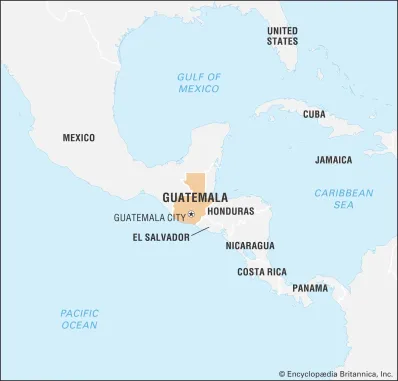
Location and Borders
- Guatemala is a country located in Central America.
- It is bounded by the Pacific Ocean to the south and the Gulf of Honduras to the northeast.
- It shares land borders with Belize, El Salvador, Honduras, and Mexico.
Geography
- Guatemala has four main geographic regions: volcanic highlands, Pacific coastal plain, mountain ranges (sierras), and Petén lowlands.
- It has about 27 volcanoes; active ones include Fuego, Pacaya, and Santiaguito.
- The highest peak is Volcán Tajumulco at 4,220 metres.
- Major rivers flowing through the country are the Motagua and Usumacinta.
- Coastal areas have a tropical climate while highland areas have a temperate climate.
Data Point National Family Health Survey 6 (NFHS-6)
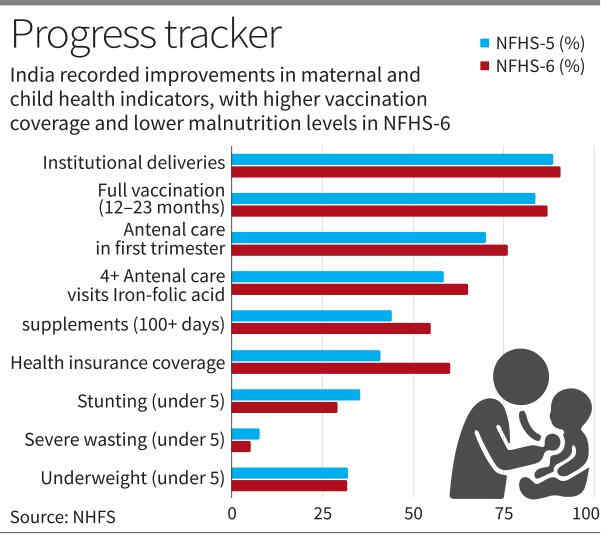
- The Health Ministry released NFHS-6 data, based on fieldwork conducted in 2023 and 2024.
- Maternal and Child Health:
- Institutional deliveries rose from 88.6% to 90.6% compared to NFHS-5.
- Caesarean section deliveries increased sharply from 21.5% to 27.2%; urban areas recorded 40%, far above the WHO threshold of 10% to 15%.
- Stunting among children under five declined from 35.5% to 29.3%.
- Severe wasting dropped from 7.7% to 5.2% among children under five.
- Underweight children declined marginally from 32.1% to 31.8%.
- Maternal Health:
- Antenatal care coverage reached 95.9%, with 76.2% receiving care in the first trimester.
- Mothers consuming iron-folic acid for 100-plus days rose from 44.1% to 54.9%.
- Vaccination:
- Full vaccination coverage among children aged 12 to 23 months rose from 83.8% to 87.1%.
- Rotavirus vaccination coverage rose substantially from 36.4% to 85.4%.
- 95.6% of children received vaccinations through public health facilities.
- Other Indicators:
- Total Fertility Rate (TFR) held steady at 2.0, just below the replacement threshold of 2.1.
- Contraceptive prevalence rate rose from 66.7% to 69.1%.
