

UPSC Prelims
2 Topics
Prelims Pinpointer
Prelims Pinpointer — August 14, 2026
Today’s high-yield Prelims facts — constitutional limits on arrest under Article 22, and the West Nile Virus outbreak in Greece
⚖️
Constitutional Limits on Arrest

News Context
- The Supreme Court reaffirmed that grounds of arrest must be communicated to the accused in a language they understand.
- The SC held that mere pro forma grounds or vague statements do not satisfy Article 22(1) requirements.
- The ruling strengthened constitutional protections against arbitrary arrest.
Constitutional Provisions on Arrest — Key Facts
- Article 22 provides specific constitutional protections against arrest and detention.
- Article 22(1): No person arrested shall be detained without being informed of the grounds of arrest.
- Article 22(1): Right to consult and be defended by a lawyer of their choice.
- Article 22(2): Every arrested person must be produced before the nearest magistrate within 24 hours of arrest.
- Article 21: Right to Life and Personal Liberty — any arrest procedure must be fair, just and reasonable.
Procedural Safeguards Under Article 22 — Key Facts
- Three key rights under Article 22(1) and 22(2): right to be informed of grounds of arrest; right to legal counsel of choice; right to be produced before a magistrate within 24 hours.
- Failure to follow these safeguards makes detention unconstitutional and illegal.
- Article 22(3) exception: these rights do not apply to enemy aliens and persons under preventive detention laws.
Arrest vs Preventive Detention — Concepts for Prelims
| Feature | Arrest | Preventive Detention |
|---|---|---|
| Basis | Crime committed | Prevent future act |
| Article | Article 22(1) and 22(2) | Article 22(3)–(7) |
| Magistrate production | Within 24 hours | Not required |
| Maximum detention | Till bail or trial | 3 months (extendable) |
| Advisory Board | Not required | Required |
Court Guidelines on Arrest — Key Facts
- D.K. Basu vs State of West Bengal (1997): SC laid down detailed guidelines for arrest including visible identification, memo of arrest, and notification to relatives.
- Arnesh Kumar vs State of Bihar (2014): SC directed no automatic arrest under offences punishable below 7 years without proper assessment.
- Satender Kumar Antil vs CBI (2022): SC issued directions to minimise unnecessary arrests and ensure bail considerations.
Preventive Detention — Key Facts
- Articles 22(4) to 22(7) deal with preventive detention.
- A person under preventive detention must be informed of grounds (except against public interest).
- Must be reviewed by an Advisory Board within 3 months.
- Key preventive detention laws: NSA (National Security Act, 1980), COFEPOSA, UAPA, PSA (J&K).
Exam trap: Article 22(3)’s exceptions (enemy aliens, preventive detainees) apply only to the ordinary-arrest safeguards of Article 22(1)–(2) — preventive detainees still get their own, separate set of safeguards under Articles 22(4)–(7).
Source: The Hindu
🦟
West Nile Virus
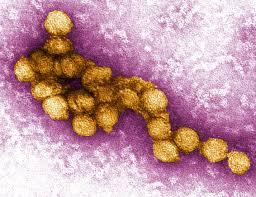
West Nile Virus Outbreak — News Context
- Greece reported a significant increase in West Nile Virus (WNV) infections, with 110 total cases and 9 deaths.
- Authorities stepped up fumigation in Athens to control mosquito populations.
West Nile Virus — Key Facts for Prelims
- WNV is caused by a single-stranded RNA virus belonging to the Flaviviridae family, flavivirus genus.
- First isolated in a woman in the West Nile district of Uganda in 1937.
- Identified in birds in the Nile Delta region in 1953 (WHO).
- Commonly found in Africa, Europe, Middle East, North America, and West Asia.
- Birds serve as reservoir hosts of WNV. Principal vector: mosquitoes of the genus Culex.
WNV Transmission — Key Facts
- Mosquitoes become infected by feeding on infected birds and then transmit the virus to humans.
- May also spread through contact with infected animals’ blood or other tissues.
- Rare transmission: organ transplant, blood transfusions, and transplacental transmission.
- No human-to-human transmission through casual contact documented.
WNV Symptoms and Treatment — Key Facts
- 80% of cases are asymptomatic.
- Symptoms: fever, headache, tiredness, body aches, nausea, vomiting, and skin rash.
- Severe cases: neurological symptoms including neck stiffness, stupor, coma, tremors, paralysis.
- No vaccine available for humans. Treatment: supportive care including hospitalisation, intravenous fluids, and respiratory support.
Source: WHO
