
Ken–Betwa River Linking Project
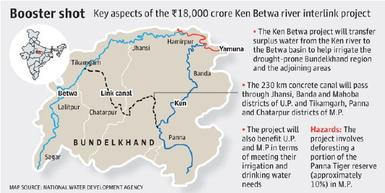
Project Overview
- Ken–Betwa Link Project is part of India’s National River Linking Project (NRLP).
- It aims to divert surplus Ken basin water to water-deficit Betwa basin.
- Project targets completion by 2030.
- Covers Madhya Pradesh and Uttar Pradesh, focusing on drought-prone Bundelkhand region.
Key Components
- Phase I
- Construction of Daudhan Dam (77 m high) inside Panna Tiger Reserve.
- Designed for irrigation and hydropower generation.
- Includes 221-km Ken–Betwa Link Canal for water transfer.
- Phase II
- Development of Lower Orr Dam, Bina Complex, and Kotha Barrage.
- Intended to address water scarcity in the Betwa basin.
Significance of the Project
- Promotes economic growth through agro-industries and tourism expansion.
- Balances flood and drought management via water redistribution.
- Generates 103 MW hydropower and 27 MW solar energy.
- Provides drinking water to 62 lakh people.
- Irrigates 10.62 lakh hectares in Bundelkhand, reducing monsoon dependence.
National River Linking Project
- Background
- River interlinking first proposed by Sir Arthur Cotton (1850s).
- Revived by K.L. Rao in 1972.
- Institutionalised under National Perspective Plan (1980s).
- NWDA (1982) created for feasibility studies.
- Proposed NIRA (2021) as apex implementation body.
- Objectives of NRLP
- Transfer water from surplus to deficit regions.
- Potential irrigation of 30 million hectares.
- Power generation capacity of 20,000–25,000 MW.
- Aims to reduce floods, droughts, and boost rural income.
Key Challenges
- Environmental
- Submergence of 98 sq. km. Panna Tiger Reserve habitat.
- Threat to tigers, gharials, and biodiversity.
- Deforestation and possible rainfall deficits.
- Economic
- High cost: ₹44,605 crore.
- Heavy maintenance burden.
- Social
- Large-scale displacement and rehabilitation issues.
- Livelihood and social disruption.
- Technical
- Uncertain water availability in non-perennial rivers.
- Water quality and sustainability concerns.
B-READY Assessment (Business Ready Assessment)
Context
- India’s inclusion in Business Ready (B-READY) 2026 assessment highlighted.
- Renewed focus on India’s business reform trajectory.
What is B-READY?
- Business Ready (B-READY) is a global benchmarking assessment.
- Evaluates business and investment climate across economies.
- Replaces the earlier Doing Business Report (DBR).
- Uses a more transparent, comprehensive, modern methodology.
Launch & Background
- Doing Business Report discontinued in 2020.
- B-READY launched in 2024 by World Bank.
Organisation Involved
- Developed and administered by World Bank Group (WBG).
- Data collected via:
- Expert consultations.
- World Bank Enterprise Surveys (WBES).
Aim of B-READY
- Provide quantitative, evidence-based business environment assessment.
- Evaluate regulatory and service support to private sector development.
- Promote inclusive, sustainable, digitally enabled growth.
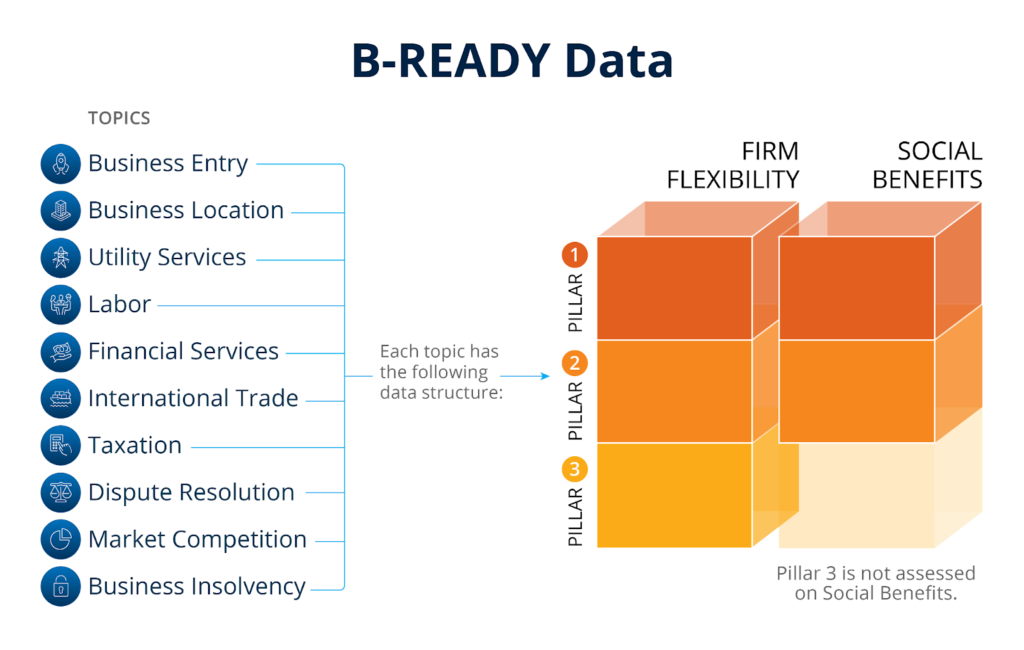
Three Pillars of B-READY
- Pillar I – Regulatory Framework
- Assesses rules governing business entry, operation, closure.
- Focus on statutory laws (de jure framework).
- Pillar II – Public Services
- Evaluates government infrastructure and institutional support.
- Covers digital systems, licensing bodies, dispute resolution institutions.
- Pillar III – Operational Efficiency
- Measures real-world compliance and implementation (de facto).
- Uses firm-level experience surveys.
Key Features of B-READY
- Lifecycle-Based Assessment
- Covers ten business topics.
- Spans entry, expansion, operation, and exit stages.
- Three-Pillar Evaluation Structure
- Integrates laws, services, and implementation realities.
- Combines de jure + de facto assessments.
- Cross-Cutting Themes Integration
- Embeds:
- Digital adoption.
- Environmental sustainability.
- Gender inclusion.
- Embeds:
- Dual Data Collection Method
- Expert inputs assess regulatory design.
- Enterprise surveys capture ground realities.
- Annual Global Benchmarking
- Published annually by World Bank Group.
- Features improved transparency and wider institutional coverage.
India–UK Social Security Agreement (SSA) for Temporary Employees
Context
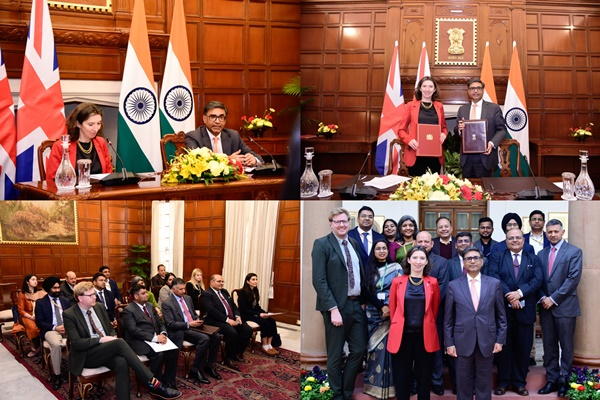
- India and United Kingdom signed a Social Security Agreement (SSA) to prevent double social security contributions.
What is the Agreement?
- A reciprocal Social Security Agreement between India and the UK.
- Also termed Double Contributions Convention (DCC).
- Eliminates dual social security payments in both countries.
- Covers temporary assignments up to 36 months.
- Employees continue contributing to home-country system only.
Aim of the Agreement
- Prevent simultaneous contributions in both countries.
- Facilitate short-term assignments in global service sectors.
- Covers IT, finance, consulting, engineering professionals.
- Reduce overseas deployment cost for firms.
- Linked to commitments under India–UK CETA (2025).
Key Features
- Coverage for Temporary Assignments
- Applicable for postings up to 36 months.
- Workers remain under home social security system.
- Certificate of Coverage (CoC) Mechanism
- CoC issued via Employees’ Provident Fund Organisation (EPFO).
- Certifies exemption from host-country contributions.
- Reciprocal Application
- Benefits both Indian employees in the UK.
- Also applies to UK employees working in India.
- Continuity of Social Security Records
- Prevents fragmentation of pension contributions.
- Ensures seamless benefit accumulation.
- Trade Agreement Linkage
- Implementation tied to India–UK Comprehensive Economic and Trade Agreement (CETA).
- Expected operationalisation in first half of the year.
Centre’s Guidelines on ‘Vande Mataram’
Context
- Union Government issued fresh guidelines on ‘Vande Mataram’ rendition.
- Coincides with 150th anniversary of the song’s creation.
- Mandates singing of all six stanzas at official functions.
What are the New Guidelines?
- Ministry of Home Affairs (MHA) notified official version.
- Requires complete rendition of original composition.
- Song authored by Bankim Chandra Chatterjee.
- Formalises performance protocol at government events.
Key Features of the Guidelines
- Official Version & Duration
- All six stanzas designated as official version.
- Prescribed duration: 3 minutes 10 seconds.
- Mandatory Union-Level Occasions
- Civil investiture ceremonies.
- Official state functions.
- Arrival and departure of the President of India.
- Before and after Presidential address broadcasts.
- Applicable on Akashwani and Doordarshan transmissions.
- State-Level Functions
- Played during official state ceremonies.
- On arrival/departure of Governors / Lieutenant Governors.
- Cultural & Flag-Hoisting Events
- Mandatory group singing at cultural programmes.
- Applicable during flag-hoisting ceremonies.
- Included in morning school assemblies.
- Protocols During Rendition
- Audience must stand in attention posture.
- Drumroll using mridang or trumpet precedes rendition.
- Marching drills require seven preparatory steps.
- Exception Clause
- Not mandatory in cinema halls.
- Exempt when part of films or newsreels.
Nawab Wajid Ali Shah
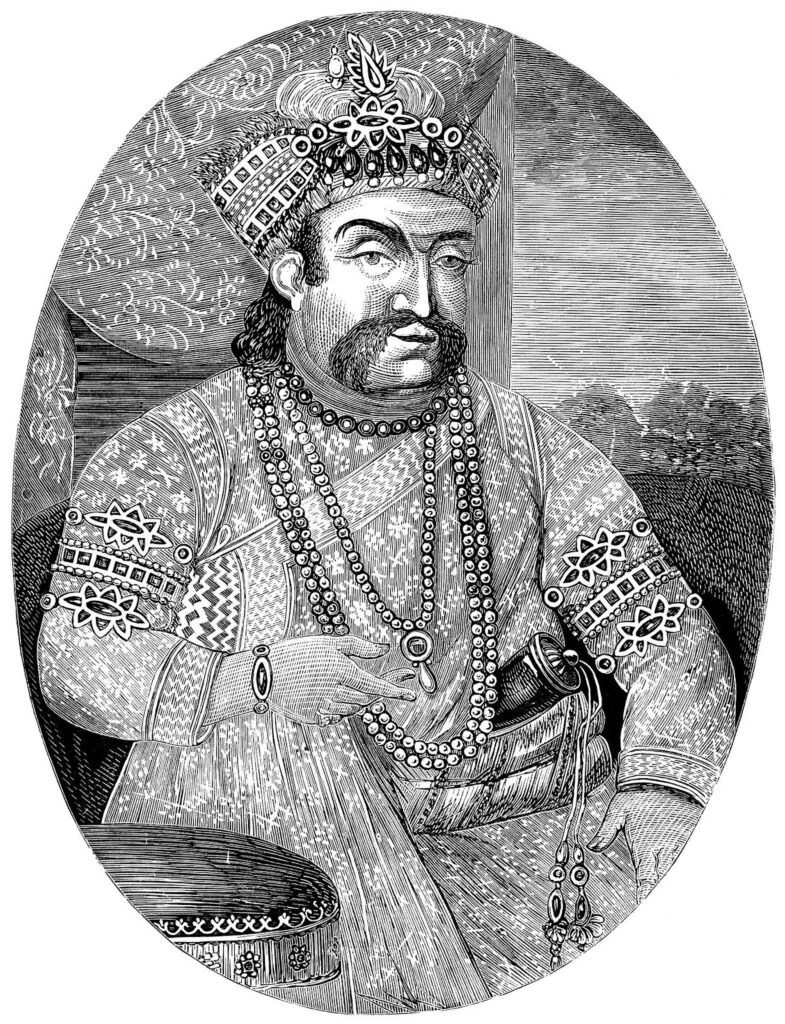
Context
- Recent biography reinterprets exile narrative and states he travelled to Calcutta voluntarily and intended to sail to London for petition submission. The departure was restricted and he stayed back.
About Wajid Ali Shah
- Nawab Wajid Ali Shah (1822–1887) ruled Awadh (Oudh).
- Succeeded father Nawab Amjad Ali Shah.
- Became the 10th and last Nawab.
- Ascended throne in 1847.
- Rule & Administration
- Known as kind, generous and compassionate ruler.
- Regarded as a capable administrator.
- Took active interest in state affairs.
- Ruled Awadh for nine years.
- Annexation of Awadh
- British annexed Awadh in 1856.
- Annexation justified on grounds of “misgovernance.”
- Deposition angered local population.
- Became major cause of Revolt of 1857.
- Cultural & Artistic Contributions
- Renowned patron of arts and culture.
- Multi-talented: poet, playwright, dancer.
- Composed poems, prose, ragas and ghazals.
- Wrote under pen name “Qaisar.”
- Authored Ishqnamah – Urdu autobiographical work.
- Credited with revival of Kathak dance form.
- Secular Outlook
- Known for inclusive and secular approach.
- Displayed deep interest in Hindu culture.
- Architectural Contributions
- Initiated construction of Qaiserbagh Palace Complex.
- Built between 1848–1850 in Lucknow.
- Associated Personalities
- Wife Begum Hazrat Mahal.
- Played key role in First War of Independence (1857–58).
