
Context: The Chairperson of the Joint Parliamentary Committee (JPC) examining the Bill on concurrent elections, emphasized that simultaneous polls are necessary from an economic standpoint to prevent wastage of manpower and avoid disruption of investment.
Meaning of Simultaneous Elections
- Simultaneous elections refer to synchronising Lok Sabha and State Assembly elections.
- Voting may still occur in phases, but electoral cycles remain aligned.
- From 1952 to 1967, Parliament and State Assemblies were elected together.
- Premature dissolutions later disrupted this synchronised electoral cycle.
- The Constitution (129th Amendment) Bill, 2024 seeks restoring this cycle.
- It proposes Article 82A and amendments to Articles 83 and 172.
Need for Simultaneous Elections
- Frequent elections prolong enforcement of the Model Code of Conduct, delaying governance.
- Policy reforms and procurement decisions face repeated administrative interruptions.
- Governments may prioritise populist spending over long-term fiscal discipline.
- Election cycles spread across five years increase fiscal pressures.
- Administrative machinery and security forces face repeated deployment burdens.
- Simultaneous elections may improve policy continuity and governance stability.
Challenges and Constitutional Concerns
- Managing elections for 96 crore voters presents enormous logistical complexity.
- Over one million polling stations require coordinated security and staffing.
- The 2024 elections used 1.7 million EVMs and 1.8 million VVPATs.
- Amendments to Articles 83, 85, 172, and 174 are constitutionally necessary.
- Article 356 implications raise concerns regarding federal balance.
- Regional parties fear marginalisation in nationalised electoral narratives.
Committee and Commission Recommendations
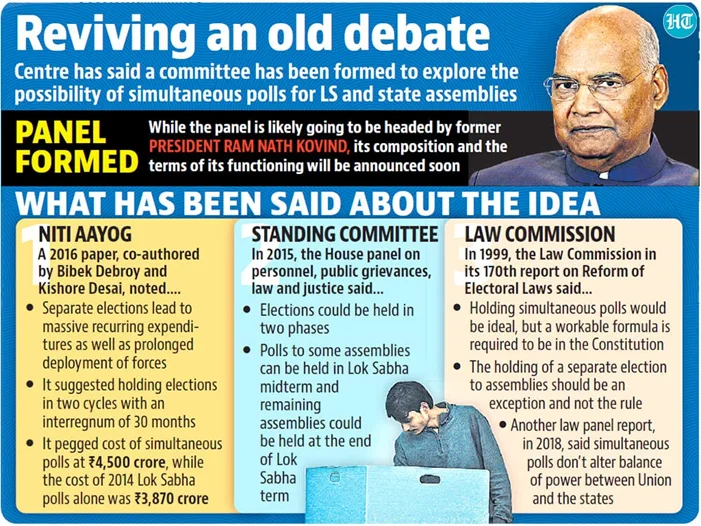
- The Election Commission (1983) first recommended synchronised Lok Sabha and Assembly polls.
- The Law Commission (1999) suggested phased implementation of simultaneous elections.
- The Parliamentary Standing Committee (2015) supported gradual synchronisation with consensus.
- The Draft Law Commission Report (2018) emphasised constitutional amendments.
- The High-Level Committee (2023) recommended restoring elections in two stages.
- It proposed a unified electoral roll and fixed “appointed date” mechanism.
Conclusion: Simultaneous elections promise administrative efficiency and fiscal prudence. However, federal balance and democratic accountability must remain protected. Phased implementation with political consensus is essential for success.