
Why in News: The Manipur High Court ordered the State to issue fresh academic certificates to Dr. Beoncy Laishram, a transgender woman, after her university refused corrections citing procedural hurdles
Introduction
- Recognition of gender identity is a matter of fundamental rights under Articles 14 and 21 of the Constitution.
- Despite clear judicial and legislative provisions, transgender persons continue to face bureaucratic hurdles in accessing their affirmed identity in official records.
- The recent Manipur High Court judgment in favour of Dr. Beoncy Laishram highlights this gap between law and practice.
Legal and Constitutional Provisions
- NALSA v. Union of India (2014): Recognised the right to self-identify gender; directed affirmative action for transpersons.
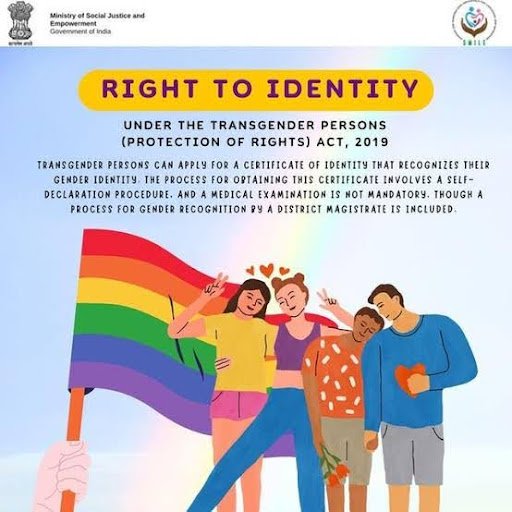
- Transgender Persons (Protection of Rights) Act, 2019: Mandates recognition of self-identified gender in official documents.
- Constitutional backing:
- Article 14 – Equality before law.
- Article 21 – Right to dignity, privacy, and autonomy.
Bureaucratic Hurdles
- Universities insist on sequential corrections from earliest certificates.
- Officials demand documentary proof over self-identification.
- Administrative inertia – action only when compelled by higher courts.
- Persistence of binary mindset rooted in birth-assigned gender.
- Results in a restrictive interpretation of procedure over the spirit of the law.
Consequences for Transpersons
- Routine entitlements turn into long-drawn legal battles.
- Disproportionate burden of time, resources, and emotional strain.
- Rights legally guaranteed become practically inaccessible.
- Sustains stigma and social exclusion in institutional setups.
- Reinforces systemic discrimination despite constitutional protections.
Way Forward
- Institutional reforms: Simplify correction processes, avoid cascading approvals.
- Sensitisation of bureaucracy: Training to recognise gender as lived reality.
- Cultural change: Move beyond binary understanding of gender.
- Enforcement mechanisms: Ensure compliance with 2019 Act.
- Judicial vigilance & precedent: Courts to continue reinforcing constitutional guarantees.
Conclusion
The struggle of transpersons like Dr. Laishram illustrates how bureaucratic hurdles dilute constitutional promises. Bridging the gap between legal recognition and lived experience requires a combination of judicial vigilance, administrative reform, and societal acceptance.
UPSC Relevance
GS Paper 2 – Polity & Governance
- Issues of Transgender Rights and Social Justice
GS Paper 1 – Society
- Gender and associated social issues
Mains Practice Questions
Q. “Procedural rigidity must not dilute constitutional guarantees.” In the context of transgender rights, critically examine the gap between legal recognition and bureaucratic implementation. (10 marks)