

Prelims
Anti Defection Law
Why in News: The Supreme Court has criticized the Telangana Assembly Speaker for delaying disqualification proceedings against 10 BRS MLAs who defected to the ruling Congress in 2024.

What is Defection?
Defection:
- When an elected representative switches party allegiance.
- Often leads to political instability and compromises governance.
Anti-Defection Law in India
- Introduced by 52nd Amendment Act, 1985; inserted Tenth Schedule.
- Purpose: Curb unprincipled defections, uphold political stability, and party discipline.
- Applicable to both Parliament and State Legislatures.
Grounds for Disqualification under Tenth Schedule
1. Voluntarily gives up party membership.
2. Votes/abstains against party directions (whip).
3. An independent MP joins a party post-election.
4. A nominated member joins party after 6 months.
Exceptions to Disqualification
- Merger: If 2/3rd of members merge with another party (after 91st Amendment, 2003).
- Split exception (1/3rd rule) abolished in 2003.
Role of the Speaker
- Acts as tribunal under Tenth Schedule.
- Decision subject to judicial review (as per Kihoto Hollohan case, 1992).
91st Amendment Act, 2003 – Key Provisions
- Limits Council of Ministers to 15% of House strength.
- Disqualified member can’t become minister or hold remunerative political post.
- Abolished protection for splits (1/3rd members).
Key Judicial Observations
- Kihoto Hollohan (1992): Speaker’s decision subject to judicial review.
- Ravi Naik (1994): Even conduct implying resignation from party leads to disqualification.
- G. Viswanathan (1995): Speaker’s decision binding, but now subject to review.
Global Perspective
- No anti-defection law in USA, UK, Canada, Australia, France, Germany.
- Defectors often face voter backlash, not legal penalties.
Criticisms of the Law
- Undermines intra-party democracy.
- Encourages party centralization.
- Delay in decisions leads to misuse.
- Speaker’s bias often questioned.
Suggested Reforms
- 2nd ARC: Transfer disqualification power to Election Commission.
- Time-bound decisions (e.g., 3 months limit by SC).
- Remove Speaker’s discretion; ensure independent adjudication.
- Allow mergers only with 2/3rd support.
- Provide grace periods for reconsideration in genuine cases.
Global Gas Flaring Emissions Surge – 2024
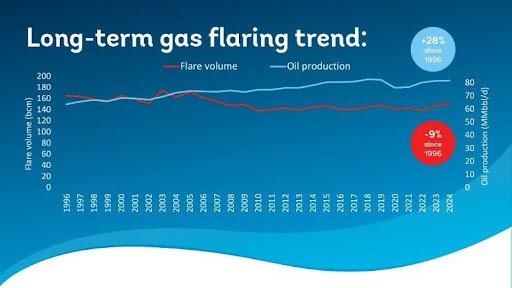
Why in News: As per the World Bank’s 2024 report, global gas flaring emissions reached 389 MtCO₂e, highest since 2007.
CONTEXT
- Unburnt methane alone contributed 46 MtCO₂e.
Gas flared: 151 billion cubic metres (bcm) — nearly equal to Africa’s annual gas consumption (162 bcm).
What is Gas Flaring
- Burning of natural gas during oil extraction, usually when it can’t be captured, processed, or transported.
- Emits CO₂ and methane—potent greenhouse gases.
Methane: High Global Warming Potential (GWP) — >80x more potent than CO₂ over 20 years.
Global Trends (2024)
Top 9 countries: Accounted for 76% of global flaring.
- Russia, Iran, Iraq, USA, Venezuela, Algeria, Libya, Mexico, Nigeria
Biggest increases: Iran, Nigeria, USA, Iraq, Russia (combined: +4.6 bcm).
Nigeria: +12% flaring rise; +8% flaring intensity, despite only +3% oil production.
Nigeria’s Flaring Crisis
- 60% flaring: By national oil company and small firms.
- 75% of volume increase: From operators lacking funds and expertise.
- Second year of increase, indicating systemic management issues.
Zero Routine Flaring (ZRF) by 2030 Initiative
- Launched by World Bank & UN in 2015.
- Target: End routine flaring by 2030.
- Progressing nations: Brazil, Colombia, Egypt, Indonesia, Kazakhstan.
- Improvements in 2024: Algeria, Libya (due to shutdowns).
- Yet, overall flaring rose globally.
Urgency of the Issue
- To meet 2030 ZRF goal: Annual reductions need to be ~40%/year.
- Calls for policy acceleration, tech adoption, and strict monitoring.
- Global Gas Flaring Tracker: Key tool for tracking and accountability.
India’s Fourth Female Grandmaster
Why in News: 19-year-old Divya Deshmukh became India’s fourth female Grandmaster by winning the FIDE Women’s World Cup 2025, defeating Koneru Humpy in the final.
- She joins Koneru Humpy, Dronavalli Harika, and R. Vaishali in this elite group.
What is a Grandmaster (GM)?
- Highest title in chess, awarded by FIDE (Fédération Internationale des Échecs) — the global chess federation headquartered in Switzerland.
- Once awarded, the GM title is held for life.
Eligibility Criteria for GM Title
Traditional Route:
- Secure 3 GM norms (performance benchmarks in tournaments) across at least 27 games.
- Achieve a FIDE rating of 2500 at any point.
Shortcut Route:
Win or rank highly in prestigious events such as:
- Women’s World Cup
- World Cup
- Junior World Championship (U20)
- Continental Championships
- Arab Individual Championship

What is a GM Norm?
- Achieved by scoring high performance (TPR ≥ 2500) in a 9+ round tournament.
Must compete against a field that includes:
- Titled players, including Grandmasters,
- Players from at least 3 different federations.
Other FIDE Chess Titles
International Master (IM): 3 IM norms + rating ≥ 2400
FIDE Master (FM): Rating ≥ 2300
Candidate Master (CM): Rating ≥ 2200
NASA-ISRO Synthetic Aperture Radar (NISAR) Satellite
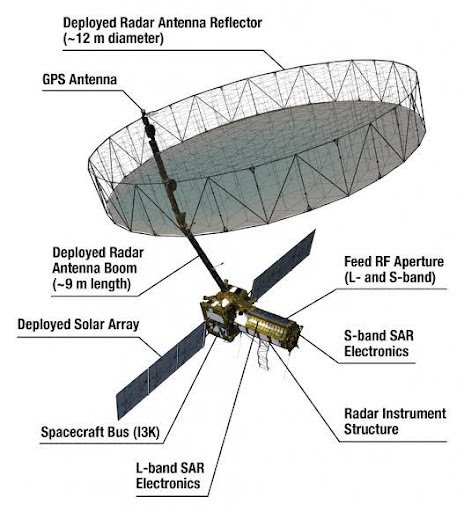
Why in News: NISAR Satellite launched from Satish Dhawan Space Centre, Sriharikota. Marks first dual-frequency radar imaging mission & major milestone in Indo-US space collaboration.
Key Facts:
- Full Form: NASA-ISRO Synthetic Aperture Radar (NISAR).
- Type: Earth Observation Satellite (EOS).
- Launch Vehicle: GSLV-F16 (Geosynchronous Satellite Launch Vehicle).
- Weight: 2,392 kg.
- Orbit: Sun Synchronous Polar Orbit (SSO) – First time GSLV used for SSO.
- Orbit Period: 12-day global revisit; orbits Earth every 97 minutes.
- Mission Life: Minimum 5 years.
- Open-Data Policy: Freely available to global scientific community, including developing nations.
Radar Technology:
Dual-band SAR:
- L-band by NASA
- S-band by ISRO
SAR (Synthetic Aperture Radar): Sends radar pulses to Earth, records reflections to create high-res images.
SweepSAR technique: Allows wide-swath, high-resolution imaging.
About the Orbits:
Sun-Synchronous Orbit (SSO):
- A type of polar orbit.
- Satellite stays in same solar time position every day.
- Useful for consistent lighting in imaging.
Polar Orbit:
- Type of Low Earth Orbit (LEO).
- Altitude: Typically 200–1000 km.
- Satellites move from pole to pole, covering entire Earth surface.
