

PRELIMS
Jan Vishwas (Amendment of Provisions) Bill, 2025
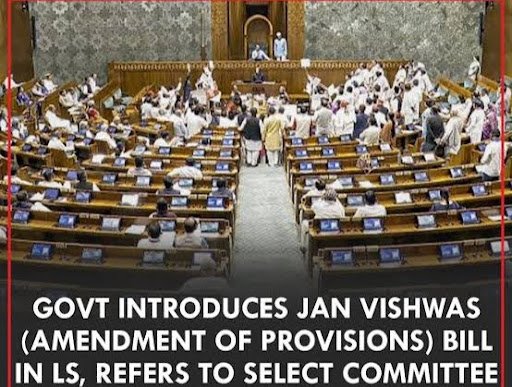
Why in News: Introduced in Lok Sabha to amend 355 provisions across 16 Central Acts. Aims to promote ease of living and ease of doing business by reducing regulatory burden.
Key Points
- Builds on Jan Vishwas Act, 2023 (which decriminalised 183 provisions in 42 Acts).
- Decriminalises 288 minor offences → replaces imprisonment with warnings or monetary penalties.
- Proportionate penalties:
- First-time contravention → advisory/warning (76 offences under 10 Acts).
- Escalating penalties for repeat violations.
- Monetary fines to increase 10% every 3 years.
- Covers laws like Motor Vehicles Act, 1988 & New Delhi Municipal Council Act, 1994.
- Seeks to reduce judicial burden through compounding, adjudication, administrative settlement.
- Supports trust-based governance → “Minimum Government, Maximum Governance”.
- Referred to Select Committee for scrutiny; report due next session.
Significance
- Enhances business confidence and modernises regulatory frameworks.
- Promotes ease of living through technology-enabled compliance and reduced fear of imprisonment.
- Part of reforms in Amritkaal, fostering trust between citizens and government.
Genetic Link to Tuberculosis in Sahariya Tribe
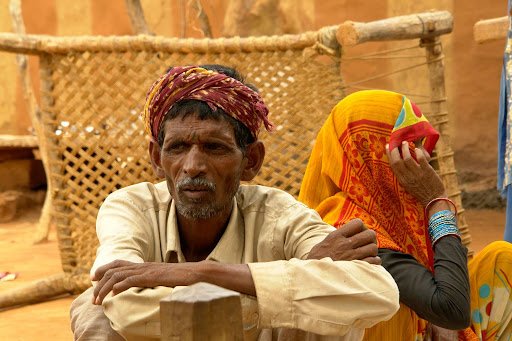
Why in News: Recent research identified a genetic basis for the high TB incidence among the Sahariya tribe, a Particularly Vulnerable Tribal Group (PVTG).
About Sahariya Tribe
- Mainly found in Madhya Pradesh, Rajasthan, and Uttar Pradesh.
- Population ~6 lakh; live in remote forest areas.
- Houses made of stone/mud; speak local dialects; practice traditional ethnic religions with Hindu influence.
- Known for Saharia Swang dance during Holi.
- Livelihood: forest produce, small-scale farming, labour, seasonal migration.
High TB Incidence
- TB rate: 1,518–3,294 cases per 100,000, far above national average.
- Factors: poor nutrition, limited healthcare, environmental conditions + genetic susceptibility.
Genetic Study
- Conducted by BHU and collaborators.
- Analysed mitochondrial DNA of 729 individuals (140 Sahariyas + 589 neighbouring groups).
- Focus: maternal haplogroups (maternal ancestry).
Findings
- Sahariyas carry rare haplogroups N5 and X2 (absent in nearby groups).
- Likely introduced via gene flow from western India during the early Iron Age.
- Founder effect concentrated these lineages → possible link to higher TB susceptibility.
Implications
- First study linking genetic structure with TB susceptibility.
- Highlights interaction of genetics, malnutrition, poor healthcare in tribal health outcomes.
- Can inform targeted TB control strategies in vulnerable tribal groups.
Future Research
- Explore mitochondrial function in disease susceptibility.
- Study gene–environment interactions for better healthcare delivery in tribal/marginalised communities.
State Health Regulatory Excellence Index (SHRESTH)
Why in News: Recently launched by the Union Health Ministry to strengthen the drug regulatory system across states and UTs.
About SHRESTH
- First-of-its-kind national initiative to evaluate and improve state drug regulatory authorities.
- Virtual gap assessment tool → helps states assess current position and move towards maturity certification.
- Proposed by: Central Drugs Standard Control Organization (CDSCO).
Objectives
- Ensure safety, quality, and effectiveness of medicines.
- Strengthen state-level regulatory systems in India’s complex pharma sector.
- Improve human resources, infrastructure, licensing, digitisation, and surveillance.
Categories of Ranking
1. Manufacturing States.
2. Primary Distribution States/UTs.
Themes (for Manufacturing States)
- Human Resources.
- Infrastructure.
- Licensing Activities.
- Surveillance Activities.
- Responsiveness.
- Ranking Methodology
27 indices for Manufacturing States.
23 indices for Distribution States/UTs.
Significance
- Strengthens state drug regulatory authorities.
- Safeguards drug quality, safety, and patient wellbeing.
- Provides a roadmap for states → regulatory maturity & harmonisation.
Other Upcoming Initiatives
- Capacity-building workshops & seminars.
- NSQ Dashboard for monitoring Not of Standard Quality drugs.
- Symposium on Drug Regulatory Systems.
- Expansion of joint trainings and audits across states.
CDSCO
- National Regulatory Authority (NRA) under DGHS, Ministry of Health & Family Welfare.
- Ensures safety, rights, and wellbeing of patients by regulating drugs and cosmetics under relevant Acts & Rules.
Saltwater Crocodile Population
Why in News: A 2025 survey by the West Bengal Forest Department reported a substantial increase in the saltwater crocodile population in the Sundarban Biosphere Reserve (SBR).
Key Findings (2025 vs 2024)
- Estimated population (2025): 220–242 (213 direct sightings).
- Last year (2024): 204–234.
Demographic details (2025):
- 125 adults.
- 88 juveniles.
- 23 hatchlings (significant rise, only 2 hatchlings in 2024).
Encounter rate: ~1 crocodile per 5.5 km stretch (0.18/km).
Survey methods: Systematic surveys, GPS mapping, habitat characterisation.
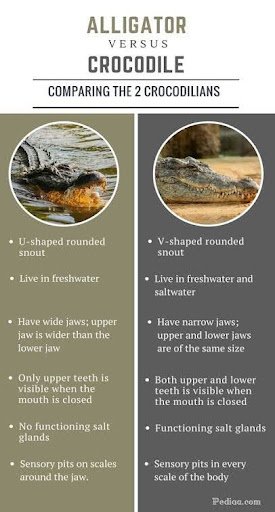
About Saltwater Crocodile (Crocodylus porosus)
- Largest living reptile in the world; “hypercarnivorous apex predator”.
- Role: Maintains water ecosystem health by feeding on carcasses.
Distribution in India:
- Mangroves, rivers, swamplands of Odisha and West Bengal.
- Coastal areas of Andaman & Nicobar Islands.
Conservation Efforts
- Bhagabatpur Crocodile Project (1976, South 24 Parganas) – major breeding & conservation facility.
- Successive governments have strengthened protection measures in Sundarbans.
Crocodiles in India
General Facts
- Largest surviving species of Reptilia.
- Habitat: Mostly freshwater swamps, lakes, rivers (except one saltwater species).
- Behaviour: Nocturnal and poikilothermic (limited ability to regulate body temperature).
- Major threats: Habitat loss, egg predation, poaching, dam construction, sand mining.
Species in India
1. Estuarine / Saltwater Crocodile (Crocodylus porosus)
- Largest living reptile on Earth.
- Status: IUCN – Least Concern; WPA – Schedule I; CITES – Appendix I.
- Distribution: Bhitarkanika (Odisha), Sundarbans (West Bengal), Andaman & Nicobar Islands.
2. Mugger / Marsh Crocodile (Crocodylus palustris)
- Broad snout; makes burrows for nesting.
- Status: IUCN – Vulnerable; WPA – Schedule I; CITES – Appendix I.
- Distribution: Found in 15 Indian states, widely across Ganga river drainage.
3. Gharial (Gavialis gangeticus)
- Long narrow snout with a bulbous knob (ghara).
- Primarily fish-eating.
- Status: IUCN – Critically Endangered; WPA – Schedule I; CITES – Appendix I.
- Distribution: Freshwater rivers – Chambal, Girwa, Ghagra, Son, Gandak.
Chief Election Commissioner (CEC) – Removal Process
Why in News: Opposition parties are considering moving a motion for the removal of the Chief Election Commissioner (CEC).
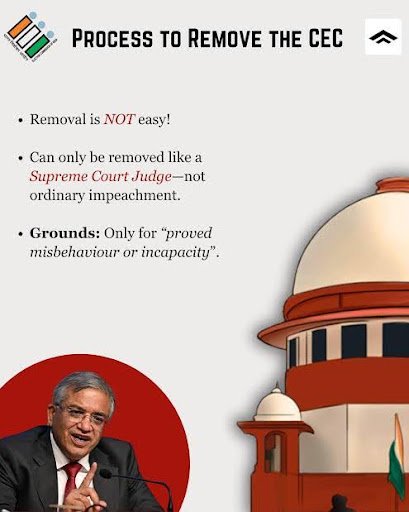
Constitutional Provision: Article 324(5)
Removal: CEC can be removed only in the same manner and on the same grounds as a Judge of the Supreme Court (Article 124(4)).
Grounds: Proven misbehaviour or incapacity.
Process:
1. Motion introduced in either House of Parliament.
2. Motion admitted → Committee enquires into validity of charges.
3. Motion must be passed by a special majority:
- Majority of the total membership of the House, and
- Majority of not less than two-thirds of members present and voting in both Houses.
4. President passes the final order of removal.
Independence safeguard:
- CEC enjoys protection similar to a SC Judge.
- Election Commissioners (ECs) cannot be removed in the same way; they can only be removed on the recommendation of the CEC.
