
Prelims pinpointer

Delimitation Exercise in India
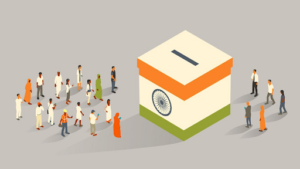
- Delimitation is the process of fixing or re-drawing boundaries of parliamentary and state legislative constituencies based on changes in population, to ensure equal representation.
- It is carried out by an independent Delimitation Commission (also called Boundary Commission).
Constitutional Basis
| Article | Provision |
| Article 82 | Parliament shall enact a Delimitation Act after every Census to readjust Lok Sabha constituencies |
| Article 170 | Provides for re-division of State Assembly constituencies after every Census |
| Delimitation Act | Gives absolute legal authority to the Commission; its orders cannot be challenged in any court |
- Once Commission’s orders are laid before Parliament or State Assemblies, they cannot be modified.
Composition of Delimitation Commission
| Post | Member |
| Chairperson | Retired Supreme Court Judge |
| Ex-officio Member | Chief Election Commissioner of India |
| Members | State Election Commissioners of concerned states |
- Appointed by the President of India and works in coordination with the Election Commission of India (ECI).
Historical Timeline
- First Delimitation Commission (1953)
-
- Based on 1951 Census.
- Headed by Justice N. Chandrasekhara Aiyar.
- Lok Sabha seats fixed at 494.
- Second Delimitation Commission (1963)
- Based on 1961 Census.
- Lok Sabha seats increased to 522.
- Third Delimitation Commission (1973)
- Based on 1971 Census.
- Headed by Justice J. L. Kapur.
- Lok Sabha seats increased from 522 to 543.
- State Assembly seats increased from 3,771 to 3,997.
- Freeze Period (Post-1971 Census)
- No delimitation exercise after 1981 and 1991 Censuses.
- 42nd Constitutional Amendment Act, 1976 froze delimitation of constituencies till the 2001 Census.
- 84th Constitutional Amendment Act, 2002 froze increase in seats in Parliament and Assemblies till 2026.
- Fourth Delimitation Commission (2002)
- Based on 2001 Census.
- Headed by Justice Kuldip Singh.
- Only constituency boundaries were redrawn.
- No increase in Lok Sabha or Assembly seats due to 84th Constitutional Amendment.
Arbitration and Conciliation Act, 1996

Nature and Purpose
- Provides a comprehensive legal framework for arbitration, conciliation and mediation in India.
- Enables faster, cheaper, and non-adversarial dispute resolution compared to regular courts.
- Based on the UNCITRAL Model Law, making it suitable for international commercial arbitration.
Key Features
- Establishes a two-track ADR system covering arbitration and conciliation procedures.
- Allows party autonomy in selecting arbitrators and procedural rules.
- Mandates confidentiality of arbitral and conciliation proceedings.
- Arbitral awards are final, binding, and legally enforceable by courts.
- Courts can intervene only for appointment, interim relief, and enforcement.
- Aligns Indian arbitration law with global arbitration standards.
Major Provisions
- Arbitration agreement must be a written commitment to resolve disputes through arbitration.
- Arbitrators are appointed by parties, or by courts if parties fail to agree.
- Courts may grant interim measures before or during arbitral proceedings.
- Parties may decide procedures or adopt institutional arbitration rules.
- Arbitral award must be written, signed, dated, and reasoned, unless waived by parties.
- Awards can be set aside only for reasons like incapacity or invalid agreement.
- Appeals are allowed on limited statutory grounds, ensuring finality of awards.
Major Amendments
- Arbitration and Conciliation (Amendment) Act, 2015
-
- Introduced a 12-month time limit for completion of arbitral proceedings.
- Reduced judicial interference to strengthen arbitration finality.
- Introduced cost regulation to make arbitration affordable.
- Arbitration and Conciliation (Amendment) Act, 2019
-
- Established the Arbitration Council of India (ACI).
- Made disclosure of conflict of interest by arbitrators mandatory.
- Restricted automatic stay of arbitral awards.
- Arbitration and Conciliation (Amendment) Act, 2021
-
- Removed automatic stay on arbitral awards in cases of fraud or corruption.
- Strengthened pro-enforcement orientation of arbitration in India.
Arbitration Council of India (ACI)
- ACI is an autonomous statutory body created under the 2019 Amendment Act.
- Responsible for grading arbitral institutions and accrediting arbitrators.
- Promotes institutional arbitration and professional standards in India.
- Chairperson is a former Supreme Court or High Court judge or arbitration expert.
- Appointed by the Central Government in consultation with the Chief Justice of India.
PANKHUDI Portal
What it is?
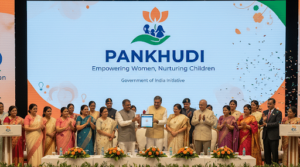
- PANKHUDI is an integrated digital platform launched by the Ministry of Women and Child Development (WCD).
- It strengthens corporate partnerships, voluntary contributions and stakeholder engagement for women and child welfare.
Platform design
- It operates as a single-window centralised portal for individuals, NRIs, NGOs, CSR entities, corporates and government agencies.
- It enables participation, collaboration and contribution to women- and child-centric development programmes.
Thematic coverage
- The portal covers nutrition, health, Early Childhood Care and Education (ECCE), child protection and rehabilitation, and women’s safety and empowerment.
Mission integration
- It supports and tracks flagship schemes such as:
- Mission Saksham Anganwadi & Poshan 2.0
- Mission Vatsalya
- Mission Shakti
Operational features
- Contributors can register, select projects, submit proposals and track progress through defined digital workflows.
- All contributions are non-cash, traceable and transparent, ensuring financial accountability and real-time monitoring.
Orinoco Belt & Guiana Shield
Orinoco Belt (Venezuela)
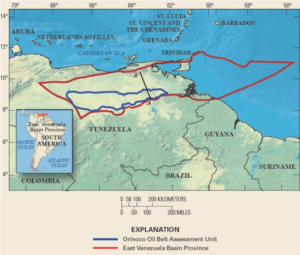
- The Orinoco Belt (Faja Petrolífera del Orinoco) holds the world’s largest extra-heavy crude reserves, about 20% of global proven heavy/extra-heavy oil.
- It lies in the southern Orinoco River basin, spanning Guárico, Anzoátegui, Monagas, Delta Amacuro and northern Bolívar.
- The belt is divided into four production blocks — Boyacá, Junín, Ayacucho and Carabobo.
- Its extra-heavy crude has low API gravity (asphalt-like) and needs blending with diluents to move through pipelines.
- Strategic value stems from energy security, OPEC leverage and geopolitical competition over Venezuela’s hydrocarbons.
Guiana Shield (Northeast South America)
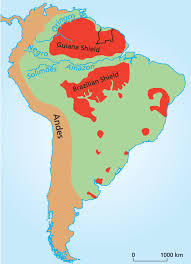
- The Guiana Shield is a 1.7–2-billion-year-old Precambrian craton, among the oldest stable geological formations on Earth.
- It underlies Guyana, Suriname, French Guiana, southern Venezuela, NE Brazil (Roraima, Pará, Amapá) and S.E. Colombia (Guainía, Vaupés).
- The Guiana Highlands host tepuis (table-top mountains) including Mount Roraima, Pico da Neblina (2,995 m) and Angel Falls (Auyán-tepui).
- It contains ~20% of global freshwater and ~18% of tropical-forest carbon, earning the tag “greenhouse of the world.”
- The shield is mineral-rich in gold, diamonds, bauxite and iron ore, driving both development and environmental pressures.
PSLV-C62 Mission
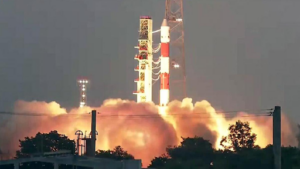
Mission Overview
- PSLV-C62 is a multi-payload ISRO mission carrying one primary and eighteen secondary satellites.
- It is ISRO’s first space launch of 2026, scheduled from Sriharikota launch centre.
Primary Payload – EOS-N1 (Anvesha)
- EOS-N1 (Anvesha) is an Earth-observation hyperspectral imaging satellite developed mainly for DRDO.
- Hyperspectral imaging allows material and object identification using hundreds of spectral wavelengths.
- Provides high-precision data for border surveillance, strategic monitoring and national security.
- Also supports civilian uses such as agriculture planning, urban mapping, mineral detection and environment monitoring.
European Payload – Kestrel Initial Demonstrator (KID)
- KID is a small experimental re-entry capsule developed with a Spanish startup.
- The capsule will re-enter Earth’s atmosphere and splash down in the South Pacific Ocean.
Commercial and Academic Payloads
- Seventeen commercial payloads from India, Mauritius, Luxembourg, UAE, Singapore, Europe and the United States are onboard.
- Indian payloads include AayulSAT, CGUSAT-1, DA-1, SR-2, Lachit-1, Solaras-S4 and DSAT-1.
Aralam Butterfly Sanctuary
Location and Extent
- Aralam Butterfly Sanctuary is located in Kerala.
- It shares boundaries with Brahmagiri Wildlife Sanctuary (Karnataka), Kottiyoor Wildlife Sanctuary, and North Wayanad Forest Division.
Physical and Ecological Setting
- The sanctuary consists mainly of evergreen and semi-evergreen forests.
- Cheenkanni River, originating from the Brahmagiri ranges, flows through its dense forest landscape.
Butterfly Diversity
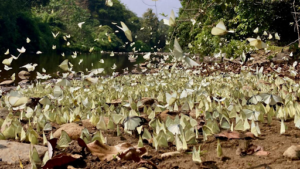
- The sanctuary supports over 266 butterfly species, forming more than 80% of Kerala’s butterfly diversity.
- Several species are endemic and endangered, making the area a major butterfly hotspot.
Unique Ecological Features
- The region is famous for large-scale butterfly migration and mud-puddling behaviour.
- It is also a special habitat of the Schedule-I Slender Loris, giving it high conservation value.
Fauna and Conservation Activities
- Apart from butterflies, it hosts elephants, leopards, giant squirrels, and many bird species.
- A Butterfly Migration Study is conducted every January–February to monitor and understand this seasonal phenomenon.
Kathputli
What it is
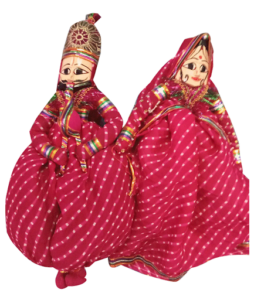
- Kathputli is a traditional string-puppet theatre of Rajasthan and among the oldest folk art forms of the state.
- The term comes from “kath” (wood) and “putli” (doll), indicating wooden puppets used for performances.
Material and Construction
- A kathputli is made of wood, cloth, thread and metal wire.
- Upper body is wooden, while the lower part is made of cotton and fabric.
- Legs are absent and puppets are covered with long flowing skirts.
Control and Performance
- Puppets are controlled by the puppeteer using 2–5 strings tied to the fingers.
- Performances are accompanied by folk music on dholak and harmonium.
Physical Features
- Puppets have large eyes, oval faces, thick lips and arched eyebrows.
- Colourful costumes reflect royal courts and desert traditions of Rajasthan.
Themes and Cultural Role
- Traditionally used to narrate stories of Rajput kings, warriors, folk heroes and moral tales.
- Performances combine humour, music, satire and social messages through folk narratives.
Cervical Cancer
What is Cervical Cancer?
-
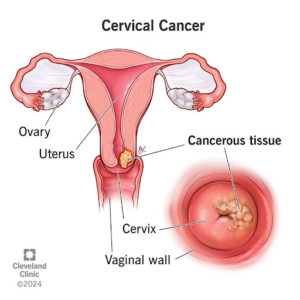
- Cervical cancer is a disease where cells in the cervix grow uncontrollably.
- The cervix connects the vagina to the uterus.
- It is the fourth most common cancer in women globally.
- It is the second most common cancer among women in India.
- Most cases occur in women above 30 years of age.
- Main Cause
- Caused mainly by persistent infection with Human Papillomavirus (HPV).
Human Papillomavirus (HPV)
- HPV is a sexually transmitted infection (STI) affecting skin, genital area and throat.
- HPV includes more than 200 related viruses.
- Two categories:
- Low-risk HPV – rarely causes cancer.
- High-risk HPV – causes cancers.
- High-risk HPV Types
- There are 12 high-risk HPV types.
- HPV-16 and HPV-18 cause most HPV-related cancers, including cervical cancer.
- HPV-Related Cancers
- Cervical
- Anal
- Oropharyngeal
- Penile
- Vaginal and Vulvar
- In most people, the immune system clears HPV naturally.
- Persistent infection may lead to abnormal cell growth and cancer.
- There is no treatment for HPV infection itself.
- HPV Vaccination
-
-
- Six HPV vaccines are available globally.
- All protect against HPV-16 and HPV-18.
- Recommended age: 9–14 years (1 or 2 doses).
- CERVAVAC is India’s first indigenous cervical cancer vaccine, developed and manufactured by the Serum Institute of India.
-
- Screening & Prevention
-
- Screening every 5–10 years from age 30.
- From 25 years for women living with HIV.
- Early detection and treatment prevents cervical cancer.
WHO Cervical Cancer Elimination Initiative (90-70-90 by 2030)
- 90% of girls vaccinated by age 15.
- 70% of women screened by 35 and 45 years.
- 90% of women with pre-cancer treated and 90% with invasive cancer managed.
India’s Initiative
- HPV vaccination programme announced in Interim Budget 2024–25.
- Targets girls aged 9–14 years to prevent cervical cancer.

