
Context
- Union Budget 2026-27 proposes training 1.5 lakh multiskilled caregivers in geriatric, core care, and allied skills through NSQF-aligned programmes to build a “strong care ecosystem.”
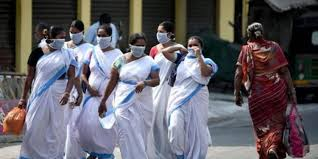
- Yet the Budget makes little mention of 5 million+ women such as ASHAs, Anganwadi workers, helpers, and mid-day meal workers, who already run India’s health, nutrition, and childcare systems daily.
India’s Shadow Labour Force
- From Anganwadi workers ensuring child nutrition to ASHA workers tracking pregnancies in remote villages, these women constitute the backbone of India’s welfare architecture.
- They perform essential, continuous, and indispensable public services yet remain classified as “volunteers” while earning meagre monthly honorariums without formal contracts, paid leaves, or maternity benefits.
- Existing support remains piecemeal and fragmented; state-level honorarium hikes, gratuity benefits, and coverage under Ayushman Bharat and PM Shram Yogi Maandhan do not address the fundamental contradiction.
- The state relies on a vast, feminised shadow labour force to deliver essential public services but classifies them as “honorary workers” to limit protections associated with formal employment.
The Gendered Dimension: Care Penalty
- The 2024 Time Use Survey (highlighted in Economic Survey 2025-26) reveals that 41% of females aged 15-59 spend 140 minutes daily on household caregiving, compared to only 21.4% of males at 74 minutes.
- By outsourcing care responsibilities to women labelled as “volunteers,” the state draws on deep-rooted social norms that view care work as an extension of women’s domestic duty rather than skilled labour.
- Since care is seen as “natural” to women, it is rendered cheap and informal — creating a vicious cycle where the less care work is recognised as skilled, the less compulsion exists to pay fairly for it.
- This traps a predominantly female workforce in insecure, unprotected employment — a structural gender injustice embedded within India’s welfare architecture itself.
Legal and Policy Basis for Reform
- In Dharam Singh & Anr. vs State of U.P. & Anr. (2025), the Supreme Court upheld that work which is recurrent and central to an institution’s functioning cannot be treated as temporary indefinitely.
- For India’s “volunteer” care workers whose duties are indispensable and continuous, this judgment provides a strong legal basis to demand conversion of honorary roles into permanent posts.
- The ILO’s 5R Framework for Decent Care Work demands that care workers receive fair compensation and genuine voice in employment and policy decisions.
- 5R: Recognise, Reduce, Redistribute, Reward, and Represent
- India has fulfilled the first three Rs to varying degrees but remains far from fulfilling Reward and Represent for its existing frontline care workforce.
Way Forward
- Move beyond the “volunteer” label and create clear transition frameworks helping care workers move from honorariums to fair wages and formal employment contracts.
- Extend NSQF-aligned skilling programmes to existing ASHA and Anganwadi workers rather than building a parallel new cadre while ignoring the existing one.
- Establish uniform national minimum honorarium standards to eliminate the wide state-to-state disparity in compensation currently prevailing.
- Implement the ILO 5R Framework fully thus ensuring care workers are Rewarded fairly and Represented meaningfully in employment and policy decisions.
- Recognise care work in national economic accounting by integrating unpaid and informal care labour into GDP measurement frameworks.