

Three-Language Formula
Context
- A recent debate has emerged between the Tamil Nadu Government and the Union Government regarding the implementation of the Three-Language Formula under NEP 2020.
- The issue highlights concerns related to linguistic imposition, multilingualism, and cooperative federalism.
About the Three-Language Formula
- The Three-Language Formula is a language policy in education designed to promote multilingualism and national integration.
- It was first introduced in the National Education Policy (1968) to create a balanced approach toward regional, national, and global languages.
- Structure of the Formula
- In Hindi-speaking States, students are expected to learn Hindi, English, and one modern Indian language, preferably a South Indian language.
- In non-Hindi-speaking States, students are expected to learn the regional language, Hindi, and English.
- Evolution of the Policy
- The policy was first introduced in 1968 and later reaffirmed in the National Policy on Education (1986) without major changes.
- The National Education Policy (2020) retained the formula but introduced greater flexibility, allowing States and students to choose languages.
- Tamil Nadu has consistently followed a two-language policy (Tamil and English) since 1968, opposing the inclusion of Hindi on grounds of linguistic autonomy.
- Key Provisions under NEP 2020
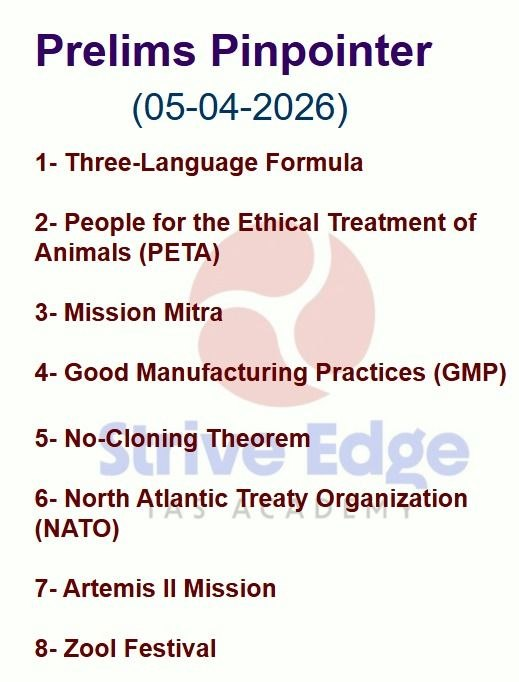
- The policy provides flexibility by allowing States and students to choose any three languages.
- It clearly states that no language will be imposed on any State.
- It emphasizes that the medium of instruction should preferably be the mother tongue or home language until at least Grade 5, and preferably up to Grade 8.
- It mandates that at least two of the three languages must be Indian languages.
- It also promotes Sanskrit as an optional language within the framework.
- Significance
- The policy promotes multilingualism, which enhances communication skills and cultural understanding.
- It contributes to national integration by bridging linguistic divides across regions.
- It ensures global competitiveness by retaining English as a link language.
- It supports cognitive development, as research shows that learning in the mother tongue improves comprehension and learning outcomes.
People for the Ethical Treatment of Animals (PETA)
About PETA
- People for the Ethical Treatment of Animals (PETA) is a non-governmental organization (NGO) dedicated to ending cruelty against animals.
- It promotes the consideration of animal interests in public policies and everyday decision-making.
- It is regarded as the largest animal rights organization in the world.
- Headquarters: Norfolk, Virginia, United States.
- It operates through global entities and networks.
Origin and Founders
- Founded in 1980 by Ingrid Newkirk and Alex Pacheco.
- The founders were influenced by Peter Singer’s book “Animal Liberation” (1975), which laid the foundation for modern animal rights philosophy.
- Initially gained recognition for exposing cruelty in research laboratories.
Core Philosophy
- PETA strongly opposes speciesism, which refers to the belief that humans are superior to other species.
- It advocates for equal moral consideration of animals.
- Focus Areas
- PETA concentrates on sectors where animals suffer most intensely and for prolonged periods, including:
- Laboratories (animal testing and experimentation)
- Food Industry (factory farming, meat and dairy production)
- Clothing Industry (use of leather, fur, wool)
- Entertainment Industry (circuses, zoos, animal shows)
- PETA concentrates on sectors where animals suffer most intensely and for prolonged periods, including:
- Other Areas of Work
- Addresses issues related to cruel killing of animals labeled as “pests”, including rodents and birds.
- Works against cruelty toward domesticated animals, including pets.
Mission Mitra
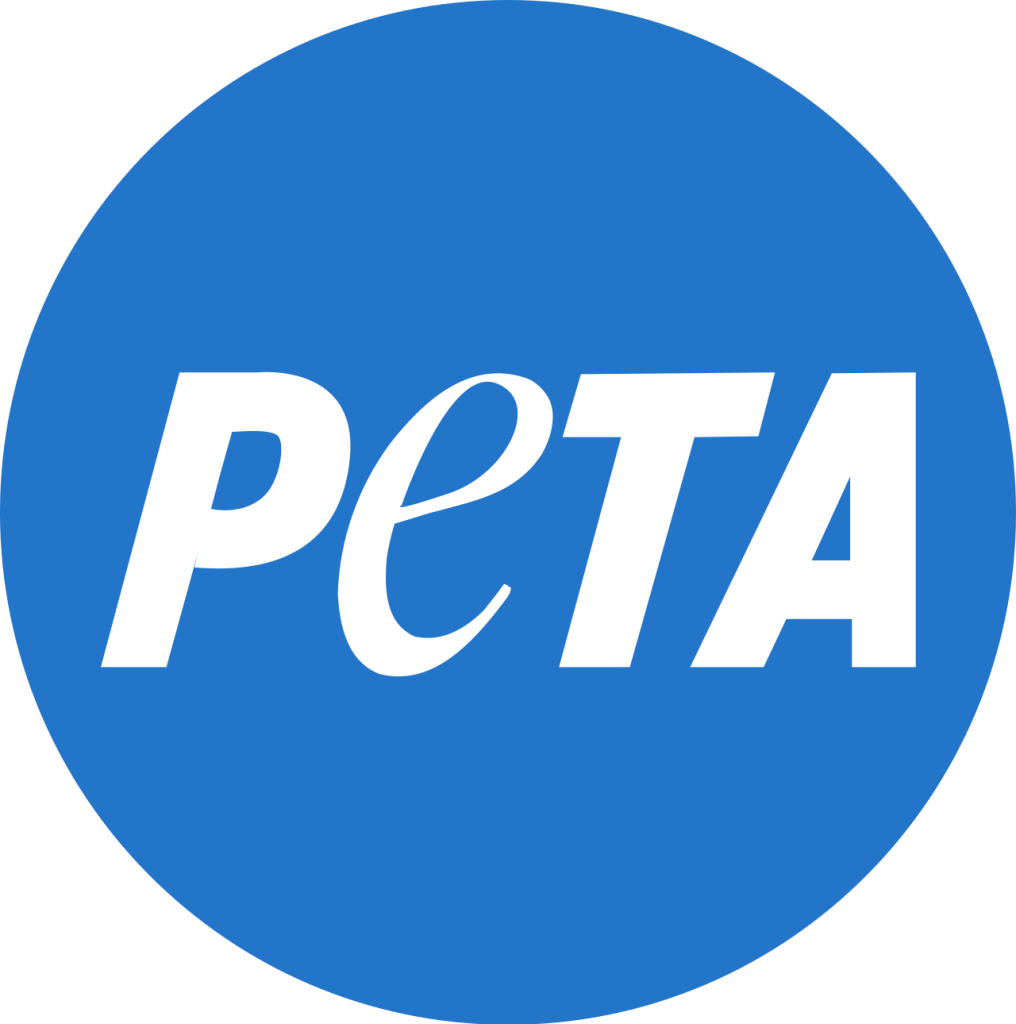
Context: ISRO has launched Mission Mitra in Ladakh as part of the Gaganyaan Mission to test astronaut endurance and psychological resilience in extreme conditions.
About Mission Mitra
- Mission Mitra stands for Mapping of Interoperable Traits & Reliability Assessment.
- It is an experimental programme by ISRO to simulate space-like conditions on Earth.
- Conducted under the Human Space Flight Centre (HSFC).
- Focuses on psychological strength, teamwork, and behavioral responses of astronauts.
- Objectives
- To assess psychological resilience under stress and isolation.
- To evaluate team coordination and trust-building in confined environments.
- To study human behavior under extreme climatic and resource constraints.
- To prepare astronauts for communication delays and operational challenges in space.
- Key Features / Activities
- Selected astronauts live and work in isolated, high-altitude conditions.
- Continuous monitoring of:
- Behavioral patterns and decision-making
- Communication and teamwork efficiency
- Stress response and adaptability
- Simulates real mission scenarios, including limited resources and delayed support.
Why Ladakh?
- Ladakh provides extreme environmental conditions, making it ideal for simulation:
- Low oxygen levels (high altitude hypoxia)
- Extreme cold temperatures
- Geographical isolation
- These conditions closely resemble challenges faced during space missions, especially long-duration missions.
Global Context / Inspiration
- Inspired by international experiments such as: European Space Agency’s CAVES Programme (training in underground caves).
- Reflects India’s adoption of advanced, research-based astronaut training models.
Good Manufacturing Practices (GMP)

Context: The U.S. FDA issued four Form 483 observations to Granules Pharmaceuticals Inc. (Virginia, USA) following a routine current Good Manufacturing Practices (cGMP) audit.
What are GMP Standards?
- Good Manufacturing Practices (GMP) are regulatory guidelines that ensure quality, safety, and consistency of pharmaceutical products.
- They govern manufacturing processes, quality control, hygiene, and documentation.
- GMP ensures that medicines are free from contamination, correctly labeled, and consistently produced.
Status of GMP in India
- GMP was first incorporated in 1988 under Schedule M of the Drugs and Cosmetics Rules, 1945.
- The standards were revised in 2018 to align with WHO-GMP standards.
- Currently, only about 2,000 out of 10,500 manufacturing units are compliant with WHO-GMP norms.
New Regulations (Recent Updates)
- Large pharmaceutical companies (turnover > ₹250 crore): Must comply with revised GMP within 6 months.
- Small and medium enterprises (turnover < ₹250 crore): Given 1 year to comply.
- Non-compliance may lead to:
- License suspension
- Financial penalties
- Key additions in revised norms include:
- Pharmaceutical Quality System (PQS)
- Quality Risk Management (QRM)
- Product Quality Review (PQR)
Significance of GMP Certification
- Ensures product safety and efficacy by reducing:
- Contamination risks
- Labeling errors
- Variation in ingredient composition
- Strengthens India’s credibility as a global pharmaceutical supplier, especially to low- and middle-income countries.
- Essential for procurement under Pradhan Mantri Bharatiya Janaushadhi Pariyojana (PMBJP).
- Enhances public health outcomes by ensuring safe and reliable medicines.
No-Cloning Theorem
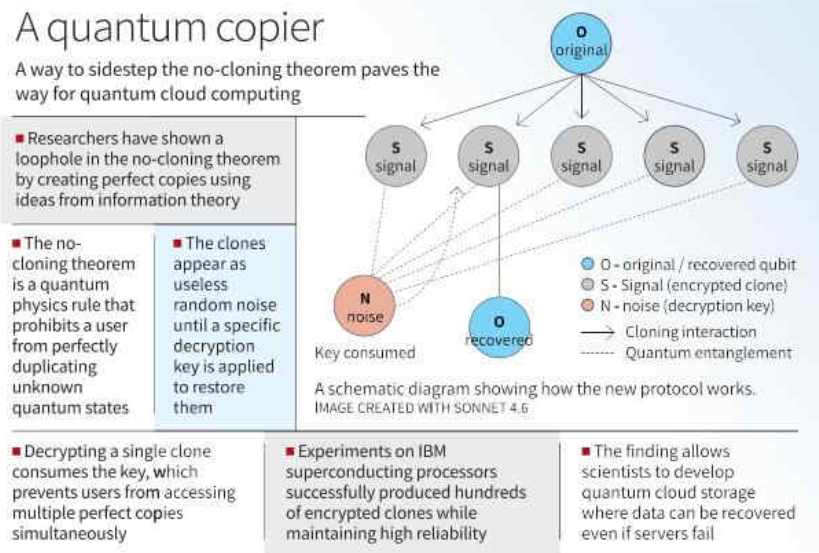
Context: Physicists have identified a loophole in the No-Cloning Theorem, demonstrating that quantum data can be perfectly copied in an encrypted form, with recovery possible only through a specific decryption key.
What is the No-Cloning Theorem?
- The No-Cloning Theorem is a fundamental principle of quantum mechanics which states that an unknown quantum state cannot be copied perfectly.
- Unlike classical information (such as files or images), quantum information is inherently fragile and non-duplicable.
- Any attempt to copy a quantum state either disturbs the original state or produces an imperfect (noisy) copy.
Key Features of the Theorem
- Applies to Unknown States: Only unknown quantum states (qubits) cannot be cloned; known states can be recreated but not copied.
- Fidelity Limitation: Earlier methods produced only approximate copies (~83% fidelity), which are unsuitable for precise computation.
- Linearity Principle: Quantum mechanics is linear, and therefore does not allow a universal copying operation.
- Measurement Disturbance: Measuring a quantum state alters or destroys its original information.
- Encrypted Loophole (Recent Discovery): Quantum information can be distributed across multiple qubits as encrypted noise-like data. A single-use decryption key is required to recover the original state.
Importance in Quantum Physics
- Quantum Security: Forms the basis of quantum cryptography, as any interception attempt leaves detectable traces.
- Error Correction Mechanism: Since direct copying is not possible, quantum systems rely on entanglement-based error correction techniques.
- Quantum–Classical Distinction: Highlights the difference between copyable classical information and non-copyable quantum information.
- Innovation in Storage: Drives the development of quantum memory and secure cloud storage systems using encoded quantum states.
North Atlantic Treaty Organization (NATO)
About NATO
- The North Atlantic Treaty Organization (NATO) is a political and military alliance of countries from Europe and North America.
- It was established in 1949 through the North Atlantic (Washington) Treaty.
- Headquarters: Brussels, Belgium.
- It aims to ensure collective security and defence cooperation among member states.
- Core Principle
- NATO is based on the principle of Collective Defence (Article 5): An attack on one member is considered an attack on all members.
- Article 5 has been invoked only once, after the 9/11 terrorist attacks.
- Purpose and Functions
- Acts as a deterrent against external threats (originally Soviet expansion).
- Maintains the transatlantic link between Europe and North America.
- Conducts joint military operations and crisis management missions.
- Facilitates consultation and cooperation on defence and security issues.
Members of NATO and Partnerships
- Current Members: 32 countries (Europe + North America).
- Founding Members (12): Belgium, Canada, Denmark, France, Iceland, Italy, Luxembourg, Netherlands, Norway, Portugal, UK, USA.
- Recent Additions: Finland (2023) and Sweden (2024)
- Funding
- Member countries contribute based on a cost-sharing formula derived from Gross National Income (GNI).
- NATO Partnerships
- NATO collaborates with 40+ non-member countries and organizations through:
- Partnership for Peace (PfP) for Euro-Atlantic partners
- Mediterranean Dialogue (MD) for Mediterranean countries
- Istanbul Cooperation Initiative (ICI) for Middle East countries
- Works with international organizations such as UN, European Union (EU), and Organization for Security and Co-operation in Europe (OSCE).
- NATO collaborates with 40+ non-member countries and organizations through:
Expansion and Geopolitics
- NATO follows an Open Door Policy (Article 10) allowing European countries to join.
- Post-1991, many former Warsaw Pact countries joined NATO.
- Expansion has led to tensions with Russia, which views it as a security threat.
Related Concepts
- Major Non-NATO Ally (MNNA): A US designation providing defence cooperation benefits (India is not an MNNA).
- NATO Plus Five:
- Includes Australia, New Zealand, Japan, South Korea, and Israel along with NATO partners.
- Aims to enhance global defence cooperation, especially in response to China’s rise.
Artemis II Mission
Context
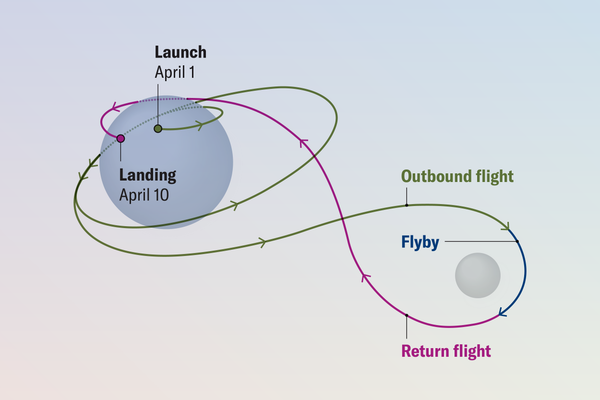
- NASA launched Artemis II as part of its programme to return humans to the Moon. The mission is often viewed in the backdrop of a strategic competition with China’s lunar programme.
About Artemis Programme
- Artemis Programme is NASA’s flagship initiative to return astronauts to the Moon after the Apollo missions.
- It aims to establish a sustainable human presence on the Moon and prepare for future missions to Mars.
About Artemis II
- Artemis II is the first crewed mission of the Artemis programme.
- It will send four astronauts on a mission around the Moon (without landing).
- It serves as a critical test of human spaceflight systems before lunar landing missions (Artemis III).
- Key Components of Artemis II
- Space Launch System (SLS)
- A 98-metre-tall heavy-lift rocket developed by NASA.
- Powered by:
- Four RS-25 engines
- Two solid rocket boosters
- Generates greater thrust than Apollo-era rockets.
- Space Launch System (SLS)
- Orion Crew Capsule
- Designed to carry four astronauts.
- Capable of sustaining crew for up to 21 days.
- Features:
- Advanced life-support systems
- Touchscreen-based avionics
- Launch abort system for crew safety
- Largest heat shield (~5 m diameter)
- European Service Module (ESM)
- Provides propulsion, power, and life-support support.
- Developed in collaboration with the European Space Agency (ESA).
- Mission Objectives
- To test crew safety systems and deep-space travel capability.
- To validate Orion spacecraft performance in lunar orbit conditions.
- To demonstrate long-duration human spaceflight readiness.
Significance
- Marks the return of human spaceflight beyond low-Earth orbit after decades.
- Strengthens international collaboration (e.g., ESA involvement).
- Acts as a stepping stone for:
- Lunar base development
- Mars missions
- Demonstrates advancements in space technology and human survival in deep space.
Zool Festival
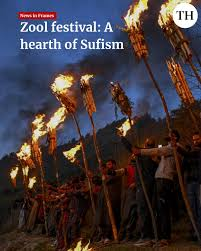
Context: The Zool Festival was recently celebrated at the Aishmuqam shrine in Anantnag district (South Kashmir).
About Zool Festival
- The Zool Festival is a centuries-old Sufi tradition celebrated at the shrine of Baba Zain-ud-Din Wali.
- It is also known as the “torch festival” or “festival of illumination”.
- Celebrated annually in South Kashmir, near the route to Pahalgam.
- Associated Personality
- Dedicated to Baba Zain-ud-Din Wali, a 15th-century Sufi saint.
- He was a disciple of Sheikh Noor-ud-Din Wali (Nund Rishi), a key figure of Rishi-Sufi tradition in Kashmir.
- Rituals and Practices
- Devotees carry wooden torches (locally called mashals or phrov) in a procession.
- Torches are made from special wood collected from nearby forests.
- Participants observe dietary restrictions (no meat consumption/sale for 3 days) before the festival.
- The procession ascends a hilltop shrine via a staircase (~100 steps).
- Devotees chant religious hymns and seek blessings.
- Symbolism
- Represents the victory of light over darkness and good over evil.
- Linked to a local legend where the saint cleared a cave of snakes/demonic forces through spiritual power.
- Reflects the essence of Sufi spirituality and moral triumph.
- Cultural and Seasonal Significance
- Marks Shab-e-Doum (second night of prayers).
- Acts as a traditional indicator of spring in Kashmir.
- Signals the beginning of agricultural activities (paddy sowing) after winter.
- Social Significance
- Represents the Rishi-Sufi cultural heritage of Kashmir.
- Promotes communal harmony, with participation across communities.
- Highlights the enduring legacy of Sufi traditions in the Himalayas.
