

Uniform Civil Code
Why Is UCC in the News?
- Madhya Pradesh CM Mohan Yadav announced a UCC Bill to be introduced in the Monsoon Session of the Assembly from July 20.
- A six-member high-level committee headed by retired Supreme Court Judge Justice Ranjana Prasad Desai is drafting the Bill.
- The committee must submit the draft Bill within 60 days after studying models from other states.
- Apart from MP, the Assam Legislative Assembly also passed a UCC Bill in May 2026.
- The MP government has asked the panel to study UCC models of Uttarakhand and Gujarat specifically.
Madhya Pradesh UCC Bill: Key Highlights
- The Bill will be introduced in the five-day Monsoon Session from July 20-24, 2026.
- A government portal has been launched inviting public suggestions on the UCC draft.
- The committee has toured various parts of the State to gather ground-level feedback before drafting.
- CM Yadav expressed hope that the Bill will be passed in the same session it is introduced.
What Is the UCC?
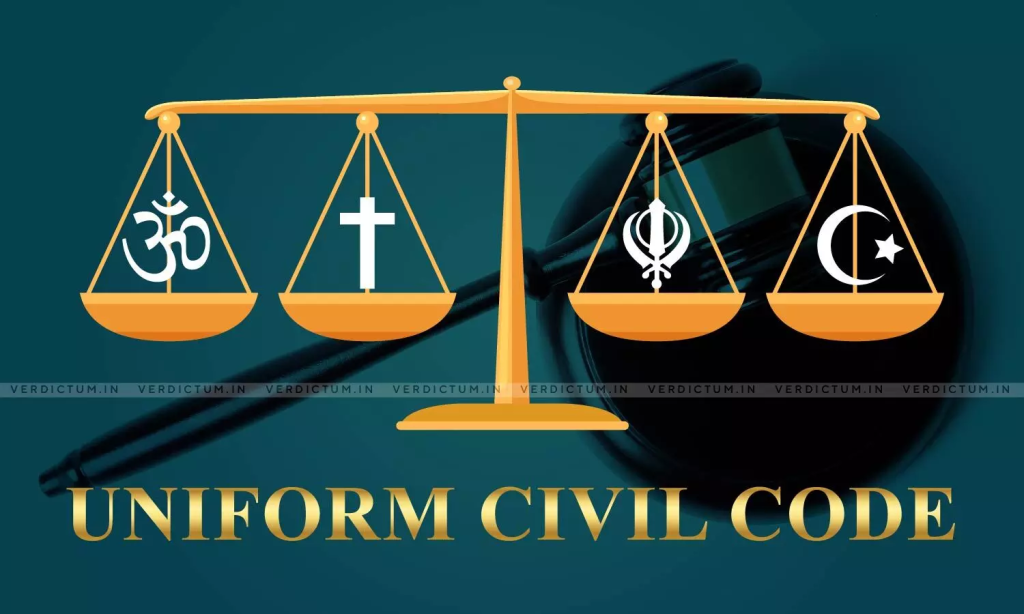
- UCC provides for one law for the entire country applicable to all religious communities.
- It covers marriage, divorce, inheritance, adoption and succession in personal matters.
- Currently, each religion adheres to its own specific personal laws making the system complex.
- Article 44 of the Constitution enshrines UCC as a Directive Principle of State Policy.
Personal Laws in India: Current Framework
| Community | Governing Law |
| Hindus, Sikhs, Jains, Buddhists | Hindu Succession Act, 1956 |
| Muslims | Muslim Personal Law |
| Christians, Parsis, Jews | Indian Succession Act, 1925 |
| Interfaith Marriages | Special Marriage Act |
Landmark Judgements and Committees on UCC
- Shah Bano Case (1985): SC highlighted the need for UCC especially in maintenance matters.
- Sarla Mudgal Case (1995): SC urged UCC to ensure gender equality across religions.
- Paulo Coutinho vs Maria Luiza Valentina Pereira (2019): SC highlighted need for uniform laws for legal consistency.
- Law Commission (2018): Stated UCC is not needed at present and recommended amending existing personal laws.
- Law Commission (2022): Sought public and religious input on the UCC before any decision.
Arguments in Favour of UCC
- Constitutional Mandate: Article 44 aims to create a uniform legal framework for all civil matters.
- Promotes Secularism: Ensures civil laws are not influenced by religious beliefs.
- Gender Justice: Eliminates discriminatory personal law practices and promotes women’s rights.
- National Unity: Transcends religious divisions and promotes common citizenship across communities.
- Legal Simplicity: Simplifies marriage, divorce and inheritance procedures for all citizens equally.
Arguments Against UCC
- Threatens Diversity: Imposing a uniform code may undermine cultural and religious identities.
- Article 25 Concerns: Could infringe upon the constitutional right to religious freedom.
- Lack of Consensus: Implementation without community consensus may lead to social unrest and resistance.
- Federal Concerns: UCC could encroach upon states’ legislative powers under Schedule 7 Entry 5 disrupting cooperative federalism.
Way Forward
- Seek Consensus: Engage in constructive dialogue with religious leaders and community representatives before implementation.
- Ensure Non-Partisanship: Implement UCC in an inclusive manner avoiding its use as a political tool.
- Raise Awareness: Conduct campaigns to educate the public about UCC’s rationale and benefits through government and civil society.
- Gradual Process: Review existing personal laws to align UCC with principles of justice, equality and non-discrimination for all.
Source: The Hindu
