

Telegram Ban and Section 69A — IT Act, 2000
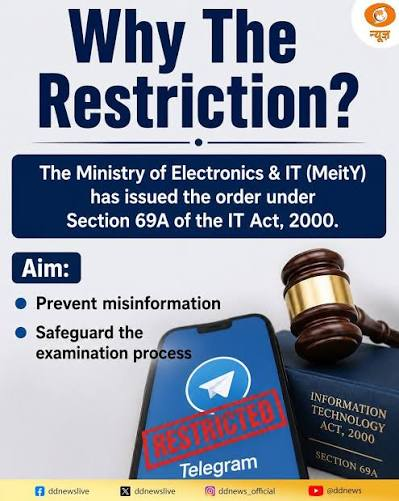
In News
- The Union government temporarily banned Telegram under Section 69A of the IT Act ahead of the NEET re-examination on June 21.
- The government described Telegram as the “new dark web”, citing its use by cybercriminals, exam paper leak operators, and terror groups.
Law — Section 69A, IT Act 2000
- Section 69A authorises the Union government to block public access to any information via any computer resource.
- Blocking is permitted if necessary for sovereignty and integrity, defence, security of state, public order, or preventing cognisable offences.
- Orders must follow procedural safeguards under IT (Procedure and Safeguards for Blocking Access) Rules, 2009.
Body — Indian Cyber Crime Coordination Centre (I4C)
- The government’s case relied on an I4C assessment identifying Telegram as a growing hub for illicit online activity.
- I4C is India’s nodal body for coordinating cyber crime investigation and response across the country.
Constitution — Articles 19(1)(a) and 19(1)(g)
- Article 19(1)(a) protects freedom of speech and expression, including over the internet.
- Article 19(1)(g) protects the right to practise any profession or carry on any trade, business, or occupation.
- A ban on Telegram’s 150 million Indian users raises concerns under both Articles.
Case Law — Anuradha Bhasin v. Union of India
- The Supreme Court held that freedom of speech and expression and freedom of profession over the internet are constitutionally protected.
- Orders restricting internet access must meet the proportionality test: be necessary, use least restrictive measures, and remain open to judicial review.
Safe Harbour — Section 79, IT Act
- Section 79 provides intermediary safe harbour to platforms like Telegram.
- Platforms are not liable for third-party content if they exercise due diligence, follow IT Rules 2021, and act swiftly upon knowledge of illegal content.
Source: The Hindu
Cough Syrup Regulation in India
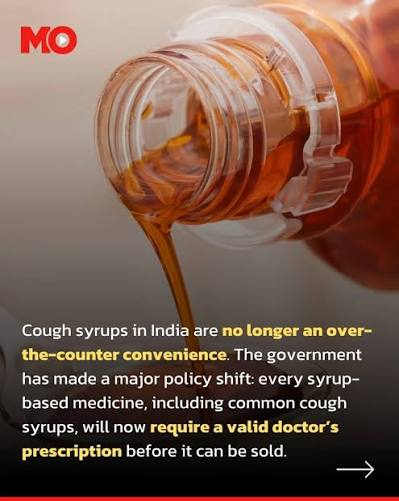
In News — Cough Syrups Now Prescription-Only
- The Union Health Ministry removed “syrup” from Schedule K of the Drugs Rules, 1945, making cough syrups prescription-only medicines.
- The change was signalled via a draft notification in December 2025.
Cause — EG/DEG Contamination
- Ethylene Glycol (EG) and Diethylene Glycol (DEG) are toxic industrial solvents used in antifreeze, not pharma-grade ingredients.
- EG/DEG contamination in India-made cough syrups killed over 300 children across several countries since 2022.
- WHO issued Medical Product Alerts in 2022 and 2023, undermining confidence in India’s export quality controls.
Rules — Schedule K and Drug Schedules
- Drugs Rules, 1945 derive from the parent statute, the Drugs and Cosmetics Act, 1940.
- Key drug schedules under Drugs Rules:
| Schedule | Category |
| Schedule H | Prescription drugs |
| Schedule H1 | Antibiotics and habit-forming drugs |
| Schedule K | Drugs exempt from certain licensing requirements |
| Schedule X | Narcotic and psychotropic substances |
- OTC (Over-the-Counter) drugs are medicines sold without a prescription at licensed pharmacies.
Standards — Indian Pharmacopoeia and State Drug Controllers
- The Indian Pharmacopoeia Commission (IPC) is an autonomous body under the Ministry of Health, headquartered in Ghaziabad.
- IPC publishes the Indian Pharmacopoeia, which sets quality standards for medicines sold in India.
- Following the contamination deaths, both the Indian Pharmacopoeia and Pharmacopoeia Internationalis updated their analytical methods to detect EG/DEG.
Regulatory Bodies — CDSCO and State Drug Controllers
- CDSCO (Central Drugs Standard Control Organisation) is India’s apex national drug regulatory authority.
- The Central Drugs Standard Control Organisation (CDSCO) operates under the Ministry of Health & Family Welfare
- The Drugs Controller General of India (DCGI) heads CDSCO.
- India has around three dozen State Drug Controllers, who are chronically understaffed, weakening enforcement.
Source: The Hindu
Nipah Virus (NiV) — Kerala Outbreak and Key Facts
In News — Nipah Resurfaces in Kozhikode
- A 43-year-old patient tested positive for Nipah virus and is being treated at Kozhikode Government Medical College.
- Kerala’s first Nipah outbreak (2018) identified 23 cases with a case fatality rate of 91% and only two survivors.
About Nipah Virus (NiV) Basics
- NiV is a highly infectious zoonotic virus, first identified in 1998-99 in Kampung Sungai Nipah, Malaysia.
- It belongs to the Henipavirus genus of the Paramyxoviridae family.
- It has human-to-human transmission potential, making containment critical.
- India has witnessed outbreaks in West Bengal (2007) and Kerala (2018, 2023, 2025).
Reservoir — Fruit Bats and Spillover
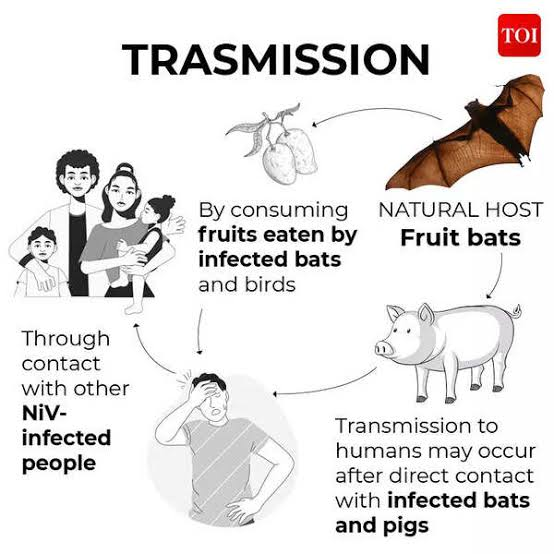
- The Indian Flying Fox (Pteropus medius) is the natural reservoir of Nipah virus in Kerala.
- In the 2018 outbreak, approximately 25% of sampled bats tested positive for Nipah viral RNA.
- Peak spillover risk in Kerala is from April to September, coinciding with bat breeding season and increased foraging activity.
- Pigs serve as intermediate hosts in Nipah transmission, as identified by WHO.
- Kerala’s One Health Centre for Nipah Research and Resilience was established in Kozhikode in 2023.
- Kerala has a community surveillance network of over 2.5 lakh trained volunteers tracking unusual disease trends.
Diagnosis — BSL-4, RT-PCR and ELISA
- NiV is classified as a Biosafety Level-4 (BSL-4) pathogen, requiring high-security laboratory testing.
- Diagnosis uses RT-PCR, ELISA, serum neutralisation tests, histopathology, and virus isolation techniques.
Treatment
- There is no approved vaccine for Nipah in humans or animals.
- Treatment relies on intensive supportive care and isolation.
- Kerala’s use of monoclonal antibodies and Remdesivir reduced mortality from 91% in 2018 to around 33% by 2023-25.
Source: The Hindu
PM Viksit Bharat Rozgar Yojana (PMVBRY)
In News
- PMVBRY was launched to boost employment and social security across sectors, especially manufacturing.
About PMVBRY
- Nodal Ministry: Ministry of Labour and Employment.
- Implementation: Through EPFO, a statutory body under the EPF and Miscellaneous Provisions Act, 1952.
- Target: Creation of 3.5 crore jobs including first-time employees over two years.
- Payments are made through DBT using the Aadhar Bridge Payment System (ABPS).
Part A — First-Time Employee Benefit
- Targets first-time employees registered with EPFO earning up to ₹1 lakh per month.
- Incentive is one month’s EPF wage up to ₹15,000, paid in two instalments.
- First instalment is payable after 6 months of service.
- Second instalment is payable after 12 months of service plus completion of a financial literacy programme.
- A portion of the incentive is kept in a savings instrument for a fixed period.
Part B — Employer Incentives
- Employers receive up to ₹3,000 per month per additional employee for two years.
- New employees must have salaries up to ₹1 lakh per month to be eligible.
- Additional employment must be sustained for at least six months.
- For the manufacturing sector, incentives are extended to the 3rd and 4th years as well.
- Incentives are paid directly into PAN-linked accounts of employers.
Source: Indian Express
PIB Snippets
Bharat Buildcon 2026
In News — Bharat Buildcon 2026
- Bharat Buildcon 2026 was inaugurated at Yashobhoomi Convention Centre, New Delhi on June 18, 2026.
- Theme: “One Nation, One Expo” for the building materials and construction industry.
- It brought together participants from over 90 countries and 100 Indian cities.
- The exhibition showcases innovations across 24 building material segments, including ceramics, cement, steel, hardware, plywood, furniture, sanitaryware, and paints.
Trade — India-UK CETA
- India-UK Comprehensive Economic and Trade Agreement (CETA) is a Free Trade Agreement between the two countries.
- It is expected to provide enhanced market access and strengthen trade relations between India and the UK.
- It creates new opportunities for Indian manufacturers and exporters in the UK market.
Vision — India as Global Manufacturing Hub
- PM Modi’s vision positions India as a trusted global manufacturing and sourcing destination through a focus on quality.
- FTAs play a key role in supporting economic growth and expanding India’s international market access.
Exercise Khaan Quest 2026

In News
- The Indian Army contingent departed to participate in Exercise Khaan Quest 2026 in Mongolia.
About Khaan Quest
- Exercise Khaan Quest is a multilateral joint military exercise focused on peacekeeping operations.
- It first started as a bilateral exercise between USA and Mongolia in 2003.
- From 2006 onwards, it graduated into a multilateral peacekeeping exercise.
- The current edition (2026) is the 23rd iteration of the exercise.
Venue and Timeline
- The exercise is scheduled from June 20 to July 3, 2026 at Five Hills Training Area, Ulaanbaatar, Mongolia.
- The previous edition was conducted from June 14 to 28, 2025 in Mongolia.
Mandate — UN Charter Chapter VII
- The exercise enhances interoperability in peace support operations under Chapter VII of the UN Charter.
- Chapter VII deals with action with respect to threats to peace, breaches of peace, and acts of aggression.
Smart Seed Coating Technology
In News
- ICAR-Indian Institute of Oilseeds Research (ICAR-IIOR), Hyderabad developed an Indian-patented biopolymer-based Smart Seed Coating Technology.
About the Technology
- The technology uses biodegradable biopolymeric materials to create a multifunctional protective layer around seeds.
- The coating acts as a carrier for beneficial microorganisms, nutrients, micronutrients, crop protection agents, and plant growth-promoting compounds.
- It delivers these inputs directly at the seed-soil interface, promoting rapid germination and vigorous seedling growth.
- Unlike conventional treatments, it functions as a comprehensive seed enhancement system integrating multiple beneficial inputs in a single application.
Performance and Benefits
- Field demonstrations in Telangana showed yield improvements of nearly 30% in Groundnut and Soybean over conventional practices.
- The technology is customisable for cereals, millets, pulses, oilseeds, fibre crops, vegetables, spices, and horticultural crops.
Relevance — Rainfed and Climate-Resilient Farming
- The technology is particularly relevant for rainfed agriculture, which accounts for a major share of India’s cultivated area.
- It helps counter delayed monsoons, intermittent droughts, moisture stress, and pest and disease pressures.
