

Juristic Person and Deity in Law: UPSC Prelims Notes
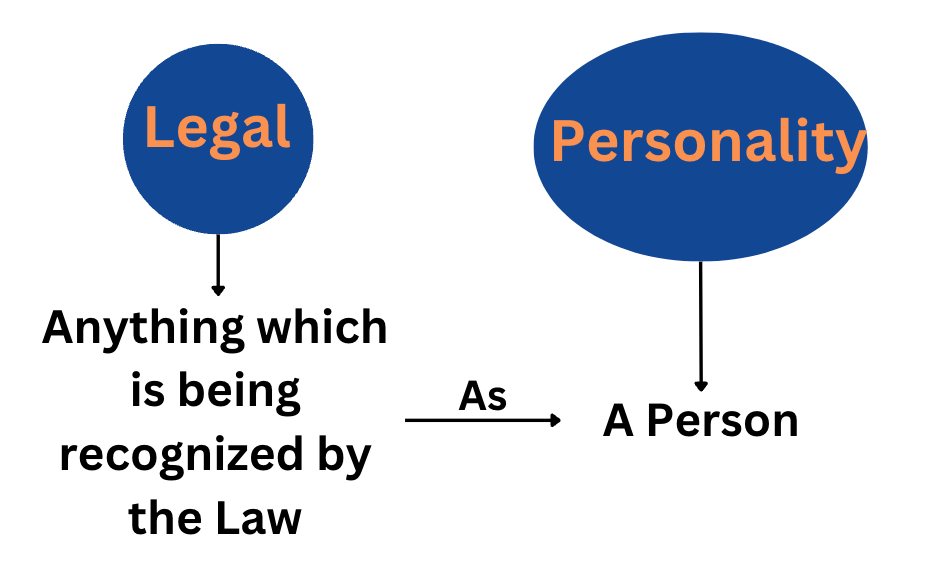
In News: Ram Temple Graft Case and a Deity’s Assets
- The Ram Temple embezzlement case involves alleged misappropriation of devotee donations.
- Donations are considered property of the Hindu deity, recognised as a juristic person.
About: Juristic (Legal) Person
- Two kinds of legal entities exist: natural persons (humans) and juristic persons (non-human entities).
- Juristic persons are created by law for legal purposes.
- They have rights, obligations, and can be sued in courts.
- Examples of juristic persons include deities, rivers, corporations, animals, and mountains.
Deity in Law: Legal Entity in the Position of a ‘Minor’
- Hindu deity is recognised as a juristic person capable of holding property.
- Dedicated property vests in the deity in an “ideal sense.”
- The physical management is handled by a human agency acting as “manager.”
- The shebait or mahant is a mere manager, not the owner.
- In Bishwanath vs Thakur Radhaballabhji (1967), the Supreme Court held a deity is in the position of a “minor.”
- Only idols with public consecration (prana pratishtha) are granted legal entity status.
Key Cases: Padmanabhaswamy, Ramjanmabhoomi and Yogendra Nath Naskar
- Privy Council (1921) in Vidya Varuthi Thirtha held that Hindu piety finds expression in gifts to idols made eo nomine (in the name of the deity).
- Padmanabhaswamy Temple case (2020): Supreme Court held devotee donations belong strictly to the deity.
- Ramjanmabhoomi case: Constitution Bench described a Hindu idol as “material embodiment of a testator’s pious purpose.”
- A testator’s pious purpose refers to a deceased person’s deeply held religious, spiritual, or charitable intentions outlined in their will or deed of dedication.
- Dakor Temple case (1887): Bombay High Court gave Hindu idols the status of juristic person.
Other Examples: Rivers, Corporations and Mountains
- Uttarakhand High Court granted legal entity status to Ganga and Yamuna Rivers, later quashed by the Supreme Court.
- Punjab and Haryana High Court granted animals the status of legal entities.
- Whanganui River (worshipped by the Maori community) was granted legal status in New Zealand.
- Mount Taranaki in New Zealand has also been granted legal status.
- In Tata Engineering vs State of Bihar, the Supreme Court held that corporations are permanent legal entities distinct from stakeholders.
Source: The Hindu
Anaemia Mukt Bharat Abhiyaan: UPSC Prelims Notes

In News: Revised Anaemia Mukt Bharat Abhiyaan Norms
- The Union Health Ministry launched revised operational guidelines for Anaemia Mukt Bharat Abhiyaan (AMB).
- The programme transitioned from Anaemia Mukt Bharat to Anaemia Mukt Bharat Abhiyaan.
About: Anaemia
- Anaemia is a condition where RBCs or haemoglobin levels fall below normal.
- It leads to reduced oxygen supply to body tissues.
- Key symptoms include fatigue, weakness, pale skin, and shortness of breath.
New Framework: T4 Strategy (Test, Treat, Talk, Track)
- The revised programme replaces T3 strategy with the T4 strategy.
- T4 stands for: Test (routine haemoglobin testing), Treat (national anaemia protocols), Talk (dietary counselling), and Track (beneficiary monitoring and referral).
- The Ministry proposed an integrated digital ecosystem for monitoring anaemia services.
Changes: Seventh Beneficiary Group and ‘Eating Right’
- Low birth weight babies (0 to 6 months) have been added as the seventh beneficiary group.
- A new “eating right” component was introduced as the seventh intervention, promoting iron-rich and diversified diets.
- The seventh institutional mechanism focuses on digital tracking for monitoring and evaluation.
Data: NFHS-5 Anaemia Prevalence
| Group | Anaemia Prevalence |
| Children (6 to 59 months) | 67.1% |
| Women (15 to 49 years) | 57% |
| Pregnant Women | 52.2% |
| Adolescent Girls (15 to 19 years) | 59.1% |
Source: The Hindu
Mauritius: UPSC Prelims Notes
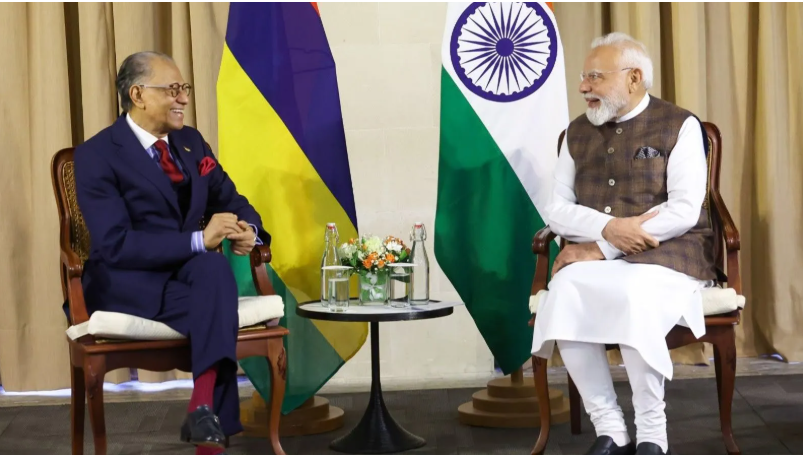
In News: PM Modi Meets Mauritius PM in Seychelles
- PM Narendra Modi met Mauritius PM Navinchandra Ramgoolam on the sidelines of Seychelles’ Golden Jubilee National Day celebrations.
- Both leaders discussed ways to strengthen India-Mauritius partnership under the Enhanced Strategic Partnership.
- India supports Mauritius’ Vision MAHASAGAR and Neighbourhood First policy.
About: Mauritius and Its Capital (Port Louis)
- Mauritius is an island country in the Indian Ocean, off the eastern coast of Africa.
- Its capital is Port Louis.
- It lies east of Madagascar.
- Mauritius territory includes Rodrigues Island, Agalega Islands, and Cargados Carajos Shoals.
- Physiographically, Mauritius is part of the Mascarene Islands in the Indian Ocean.
Geography: Volcanic Origin, Coral Reefs and Highest Peak
- Mauritius is of volcanic origin, surrounded by coral reefs.
- Highest peak: Piton de la Petite Rivière Noire at 828 metres.
- Major rivers: Grand River South East and Black River.
- Vacoas Lake serves as the main water source.
Source: Indian Express
FCNR(B) Account: UPSC Prelims Notes

In News: FCNR(B) Loan Rates Edge Higher
- Banks are competing for FCNR(B) deposits, pushing loan rates 20 to 25 basis points higher.
- Floating rate loans against FCNR(B) deposits are available at 4.90 to 5.25%.
- Once converted to fixed-rate loans (3 to 5 years), costs rise to 5.25 to 5.50% after the term premium.
- The interest rate arbitrage must remain sufficiently attractive for deposits to continue flowing.
About: Foreign Currency Non-Resident (FCNR) Account
- FCNR(B) is a term deposit account for NRIs and PIOs in Indian banks.
- Deposits are maintained in designated foreign currencies, not Indian Rupees.
- It is governed by RBI under FEMA, 1999.
- Residents of India cannot open FCNR accounts.
Regulation: RBI under FEMA, 1999
- Interest rates are determined by banks subject to RBI guidelines.
- The RBI’s deposit scheme is attracting significant foreign currency inflows.
Features: Foreign Currency Term Deposit and Exchange Protection
- FCNR(B) is only a term deposit (fixed deposit) account.
- Tenure ranges from 1 year to 5 years.
- Deposits are maintained in six designated currencies: USD, GBP, EUR, JPY, AUD, and CAD.
- Since deposits are in foreign currency, depositors are protected from exchange rate fluctuations.
- Accounts can be jointly held with another NRI.
Benefit: Tax-Free, Fully Repatriable (No TDS)
- Both principal and interest are fully repatriable abroad.
- Interest earned is tax-free in India for NRIs as long as NRI status is maintained.
- No TDS (Tax Deducted at Source) is applicable on FCNR(B) interest.
- Eligible to open: NRIs, OCIs (Overseas Citizens of India), and PIOs (Persons of Indian Origin).
Source: Indian Express
