

China’s Missile Challenge & India’s Rocket Force: UPSC Mains Notes
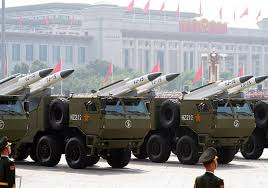
In News: Preparing India for China’s Missile Threat
- Missiles are reshaping warfare making conflicts faster, cheaper and more political. Further, China has deployed over 200 conventional missile launchers opposite India.
Threat: China’s Missile Arsenal (DF-26, DF-100 Hypersonics)
- Coercion Tool: China sees missiles as instruments of political coercion and war-fighting.
- Missile Bases: Two bases at Korla and Kunming can fire multiple missile types.
- Border Missiles: DF-15B, DF-16 and DF-21C target military positions along the border.
- Deep Strike: DF-26 can hit high-value targets in depth inside India.
- Hypersonic Threat: DF-100 and CJ-1000 hypersonics can strike deeper with no launch warning.
- Strategic Depth Loss: China’s inventory reduces the salience of the Himalayas as strategic depth.
- Escalation Risk: The dual-role DF-26 raises significant escalation risk for India.
Gap: India’s Limited Missile Inventory & No Rocket Force
- Evolving Inventory: India’s missile systems are still evolving with limitations in range.
- Integration Gap: Agni, Nirbhay and BrahMos variants are yet to be fully integrated.
- No Real-Time Targeting: India lacks robust real-time targeting capabilities for missile warfare.
- Finite Stockpiles: India has finite missile stockpiles and developing hypersonic technology.
- No Rocket Force: India’s rocket force remains a conceptual construct without resolution.
- Forced Absorption: Without a rocket force, India would have to absorb a Chinese missile strike.
Need: Case for an Integrated Rocket Force Under CDS
- Mutual Vulnerability: India must inflict comparable damage effects to deter Chinese strikes.
- WTC Threat: India’s rocket force should threaten PLA’s Western Theatre Command deep inside Tibet.
- Infrastructure Degradation: It must degrade PLA’s road, rail and airbase infrastructure along the border.
- Tactical Strikes: Field commanders must strike PLA camps and ammunition dumps tactically.
- Single Command: India needs one rocket force under single command authority for all target types.
- Counter-Value Doctrine: India must adopt counter-value strikes as part of its missile strategy.
- Unified Target List: Service-specific target lists have little place in time-sensitive missile warfare.
- CDS Placement: The rocket force must be placed under the Chief of Defence Staff.
- Medium-Range Ballistic Missile (MRBM) Expansion: India must expand its Agni variant inventory to hold Korla and Kunming at risk.
Way Forward: Hypersonics, Private Sector & Interim Measures
- Hypersonic Fast-Track: India must fast-track hypersonic missile development given China’s DF-100 deployment.
- Private Sector Role: Private participation must expand to complement DRDO efforts significantly.
- Technology Gaps: Critical gaps remain in propulsion systems, semiconductors and high-grade materials.
- Foreign Dependence: Dependence on foreign suppliers remains a strategic vulnerability for India.
- Asset Dispersal: India must disperse IAF assets and harden airbases against strikes.
- Air Defence Optimisation: Air defences should be optimised to force PLA to target defences instead.
- Strike Capability: India must strengthen long-range strike capabilities to threaten Tibet and Xinjiang.
- Satellite Surveillance: India must expand satellite surveillance to detect mobile DF-26 launchers early.
Source: The Hindu
