

Artificial Intelligence (AI) in Warfare: UPSC Mains Notes
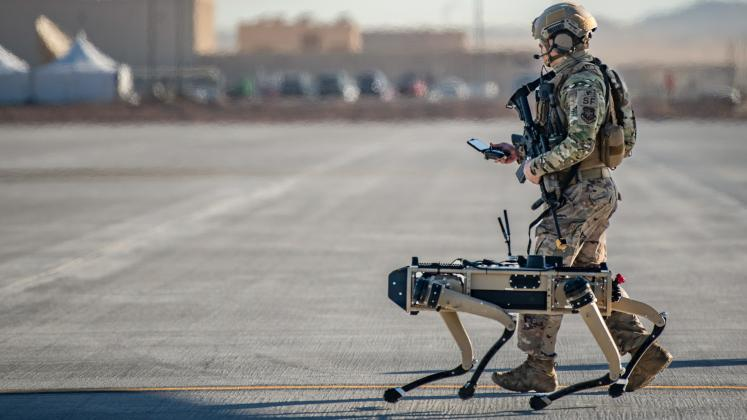
Why is Artificial Intelligence (AI) in Warfare in News?
- Recent conflicts highlight how AI technologies are transforming military operations, deterrence and battlefield decision-making.
Role of Artificial Intelligence (AI) in Modern Warfare
- Algorithmic warfare: AI-driven workflows improve battlefield precision and significantly reduce combat decision-making time.
- Drone warfare: AI-integrated drones perform surveillance, targeting, logistics, ammunition supply and casualty evacuation efficiently.
- Data fusion: Ukraine’s Delta platform integrates radar, imagery and social media into intelligent operational networks.
- Kill webs: AI-enabled systems compress detection-to-neutralisation timelines into just a few minutes.
- Autonomous systems: Military platforms are increasingly shifting from remote control to autonomous software-driven operations.
- Collaborative airpower: AI-powered autonomous fighter aircraft indicate future warfare based on human-machine collaboration.
- Cyber capabilities: AI strengthens electronic warfare, cyber operations and machine-speed targeting during military conflicts.
Challenges of AI-Driven Warfare
- Rapid innovation: Software evolves every three weeks while hardware upgrades occur every three months.
- Technological competition: AI advancements intensify strategic rivalry among major military and technological powers.
- Structural transformation: Defence establishments must evolve from hardware-focused systems into software-driven organisations.
- Autonomous lethality: Machine-speed targeting raises concerns over increasingly lethal and autonomous battlefield operations.
- Capability gap: Countries lacking indigenous AI systems risk falling behind in future warfare preparedness.
India’s Preparedness for AI-Enabled Warfare
- AI platforms: Develop indigenous AI-enabled data analytics systems similar to Ukraine’s Delta platform.
- Autonomous drones: Build software for coordinating drone swarms and identifying legitimate military targets autonomously.
- Drone inventory: Create a diversified fleet targeting five million drones by 2028.
- Counter-drone systems: Deploy laser, microwave weapons and specialised drone-hunting teams along border regions.
- Space capability: Expand Low-Earth Orbit assets for persistent surveillance and offensive intelligence operations.
- Defence investment: Allocate at least 40% modernisation funds towards advanced technological defence solutions.
Way Forward for AI-Driven Defence Modernisation
- Sovereign innovation: Develop indigenous AI, autonomy and algorithmic warfare capabilities through national technological pathways.
- Software transformation: Reorient defence institutions towards software-centric military innovation and operational readiness.
- Integrated ecosystems: Combine AI, drones and surveillance networks into effective battlefield kill webs.
- Strategic preparedness: Build advanced technological capabilities for stronger deterrence and future combat readiness.
- Institutional reforms: Undertake cultural and structural transformation to accelerate AI adoption across defence services.
Source: Indian Express
