

Asiatic Lion: UPSC Prelims Notes
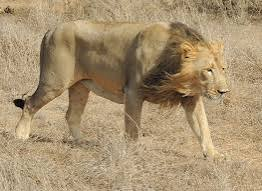
Why is the Asiatic Lion in News?
- The Asiatic Lion debate has revived over establishing a second home to ensure long-term species survival.
About the Asiatic Lion (Panthera leo persica)
- The Asiatic Lion is the only wild population of lions found outside Africa.
- It is a keystone species of dry deciduous forests and open grassy scrublands in the Saurashtra region.
- The species is slightly smaller than African lions, with males weighing 160 to 190 kg.
- A distinctive belly fold of skin differentiates Asiatic lions from African lions.
- Male lions have a shorter mane, leaving their ears clearly visible.
- They live in smaller prides, and males associate with females mainly during mating or large kills.
- Their fur colour ranges from ruddy tawny to sandy or buff grey shades.
Habitat and Distribution of the Asiatic Lion
- Gir National Park and Wildlife Sanctuary in Gujarat is the only natural habitat of Asiatic Lions.
- Successful conservation efforts have expanded lion populations across the Greater Gir Landscape.
- The expanded range includes Amreli, Bhavnagar and Somnath districts of Gujarat.
- Barda Wildlife Sanctuary is being developed as a second home for natural lion dispersal.
- Scientists recommend a geographically separate population to reduce extinction risks from single catastrophic events.
- Kuno National Park was prepared through habitat restoration and village relocation for lion translocation.
Conservation Status of the Asiatic Lion
- The species receives Schedule I protection under the Wildlife (Protection) Act, 1972.
- It is listed under Appendix I of the Convention on International Trade in Endangered Species.
- The IUCN Red List classifies the Asiatic Lion as Vulnerable.
- Project Lion, launched in 2020, promotes habitat restoration and landscape-based conservation.
Source: The Hindu
Right to Information (RTI) Act, 2005: UPSC Prelims Notes

In News: Demand to Bring Ram Janmabhoomi Teerth Kshetra Trust under the RTI Act
About the Right to Information (RTI) Act, 2005
- The RTI Act was enacted in June 2005 and came into force in October 2005.
- The Act provides Indian citizens the right to access information held by public authorities.
- The Department of Personnel and Training coordinates implementation under the Ministry of Personnel, Public Grievances and Pensions.
- The RTI Act replaced the earlier Freedom of Information Act, 2002.
- The Right to Information is recognised as a human right under major international human rights instruments.
- In Raj Narayan versus Uttar Pradesh Government, the Supreme Court recognised information access under Article 19.
Key Provisions of the Right to Information (RTI) Act, 2005
- Institutional Framework:
- Central Information Commission and State Information Commissions oversee implementation and hear appeals.
- Every Public Authority must appoint Central or State Public Information Officers to provide information.
- Rights of Citizens:
- Every Indian citizen has the right to seek information from a public authority.
- Citizens can file appeals against denial or inadequate response by Public Information Officers.
- Obligations of Public Authorities:
- Section 4 mandates record maintenance and proactive disclosure of important information.
- Public authorities must improve transparency by reducing the need for repeated RTI applications.
- Applicability:
- Covers government bodies established under the Constitution, laws or government notifications.
- Includes substantially financed government-owned bodies and eligible non-government organisations.
- Exemptions from Disclosure:
- Section 8 exempts specified categories of information from public disclosure.
- Second Schedule organisations, including specified intelligence and security agencies, remain exempt.
- Time Limit and Penalties:
- Information must normally be provided within 30 days of receiving an RTI application.
- Matters involving life or liberty require information within 48 hours.
- The Act prescribes penalties for delayed, incorrect or incomplete information.
- Jurisdiction:
- Lower courts cannot entertain RTI-related suits or applications.
- Constitutional writ jurisdiction of the Supreme Court and High Courts remains unaffected.
- Major Amendments:
- RTI Amendment Act, 2019 empowered the Central Government to prescribe service conditions of Information Commissioners.
- DPDP Act 2023 amended Section 8(1)(j) to exempt personal information from disclosure.
Central Information Commission (CIC) and Public Authority under the RTI Act
- The Central Information Commission oversees implementation and hears appeals regarding information disclosure.
- State Information Commissions perform similar functions within their respective States.
- Under Section 2(h), only bodies qualifying as public authorities fall within the RTI framework.
- The Central Information Commission held the Ram Janmabhoomi Teerth Kshetra Trust is not a public authority.
- The present RTI debate concerns whether the Trust should fall within the Act’s accountability framework.
Source: The Hindu
Kaziranga National Park: UPSC Prelims Notes
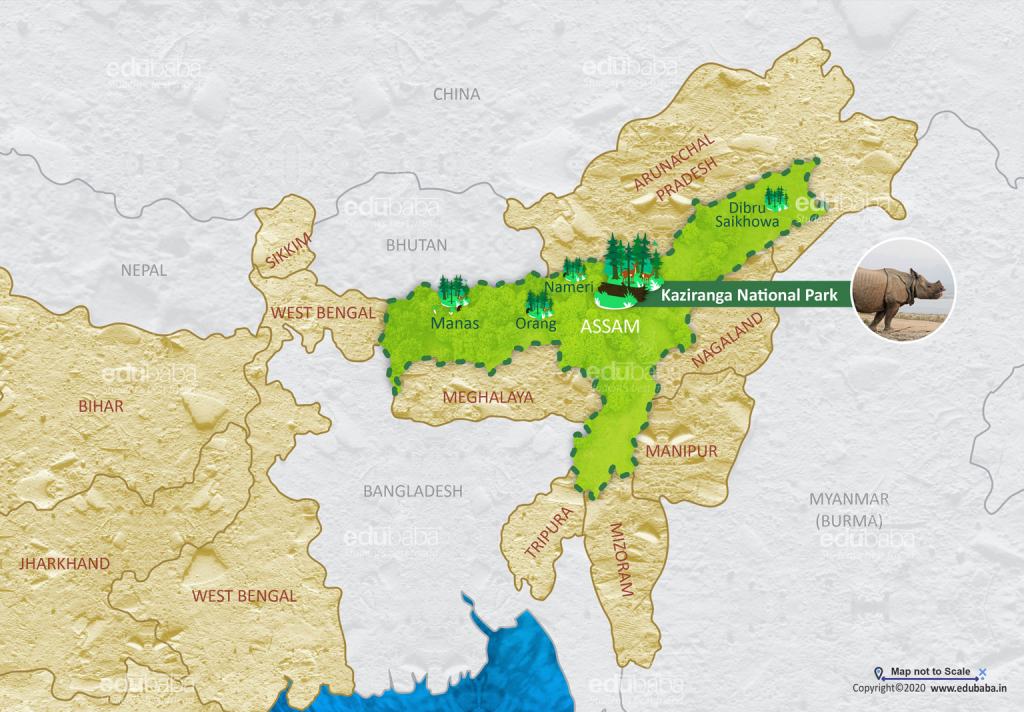
In News: Kaziranga National Park Bids Farewell to Patrol Elephant Joymala
- Joymala, a long-serving patrol elephant of Kaziranga National Park, passed away after serving since 1992. Joymala gained international recognition after a tiger leapt over her during patrol in 2004. The incident highlighted the courage and dedication of Kaziranga’s patrol elephants and forest personnel.
About Kaziranga National Park
- Kaziranga National Park is located between the Brahmaputra River and the Karbi Hills in Assam.
- It is the largest undisturbed representative area within the Brahmaputra Valley floodplain.
- The park was declared a UNESCO World Heritage Site in 1985.
- The Diffalu River, a tributary of the Brahmaputra, flows through the national park.
- The Moradifalu River flows along the southern boundary of the national park.
Flora and Fauna of Kaziranga National Park
- The park is famous for elephant grasses mixed with small swamplands across its landscape.
- Aquatic vegetation includes water lilies, water hyacinths and lotus species.
- Kaziranga supports one-horned rhinoceroses, tigers, elephants, wild buffaloes and eastern swamp deer.
- Kaziranga protects the largest population of one-horned rhinoceroses through sustained conservation efforts.
- The park also shelters Hoolock gibbons and capped langurs in its forest habitats.
- The Gangetic River dolphin is commonly found within the park ecosystem.
- Kaziranga has the world’s largest population of one-horned rhinoceroses.
Source: The Hindu
Gaganyaan Mission: UPSC Prelims Notes
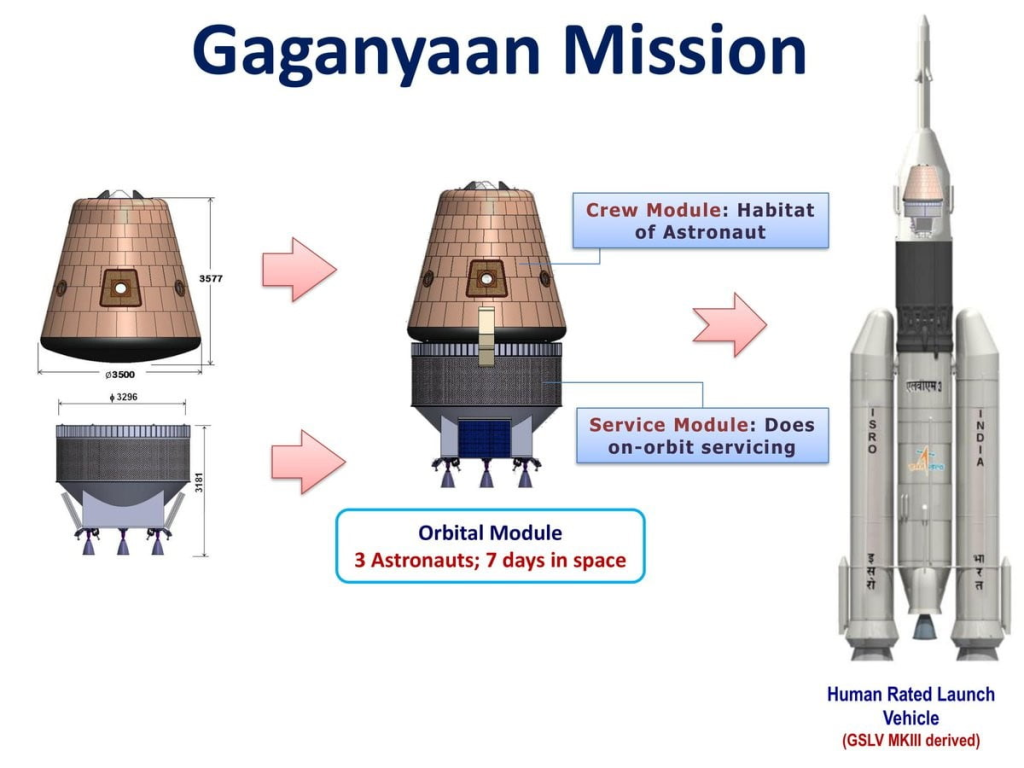
In News: ISRO Successfully Tests SOLVE for the Gaganyaan Mission
- ISRO successfully conducted the first ground test of SOLVE for upcoming Gaganyaan mission test flights.
About the Gaganyaan Mission
- Gaganyaan Mission aims to demonstrate safe human spaceflight through an indigenous crew module.
- The Crew Module carries astronauts during launch, spaceflight and sea splashdown.
- ISRO is conducting multiple tests to validate mission safety under different operational conditions.
- Recent tests include Mission MITRA and the second Integrated Air Drop Test.
SOLVE (Sub-Orbital Launch Vehicle for Experiments)
- SOLVE is a solid motor-based Sub-Orbital Launch Vehicle developed for Gaganyaan experimental missions.
- It serves as a test platform for validating the crew module deceleration system.
- The SOLVE vehicle carries the crew module to an altitude between 10 and 17 km.
- The Crew Module separates from the vehicle before parachute deployment during test missions.
- The solid stage is derived from the PSLV Strap-on Motor with suitable modifications.
- Modifications include slow burn rate propellant and secondary injection thrust vector control.
- The ground test confirmed expected performance parameters of the SOLVE solid motor.
Crew Module Recovery System and Integrated Air Drop Test (IADT)
- A series of 10 parachutes reduces the crew module velocity before sea splashdown.
- The Integrated Air Drop Test validates the crew module deceleration system under different test conditions.
- The Crew Module recovery system ensures safe splashdown during Gaganyaan mission operations.
- SOLVE provides greater flexibility for simulating different Gaganyaan mission conditions through repeated experimental flights.
Source: The Hindu
National Pension System (NPS): UPSC Prelims Notes

In News: PFRDA Revises National Pension System (NPS) Withdrawal Rules
- The PFRDA revised National Pension System withdrawal rules to provide greater flexibility for retirement planning.
About the National Pension System (NPS)
- The National Pension System is a long-term retirement savings scheme for subscribers.
- The scheme helps build a retirement corpus through long-term contributions during working years.
- Earlier, subscribers had to invest 40% corpus into an annuity at retirement.
- The revised rules provide greater flexibility in accessing retirement savings.
New NPS Withdrawal Rules and Retirement Income Scheme (RIS)
- Revised Withdrawal Norms:
- Subscribers can now withdraw 80% corpus as a lump sum after retirement.
- The mandatory annuity portion has been reduced from 40% to 20% of the corpus.
- Withdrawal for Smaller Corpus:
- Subscribers with a corpus up to ₹8 lakh can withdraw the entire accumulated amount.
- Subscribers with a corpus between ₹8 lakh and ₹12 lakh can withdraw up to ₹6 lakh.
- The remaining amount is routed through structured withdrawal or annuity options.
- Retirement Income Scheme (RIS):
- The Retirement Income Scheme allows phased withdrawal from the non-annuity portion of the corpus.
- The remaining retirement corpus continues earning market-linked returns during periodic withdrawals.
- Payout Options under RIS:
- Systematic Lump Sum Withdrawal provides fixed payouts at monthly, quarterly, half-yearly or annual intervals.
- Systematic Unit Redemption provides payouts based on redeemed units and prevailing NAV.
- Tax Implications:
- Under the Income Tax Act, only 60% of the withdrawn corpus remains tax exempt.
- The additional 20% withdrawal permitted under revised rules is taxable as per the applicable slab rate.
Pension Fund Regulatory and Development Authority (PFRDA)
- The PFRDA regulates and develops the National Pension System in India.
- The Authority introduced revised withdrawal rules in December 2025.
- The PFRDA also introduced the Retirement Income Scheme for phased retirement withdrawals.
- The Authority provides a regulated pension framework with structured retirement income options.
Source: The Hindu
Synthetic Cell: UPSC Prelims Notes
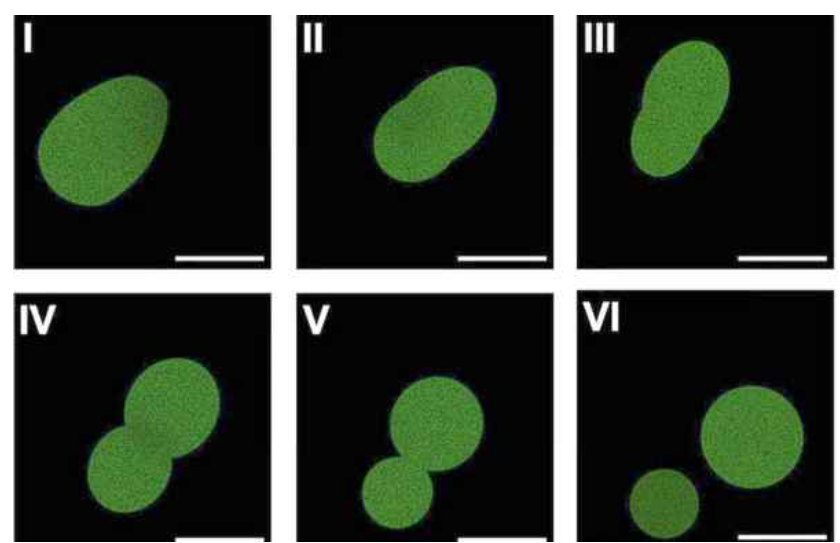
In News: Scientists Develop a Synthetic Cell that Can Grow and Divide
- Scientists developed a synthetic cell capable of growth and division under laboratory conditions.
What is a Synthetic Cell?
- A synthetic cell is an artificially created cell designed to perform basic life-like functions.
- Researchers initially created the synthetic cell using a liposome made from fats.
- The cell contained the PURE System to convert DNA instructions into proteins.
- The synthetic cell contained 90,000 base pairs of DNA.
How Does a Synthetic Cell Work?
- The synthetic cell fuses with smaller feeder liposomes to obtain nutrients and lipids.
- Its DNA produces Alpha-Hemolysin, which helps capture feeder liposomes for growth.
- The cell expands after obtaining lipids and nutrients from feeder liposomes.
- The Phi29 Enzyme copies the complete genome before cell division.
- Scientists engineered a biological mechanism that enabled the cell membrane to divide naturally.
- Faster-growing mutated cells produced more offspring and became dominant within the population.
Key Components of the Synthetic Cell
- Liposome: A fat-based bubble that forms the basic structure of the synthetic cell.
- PURE System: A protein-making system that converts DNA instructions into proteins.
- Alpha-Hemolysin: A protein that captures feeder liposomes to support cell growth.
- Phi29 Enzyme: An enzyme that copies the entire genome before cell division.
Source: The Hindu
Direct Seeded Rice (DSR): UPSC Prelims Notes

In News: Direct Seeded Rice (DSR) Gains Traction During El Niño Year
What is Direct Seeded Rice (DSR)?
- Direct Seeded Rice is a cultivation method where paddy seeds are directly sown in the main field.
- DSR eliminates the need for nursery preparation, puddling, flooding, and seedling transplantation.
- Farmers cultivate Direct Seeded Rice using machines similar to wheat sowing.
- DSR has gained farmer acceptance due to increasing water and labour shortages.
Advantages and Challenges of Direct Seeded Rice (DSR)
- Advantages
- DSR saves around 30 to 35% water compared to the traditional transplantation method.
- DSR reduces labour requirement by eliminating nursery raising and transplanting operations.
- Farmers require irrigation only to maintain soil moisture instead of continuous flooding.
- Laser land levelling improves uniform sowing and efficient water distribution.
- Challenges
- DSR replaces standing water with chemical herbicides for effective weed management.
- Normal paddy varieties cannot tolerate Imazethapyr herbicide, leading to crop damage.
Herbicide-Tolerant (HT) Rice Varieties for Direct Seeded Rice
- HT Rice varieties tolerate Imazethapyr herbicide used for weed control under DSR cultivation.
- IARI developed Pusa Basmati-1985 and Pusa Basmati-1979 through mutation breeding.
- These varieties contain a mutated ALS gene and are not genetically modified.
- The mutated ALS enzyme prevents Imazethapyr binding while maintaining amino acid production.
- Savannah Seeds developed FullPage Trait hybrids named Sava-134 and Sava-127 for DSR cultivation.
- Central Rice Research Institute released CR Dhan-807 and CR Dhan-812 as herbicide-tolerant rice varieties.
Source: Indian Express
Hudson River: UPSC Prelims Notes
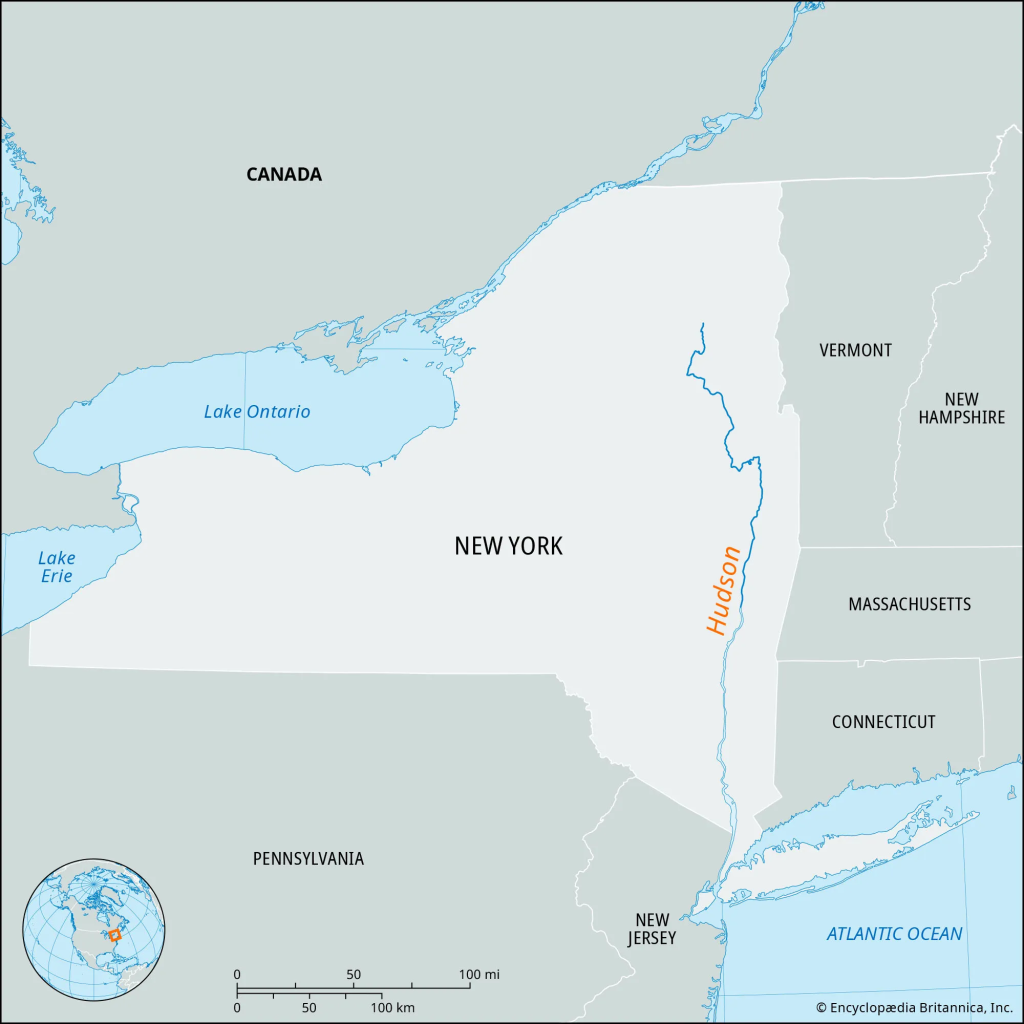
In News: INS Sudarshini Participates in Maritime Event on the Hudson River
- INS Sudarshini participated in a maritime event on the Hudson River during U.S. Independence anniversary celebrations.
About the Hudson River
- The Hudson River is a major river located in New York State, United States.
- It flows almost entirely within New York State except for its final boundary segment.
- The river was named after Henry Hudson, who explored it in 1609.
- It originates from postglacial lakes in the Adirondack Mountains near Mount Marcy.
- Lake Tear of the Clouds is regarded as the source of its main headstream.
- The Hudson River flows about 507 kilometres through eastern New York State.
Geographical Features of the Hudson River
- The river forms the boundary between New York and New Jersey for about 34 kilometres.
- The Hudson River empties into the Upper New York Bay.
- It finally drains into the Atlantic Ocean through New York Harbor.
- The lower river is a tidal estuary formed by glaciation and rising sea levels.
- The Mohawk River is the major tributary of the Hudson River.
Source: ToI
