

UPSC Mains
GS Paper III
Economy & Energy
How Sustainable Is India’s E20 Ethanol Push?
India hit E20 blending ahead of its 2030 deadline — but mileage complaints and viral misinformation about corn imports are testing public trust
ETHANOL PRODUCED (2024-25)
~1,000 crore litres
FOREX SAVED SINCE 2014
~₹1 lakh crore
MILEAGE DROP REPORTED
3-6%
📰
Context and Background
- India achieved E20 blending ahead of the 2030 deadline set under the National Biofuel Policy.
- Social media claims falsely alleged India was importing corn from the US to produce ethanol.
- Vehicle owners reported mileage drops and engine concerns after E20 fuel adoption.
- The government defended E20 as central to energy security and farmer income enhancement.
India’s Ethanol Production Status
- India produced approximately 1,000 crore litres of ethanol in the 2024-25 blending season.
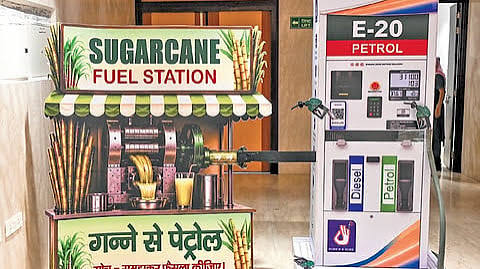
- Sugarcane-based ethanol accounts for nearly 80% of India’s ethanol production.
- Grain-based ethanol, including maize and rice, contributes the remaining 20%.
- India has not imported corn for ethanol — domestic maize production meets current requirements.
- The National Biofuel Policy 2018 targets multiple feedstocks to ensure food security simultaneously.
🌽
Corn Import Concerns: Fact Check
- India is a net exporter of maize, not an importer, for ethanol production.
- Maize imports in 2024-25 were for poultry and animal feed — not ethanol purposes.
- The government allowed maize import duty reduction for the feed sector, causing public confusion.
- Ethanol producers are using domestic surplus rice and maize from Food Corporation of India stocks.
The viral claim of “US corn imports for ethanol” is false — India remains a net maize exporter, and any imports were for the animal feed sector, unrelated to ethanol.
Vehicle Safety Concerns Around E20
Mileage Drop
E20 has lower energy density than petrol, causing 3-6% mileage reduction.
Material Compatibility
Older vehicles have rubber seals and fuel lines not designed for higher ethanol blends.
Warranty Concerns
Some manufacturers warned that E20 use could void warranties for older vehicle models.
Cold Start Issues
High ethanol blends cause cold-start difficulties in low-temperature conditions.
💰
Economic Impact of Ethanol Blending
- India saved approximately ₹1 lakh crore in foreign exchange through ethanol blending since 2014.
- Farmers received approximately ₹2.3 lakh crore from ethanol procurement over the same period.
- The programme displaced over 500 crore litres of petrol, reducing crude import dependence.
- Ethanol blending has created over 3 lakh direct and indirect employment opportunities in rural areas.
🧭
Way Forward for a Sustainable E20 Transition
Feedstock Diversification
Expand second-generation ethanol from agricultural waste, reducing food crop dependence.
Vehicle Retrofitment
Provide incentives for retrofitting older vehicles to ensure E20 material compatibility.
Consumer Awareness
Launch campaigns clarifying mileage tradeoffs and long-term cost savings to manage expectations.
Flex Fuel Mandate
Accelerate mandatory flex-fuel vehicle production, enabling consumer choice between blends.
Food Security Safeguard
Maintain strict feedstock prioritisation protocols ensuring food grains are not diverted to ethanol.
India’s E20 push is strategically sound but requires better consumer communication and vehicle readiness. The sustainable ethanol transition demands food security safeguards, vehicle compatibility and feedstock diversification simultaneously.
