


Compressed Biogas (CBG)
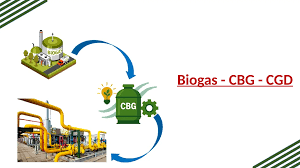
What is CBG?
- Compressed Biogas is a purified form of biogas rich in methane used as clean fuel.
- Produced from decomposition of animal waste, plant residue, and MSW.
- After purification and compression, it becomes suitable for automotive and industrial use.
- Possesses properties similar to Compressed Natural Gas (CNG).
Key Features
- Mainly composed of methane gas, ensuring high calorific efficiency.
- Can directly replace CNG in vehicles and industries without major modifications.
- Derived from renewable sources, making it a green energy alternative.
- Supports large-scale utilisation of biomass resources available in India.
Sources of Production
- Agricultural residue such as crop stubble and organic waste.
- Animal waste including cattle dung.
- Urban waste like Municipal Solid Waste (MSW).
Benefits
- Energy Security
- Reduces dependence on imported crude oil and natural gas.
- Provides a stable alternative against price fluctuations.
- Environmental Benefits
- Helps reduce carbon emissions and air pollution.
- Promotes scientific disposal of waste under Swachh Bharat Mission.
- Economic Benefits
- Generates additional income for farmers and rural households.
- Creates rural employment and supports local economy.
- Climate Commitments
- Contributes towards achieving climate change targets.
- Supports transition to clean and sustainable energy systems.
Sacrifice Ratio
What is Sacrifice Ratio?
- Sacrifice Ratio measures the economic cost of reducing inflation in an economy.
- It shows how much GDP loss or unemployment rise occurs for lowering inflation.
- Reflects the trade-off between price stability and economic growth.
- Formula
- Sacrifice Ratio = Loss in GDP ÷ Reduction in inflation.
How it Works
- To reduce inflation, governments use tight monetary or fiscal policies.
- This reduces demand, leading to lower output and higher unemployment.
- Hence, disinflation always involves some short-term economic pain.
Linkages in Macroeconomics
- The Sacrifice Ratio is closely associated with the Phillips Curve relationship. It reflects the inverse trade-off between inflation and unemployment in short run.
- Through Okun’s Law, unemployment changes translate into variations in output. Together, these concepts explain the output cost of disinflation policies.
Interpretation & Policy Relevance
- A higher Sacrifice Ratio indicates greater output loss for reducing inflation.
- A lower ratio suggests efficient disinflation with limited economic disruption.
- It helps policymakers evaluate the cost-effectiveness of monetary policies.
- Serves as a critical tool in designing inflation targeting strategies.
Factors Affecting Sacrifice Ratio
- Expectations & Credibility
- Strong central bank credibility reduces inflation faster with less cost.
- Speed of Policy Action
- Rapid disinflation causes higher short-term output loss.
- Gradual approach ensures smoother adjustment.
- Market Flexibility
- Flexible wages and prices lead to lower economic losses.
- Rigid economies face higher sacrifice ratio.
- Nature of Economy
- Open economies can import stability → lower inflation cost.
- Closed economies rely on internal adjustment → higher cost.
Privilege Motion & Parliamentary Privileges (Article 105)
About the Motion
- A Privilege Motion is raised when there is a breach of parliamentary privilege.
- It is moved by a Member of Parliament against any individual or authority.
- It ensures protection of rights and dignity of Parliament and its members.
- Background
- These are special rights enjoyed by Members of Parliament (MPs).
- Includes freedom of speech in Parliament without legal liability.
- MPs are protected from court proceedings for statements made in House.
- Privileges are not fully codified, evolving through conventions and precedents.
Procedure of Privilege Motion
- Any MP can raise a motion for breach of privilege.
- The Speaker (Lok Sabha) or Chairman (Rajya Sabha) acts as first authority.
- They may either decide the matter or refer it to the Privileges Committee.
- In Rajya Sabha, it is governed under Rule 203 of procedure rules.
Committee of Privileges
- Lok Sabha Committee has 15 members, Rajya Sabha has 10 members.
- Members are nominated by Speaker/Chairman of respective Houses.
- In Rajya Sabha, the committee is headed by the Deputy Chairman.
- Examines cases of breach and submits recommendations to the House.
Key Conditions & Process
- Issue must relate to a recent and specific incident.
- It should require intervention of the House.
- Committee report is generally presented within one month.
- Final decision is taken by the House through a motion.
Cotton Cultivation in India

Importance of Cotton
- Cotton is a major commercial crop contributing nearly 25% of global production.
- It is popularly known as “White Gold” due to its economic significance.
- Around 67% cultivation is rain-fed, while 33% is under irrigation.
Conditions Required
- Agro-Climatic Conditions
- Requires a hot and sunny climate with a long frost-free growing period.
- Performs best under warm and humid conditions for optimal yield.
- Sensitive to frost, making temperature stability crucial for cultivation.
- Soil Requirements
- Grows well in deep alluvial soils in northern regions.
- Central India favours black cotton (regur) soils with high moisture retention.
- Southern regions support growth in mixed red and black soils.
- Highly sensitive to waterlogging, thus requires well-drained soils.
- Water & Sensitivity Factors
- Shows moderate tolerance to salinity conditions.
- Excess water adversely affects roots due to poor drainage sensitivity.
- Rain-fed dominance makes it vulnerable to monsoon variability.
Types of Cotton
- Hybrid Cotton
- Developed by crossing two genetically different parent varieties.
- Ensures improved yield and adaptability under diverse conditions.
- Bt Cotton
- Genetically modified variety with pest resistance traits.
- Designed to protect against specific insect pests and improve productivity.
Power Sector Trends in India
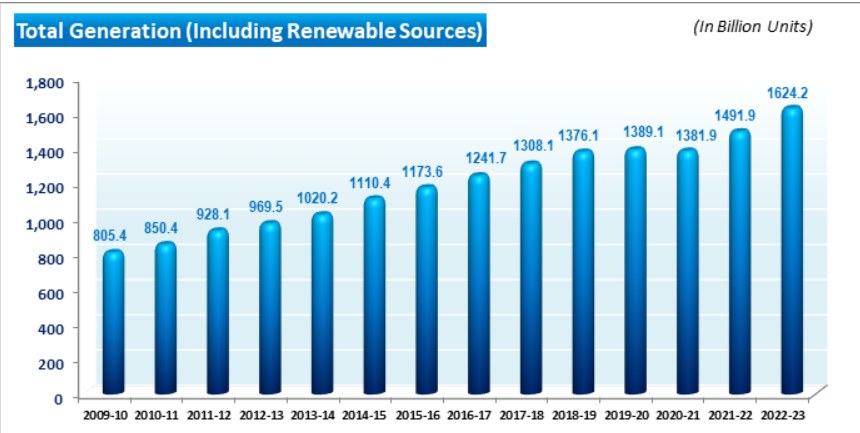
Context: A recent report highlights a global decline in fossil fuel-based power, alongside rising clean energy generation in India.
Key Findings (India)
- Share of clean energy in power generation reached 12% in 2025.
- Fossil fuel-based generation declined to 52 TWh, lowest in recent years (excluding COVID period).
- India added nearly 38 GW solar capacity in 2025, marking a significant expansion.
- Total solar capacity increased from 73 GW (2023) to 163 GW (2025).
- Wind energy capacity stood at 51 GW, while hydropower reached 63 GW.
- Overall renewable capacity addition exceeded 48 GW in a single year.
Emerging Concerns
- Weak monsoon conditions may reduce hydropower generation.
- Rising demand for irrigation and cooling may increase fossil fuel dependence.
- Indicates vulnerability of clean energy gains to climatic variability.
Global Trends
- Fossil fuel-based power declined across 52 countries due to renewable growth.
- China remains the largest coal-based power producer globally.
- India ranks third in coal-based electricity generation.
Maritime Law & Naval Blockade
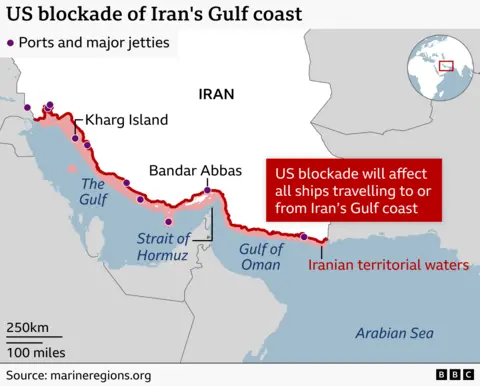
Context: U.S. seizure of an Iranian vessel near the Strait of Hormuz has raised legal questions under maritime law.
More in News
- U.S. intercepted and seized an Iran-flagged ship in the Gulf of Oman.
- Action linked to enforcement of a naval blockade on Iranian oil exports.
- Incident occurred amid tensions following Israel–Iran conflict (Feb 2026).
- A temporary ceasefire was in place, creating ambiguity over legal status of conflict.
Legal Framework Governing Maritime Actions
- UNCLOS (1982) governs maritime conduct during peacetime.
- During conflict, rules shift to International Humanitarian Law (Law of Naval Warfare).
- Applicability depends on whether situation qualifies as armed conflict.
Key Legal Principles
- Peacetime (UNCLOS Regime)
- Ensures freedom of navigation on high seas.
- Does not permit forcible boarding for unilateral sanctions enforcement.
- Seizure of foreign vessels may violate sovereignty principles.
- Wartime (Naval Warfare Rules)
- Naval blockade is a legitimate wartime instrument.
- Belligerent states can intercept and capture enemy vessels.
- Governed by customary law such as San Remo Manual (1994).
- San Remo Manual & Prize Law
- Recognises rights of belligerents to visit, search, and capture vessels.
- Allows captured ships to be adjudicated under Prize Law mechanisms.
- Provides operational guidance for naval warfare at sea.
- However, it has no legal force in peacetime conditions.
Tadoba–Andhari Tiger Reserve
Basic Profile
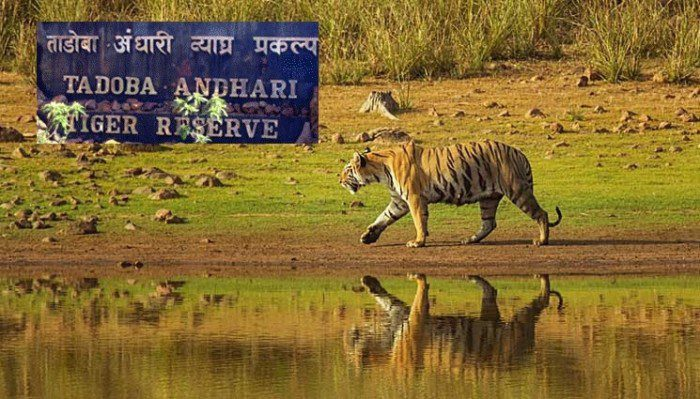
- Located in Chandrapur district, Maharashtra, forming part of central Indian tiger landscape.
- It is the largest and oldest tiger reserve in Maharashtra.
- Total area is about 1,727 sq km, comprising protected forest ecosystem.
- Established in 1955, combining Tadoba National Park and Andhari Wildlife Sanctuary.
- Key water bodies include Tadoba Lake, Kolsa Lake, and Tadoba River.
Ecological Features
- Falls under Central Plateau (Deccan Peninsula) biogeographic zone.
- Dominated by tropical dry deciduous forests, typical of central India.
- Rich vegetation includes teak, salai, tendu, mahua, and karaya gum trees.
Biodiversity (Flora & Fauna)
- Hosts flagship species tiger, along with leopard and sloth bear.
- Other fauna include gaur, dhole (wild dog), striped hyena, marsh crocodile.
- Herbivores include sambar, chital, barking deer, and four-horned antelope.
- Supports over 250 bird species, making it a major birding hotspot.
- Connected through corridors with Nagzira–Navegaon and Pench Tiger Reserves.
3D Glass Semiconductor Project (India)
Context: India laid foundation for its first 3D glass-based semiconductor packaging unit in Odisha under ISM. The project located in Bhubaneswar (Odisha) with an investment of ₹76,000 crore. It is implemented by RIR Power Electronics with US-based 3D Glass Solutions.
What is 3D Glass Semiconductor Technology?
- Uses glass substrate instead of silicon wafers for advanced chip packaging.
- Enables 3D stacking of components, unlike traditional 2D chip design.
- Allows integration of multiple components within same compact footprint.
- Improves performance by increasing processing power and efficiency.
3D Glass vs Traditional Chips
- Traditional chips use silicon wafers and planar (2D) architecture.
- 3D chips use vertical stacking, enhancing computational capability.
- Leads to faster processing, better AI performance and data handling.
- Supports emerging technologies like AI, 5G, autonomous systems.
Significance for India
- Positions India in advanced semiconductor packaging ecosystem.
- Reduces dependence on imports, enhancing technology self-reliance.
- Strengthens domestic capacity in electronics and defence sectors.
- Supports development of data centres and high-performance computing.
Baltic Sea
About Baltic Sea
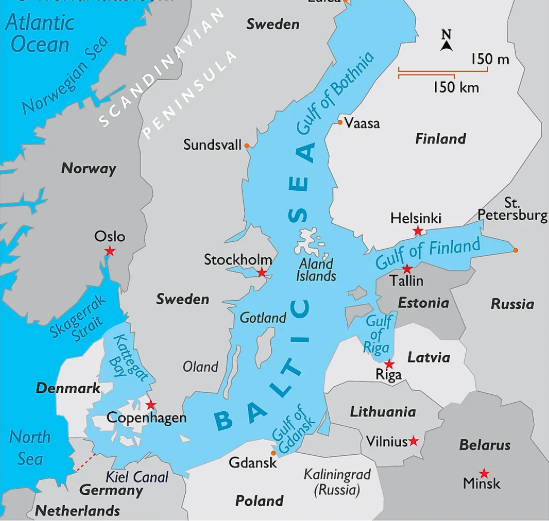
- Baltic Sea is a marginal sea of the North Atlantic Ocean in Northern Europe.
- Extends from southern Denmark to near the Arctic Circle in the north.
- Bordered by Denmark, Sweden, Finland, Russia, Estonia, Latvia, Lithuania, Poland, and Germany.
Key Physical Features
- It is the youngest sea in geological terms.
- World’s largest expanse of brackish water due to limited oceanic exchange.
- A semi-enclosed and shallow sea, influencing salinity and circulation.
Important Connections
- Connected to the North Sea via Kiel Canal (Germany).
- Major gulfs include Gulf of Bothnia, Gulf of Finland, and Gulf of Gdańsk.
