

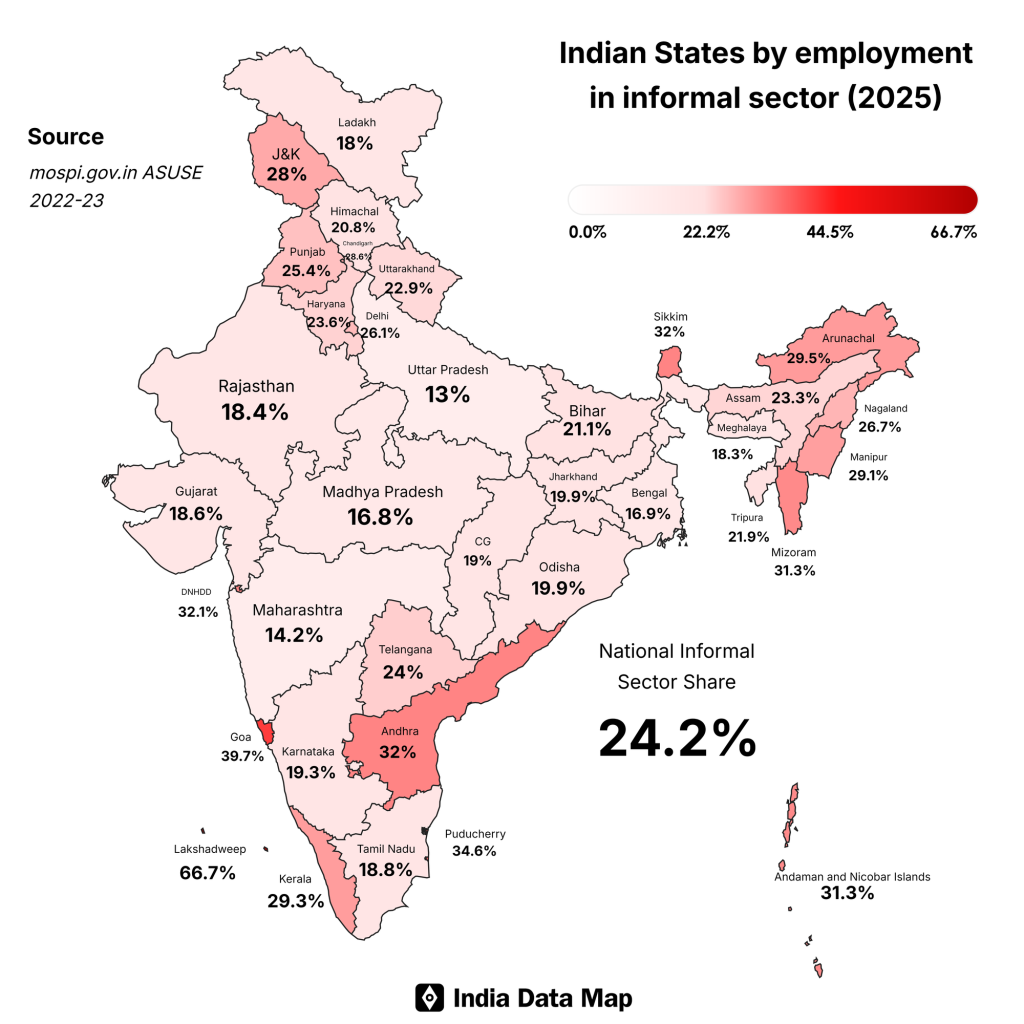
Context: Recent worker protests in Noida highlight the growing precariousness of urban informal workers, reflecting deeper structural issues in India’s urban development model.
Structural Transformation of Urban Economy
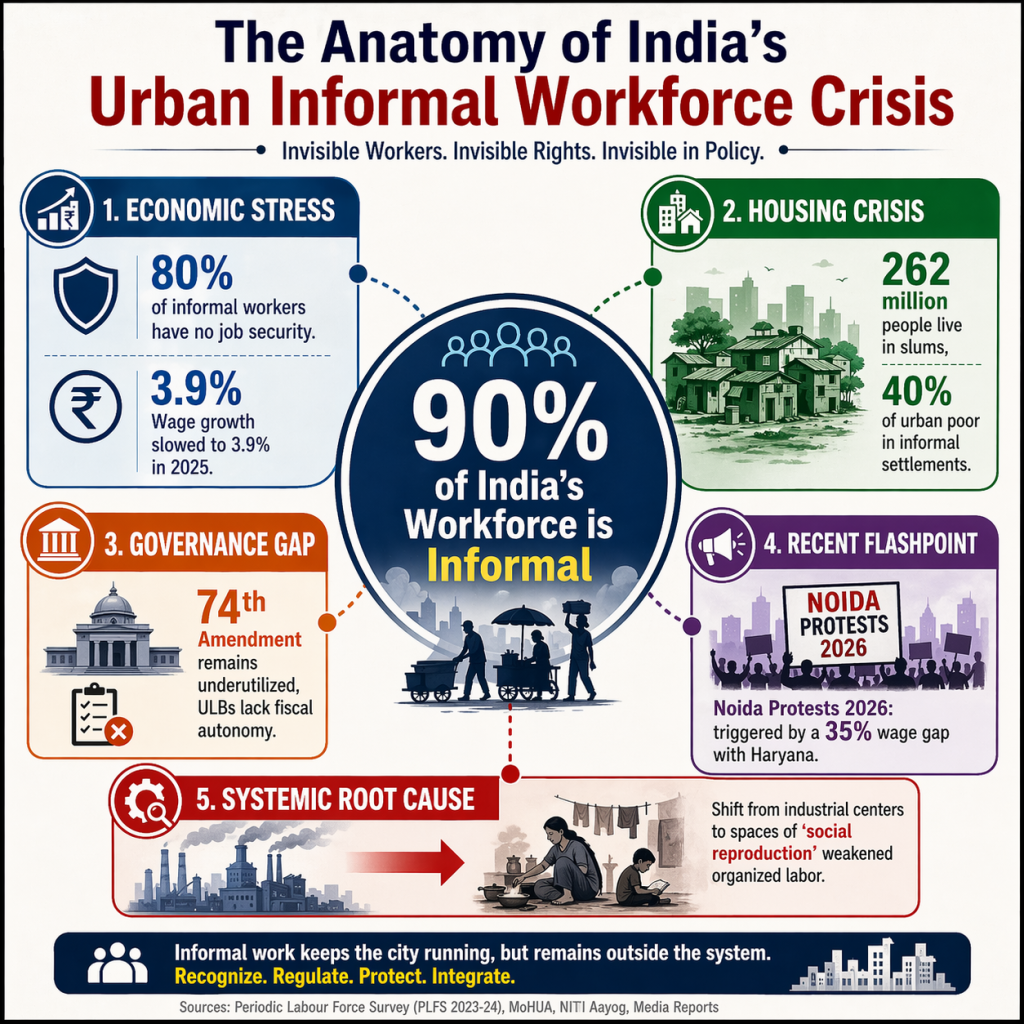
- Shift in urban production systems: Cities have transitioned from industrial production centres to spaces of social reproduction, weakening organised labour.
- Decline of formal industry: Closure of textile mills (Mumbai, Ahmedabad) led to erosion of stable, unionised employment.
- Fragmentation of labour: Workforce has become dispersed across informal activities, reducing collective bargaining power.
- Urbanisation of survival: Cities increasingly revolve around basic survival functions—housing, water, and livelihoods, rather than productive employment.
Changing Role of the State
- Policy shift under Washington Consensus: Emphasis moved towards privatisation, fiscal discipline, and growth-led development.
- Erosion of rights-based services: Access to water, health, and education shifted from public rights to market-driven services.
- State as facilitator, not provider: Public housing and welfare provisioning declined, with increased reliance on private sector solutions.
- The transition has weakened the protective role of the state for vulnerable workers.
Nature of Urban Informal Vulnerability
- Around 90% of India’s workforce is informal, with low levels of secure salaried employment.
- Nearly 40% of urban poor live in slums, often without legal tenure or basic services.
- Workers spend 30–50% of income on rent, limiting savings and mobility.
- About 60% of informal settlements are in flood-prone or hazardous areas, increasing risk exposure.
- Lack of collateral forces reliance on informal lenders, leading to debt traps (RBI Bulletin 2025).
Deepening Challenges in Urban Governance
- Labour law dilution: Weakening of protections has reduced job security and worker rights.
- Privatisation of essential services: Water and electricity increasingly follow user-fee models, raising cost burdens.
- Gentrification and displacement: Slum evictions for “world-class infrastructure” displace vulnerable populations.
- Loss of urban commons: Natural spaces are increasingly commodified, reducing access for the poor.
- Real estate-led urbanisation: Public land is diverted towards high-end projects rather than affordable housing.
Way Forward
- Re-centre rights-based approach: Restore access to housing, water, and services as basic entitlements.
- Strengthen labour protections: Extend social security and legal safeguards to informal workers.
- Inclusive urban governance: Models like workers’ councils (Kerala Urban Commission) can integrate workers into decision-making.
- Affordable housing focus: Prioritise low-income housing and secure tenure systems.
- Address intersectional vulnerabilities: Integrate policies across labour, housing, climate, and disaster risks.
- Strengthen financial inclusion: Expand access to formal credit systems to reduce debt dependency.
Conclusion
- India’s urban informal workforce reflects the contradictions of rapid urbanisation without inclusive planning. Sustainable urban growth will require a shift towards rights-based, worker-centric, and equitable development models.
