

Reconnecting Public Health with People’s Needs
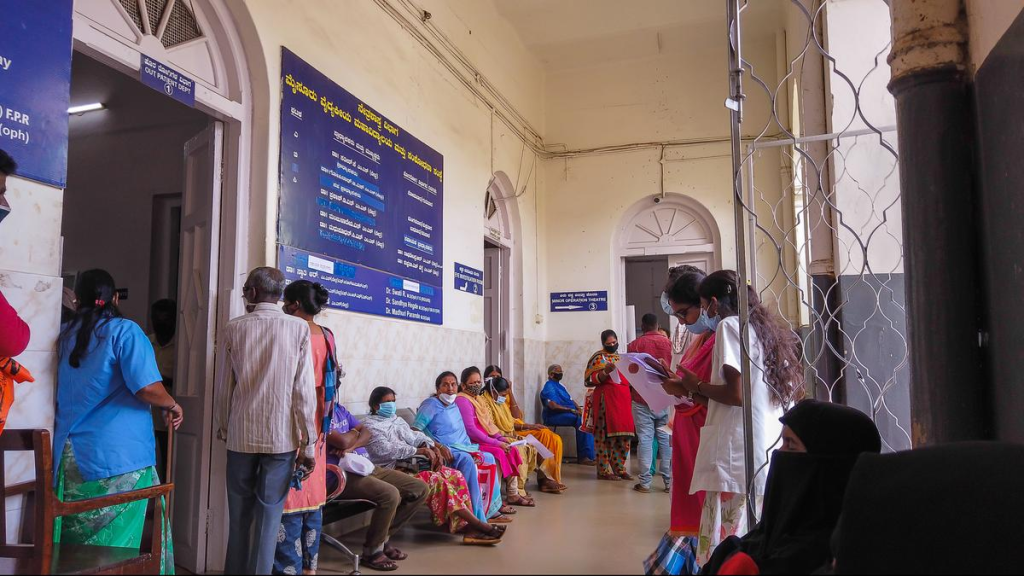
In News: Public Health Policy & People’s Felt Needs
- Public health policies are crucial for achieving Universal Health Coverage (UHC) and reaping India’s demographic dividend.
- UHC seeks to ensure every individual accesses needed health services without suffering financial hardship.
- Two recent initiatives reveal serious inadequacies in evidence-based health policymaking in India.
Issue: Individualisation of Health vs Population Health
- The shift from population health outcomes to individual well-being is a major concern in current policy.
- Wellness was historically used to denote absence of disease but has since expanded to mental, spiritual, social and environmental dimensions.
- Health promotion is preferred over wellness in public health because it is more measurable and population-based.
- Wellness places primary responsibility on individuals assuming they can modify health-related choices freely.
- This approach underestimates structural and social determinants that actually shape health outcomes significantly.
- As a management principle states, “If you cannot measure it, you cannot improve it” — well-being is inherently unmeasurable at population level.
- When health outcomes are framed as individual well-being, systematic unmet population health needs remain uncaptured.
| Schemes: Ayushman Bharat HWCs & Digital Health Mission (ABDHM)Health and Wellness Centres (HWCs):Introduced in 2018, HWCs were intended to strengthen grassroots health infrastructure across India.Names of Sub-Centres, Primary Health Centres and Community Health Centres were mandatorily prefixed with “Health and Wellness Centre”.This created considerable ambiguity among health professionals and policymakers about their actual mandates.The shift toward wellness moved focus from population health outcomes to subjective individual well-being.Ayushman Bharat Digital Health Mission (ABDHM):ABDHM’s principal objective is creating a digital repository of health information through a unique ABHA card for every individual.It maintains registries of health facilities, healthcare professionals and health insurance information.ABDHM receives an annual budget of approximately Rs 300 crore without measurable health outcome targets. |
Concern: Data Generation Without Improved Access
- Information Without Access: A digital portal of health records cannot by itself address inadequate healthcare access.
- Structural Gap: Even if every individual has an ABHA card, delivering healthcare still requires robust institutional mechanisms.
- Silo Operation: Individuals, facilities and healthcare professionals continue to operate largely in silos under ABDHM.
- Unaffordability Persists: Private sector care remains unaffordable and public sector quality remains poor regardless of digital mapping.
- Missing Rationale: It is difficult to identify a compelling public health rationale for this scale of data generation.
- Weakening Institutions: Public health institutions continue to weaken in many parts of India despite these digital initiatives.
Way Forward: Strengthening the Three-Tier Health System
- Felt Needs First: Curative care constitutes an immediate pressing need before preventive and promotive interventions can be meaningful.
- Evidence-Based Policy: Public health policies must be grounded in evidence and linked to measurable population health outcomes.
- Strengthen Institutions: Concrete measures must strengthen Sub-Centres, PHCs and CHCs as envisaged under India’s three-tier system.
- Mandate Clarity: The identity and mandate of grassroots health institutions must be clearly defined and protected from branding changes.
- Address Determinants: Structural and social determinants of health including food, water, nutrition and chronic disease management must be central to policy.
- Measurable Outcomes: ABDHM budgets must be tied to measurable improvements in healthcare access rather than data generation alone.
Source: The Hindu
Reconnecting Public Health with People’s Needs: UPSC Mains Notes
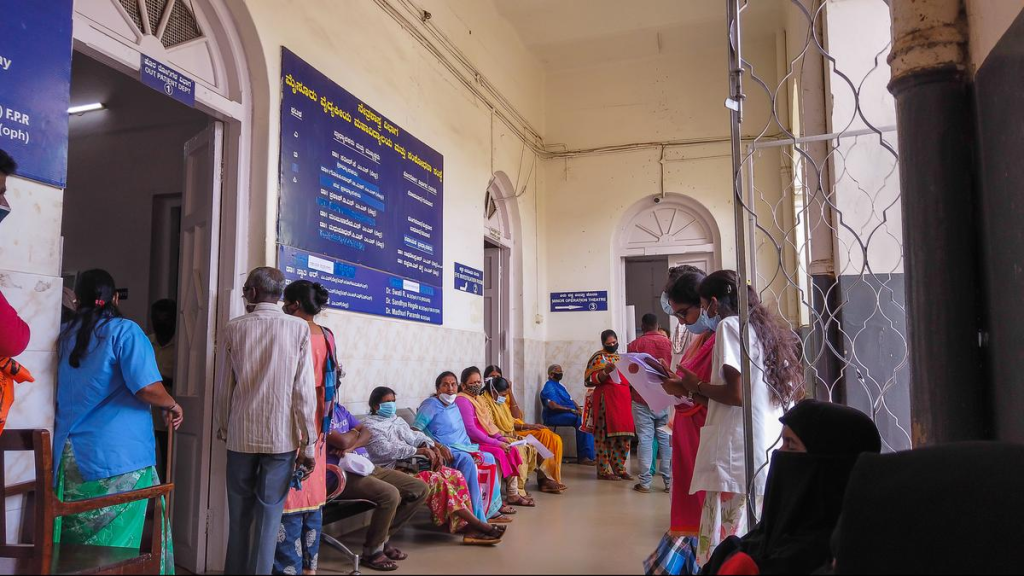
In News: Public Health Policy & People’s Felt Needs
- Public health policies are crucial for achieving Universal Health Coverage (UHC) and reaping India’s demographic dividend.
- UHC seeks to ensure every individual accesses needed health services without suffering financial hardship.
- Two recent initiatives reveal serious inadequacies in evidence-based health policymaking in India.
Issue: Individualisation of Health vs Population Health
- The shift from population health outcomes to individual well-being is a major concern in current policy.
- Wellness was historically used to denote absence of disease but has since expanded to mental, spiritual, social and environmental dimensions.
- Health promotion is preferred over wellness in public health because it is more measurable and population-based.
- Wellness places primary responsibility on individuals assuming they can modify health-related choices freely.
- This approach underestimates structural and social determinants that actually shape health outcomes significantly.
- As a management principle states, “If you cannot measure it, you cannot improve it” — well-being is inherently unmeasurable at population level.
- When health outcomes are framed as individual well-being, systematic unmet population health needs remain uncaptured.
| Schemes: Ayushman Bharat HWCs & Digital Health Mission (ABDHM)Health and Wellness Centres (HWCs):Introduced in 2018, HWCs were intended to strengthen grassroots health infrastructure across India.Names of Sub-Centres, Primary Health Centres and Community Health Centres were mandatorily prefixed with “Health and Wellness Centre”.This created considerable ambiguity among health professionals and policymakers about their actual mandates.The shift toward wellness moved focus from population health outcomes to subjective individual well-being.Ayushman Bharat Digital Health Mission (ABDHM):ABDHM’s principal objective is creating a digital repository of health information through a unique ABHA card for every individual.It maintains registries of health facilities, healthcare professionals and health insurance information.ABDHM receives an annual budget of approximately Rs 300 crore without measurable health outcome targets. |
Concern: Data Generation Without Improved Access
- Information Without Access: A digital portal of health records cannot by itself address inadequate healthcare access.
- Structural Gap: Even if every individual has an ABHA card, delivering healthcare still requires robust institutional mechanisms.
- Silo Operation: Individuals, facilities and healthcare professionals continue to operate largely in silos under ABDHM.
- Unaffordability Persists: Private sector care remains unaffordable and public sector quality remains poor regardless of digital mapping.
- Missing Rationale: It is difficult to identify a compelling public health rationale for this scale of data generation.
- Weakening Institutions: Public health institutions continue to weaken in many parts of India despite these digital initiatives.
Way Forward: Strengthening the Three-Tier Health System
- Felt Needs First: Curative care constitutes an immediate pressing need before preventive and promotive interventions can be meaningful.
- Evidence-Based Policy: Public health policies must be grounded in evidence and linked to measurable population health outcomes.
- Strengthen Institutions: Concrete measures must strengthen Sub-Centres, PHCs and CHCs as envisaged under India’s three-tier system.
- Mandate Clarity: The identity and mandate of grassroots health institutions must be clearly defined and protected from branding changes.
- Address Determinants: Structural and social determinants of health including food, water, nutrition and chronic disease management must be central to policy.
- Measurable Outcomes: ABDHM budgets must be tied to measurable improvements in healthcare access rather than data generation alone.
Source: The Hindu
