

UPSC Mains
GS Paper II
International Relations
India’s BRICS Moment: Reclaiming the Original Purpose of the Grouping at the 2026 New Delhi Summit
India hosts the 18th BRICS Summit (Sept 12-13, 2026) as the 11-member bloc grapples with internal differences and a widening gap between reform ambitions and great-power rivalry
2026 Summit
Sept 12–13, New Delhi
Current Membership
11 full members
First Full Summit
2009, Yekaterinburg
📰
Why in News
- India will host the 18th BRICS Summit in New Delhi on September 12–13, 2026, under the theme “Building for Resilience, Innovation, Cooperation and Sustainability.”
- The summit is significant as BRICS faces challenges of internal differences and maintaining unity after its expansion to 11 members. India aims to strengthen cooperation and restore BRICS’ original reform-oriented focus.
About BRICS
- BRICS originated as an acronym for Brazil, Russia, India, China and South Africa — conceived to give emerging economies a greater voice in global governance and push for a more equitable multilateral order.
- Leaders first met informally in 2006; the first full summit was held in Yekaterinburg, Russia, in 2009. South Africa joined in 2010–11, converting BRIC into BRICS.
- India’s 2012 chairship (“Global Stability, Security and Prosperity”) led to the creation of the New Development Bank (NDB), also called the “BRICS Bank.”
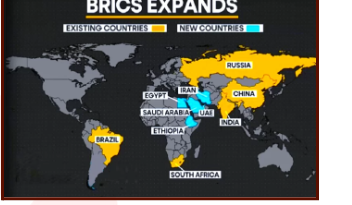
- BRICS has since expanded dramatically, now including Egypt, Ethiopia, Iran, Saudi Arabia, the UAE and Indonesia as full members, alongside partner countries, giving it a presence across Asia, Africa, the Middle East and Latin America.
🧭
Key Dimensions of the Issue
1. India’s Original Vision versus China’s Strategic Use of BRICS
- India initially saw BRICS as a genuine vehicle for reform of multilateral institutions. China viewed it as a counterpoise to Western dominance and a platform to amplify its own global ambitions via BRICS-Plus and BRICS Outreach.
2. Selective Reformism by China
- India, Brazil and South Africa found China’s support for institutional reform was selective — China did not support their bids for permanent UNSC seats.
3. The Consensus Principle Under Strain
- BRICS traditionally follows the consensus principle, but this is under pressure — seen in the non-consensus chair’s COVID-19 statement (2020) and disagreements at the May 2026 Foreign Ministers’ Meeting in New Delhi.
4. Expansion and Its Costs — Cohesion versus Scale
- New entrants bring bilateral disputes with them, raising the risk BRICS could go the way of SAARC — a body frequently paralysed by bilateral tensions among members.
5. The “Non-West” versus “Anti-West” Debate
- India sees BRICS as a “non-West” platform, not “anti-West.” Maintaining this balance is harder amid US-China rivalry, the Russia-Ukraine war, US tariffs on India and Brazil, and a weakening Quad.
6. Parallel Global Structures and Institutional Rivalry
- China pushes for de-dollarisation and a BRICS currency; other members prefer linking payment systems and CBDCs instead. India is watching China’s mBridge cross-border payment system closely, wary of a China-dominated financial architecture.
7. Reformed Multilateralism as India’s Guiding Agenda
- India’s “reformed multilateralism” vision, first articulated by PM Modi at the 2018 South Africa summit, found formal expression in the 2019 Brasilia document — the 2026 Delhi Summit is seen as a chance to revive this agenda.
Significance for India
Strengthen BRICS unity, maintain the “non-West” balance, push UNSC/IMF reform, manage China relations, and protect economic interests from a China-dominated alternative financial system.
Challenges Before India
Maintaining consensus among 11+ members, hosting Russia/Iran amid Western sanctions, managing China’s influence, avoiding bilateral disputes, and balancing India-US tariff tensions.
Analytical insight: BRICS illustrates the “coalition of convenience” dilemma — groupings built around opposition to an existing order often struggle once membership expands to actors with contradictory strategic interests, a theory point applicable to the SCO and G-77 as well.
🧭
Way Forward
Protect consensus
Strengthen consensus-based decision-making as a non-negotiable operating principle.
Anchor the reform agenda
Use India’s chairship to centre UNSC and IMF quota reform as BRICS’s core purpose.
Payment interlinkage over a common currency
Encourage CBDC cooperation and payment-system interlinkage instead of a unified BRICS currency.
Manage bilateral disputes early
Build mechanisms to resolve disputes among newer members before they spill into summit outcomes.
Continue multi-alignment
Engage BRICS, Quad and Western partners simultaneously without being seen as choosing sides.
Conclusion: The 18th BRICS Summit is a test of whether BRICS can be steered back toward equitable multilateral reform, or drift further into an instrument of great-power rivalry. As 2026 chair, India has both the opportunity and responsibility to reinforce consensus and position BRICS as an authentic voice of the Global South.
📰
Source: The Hindu
