

Context
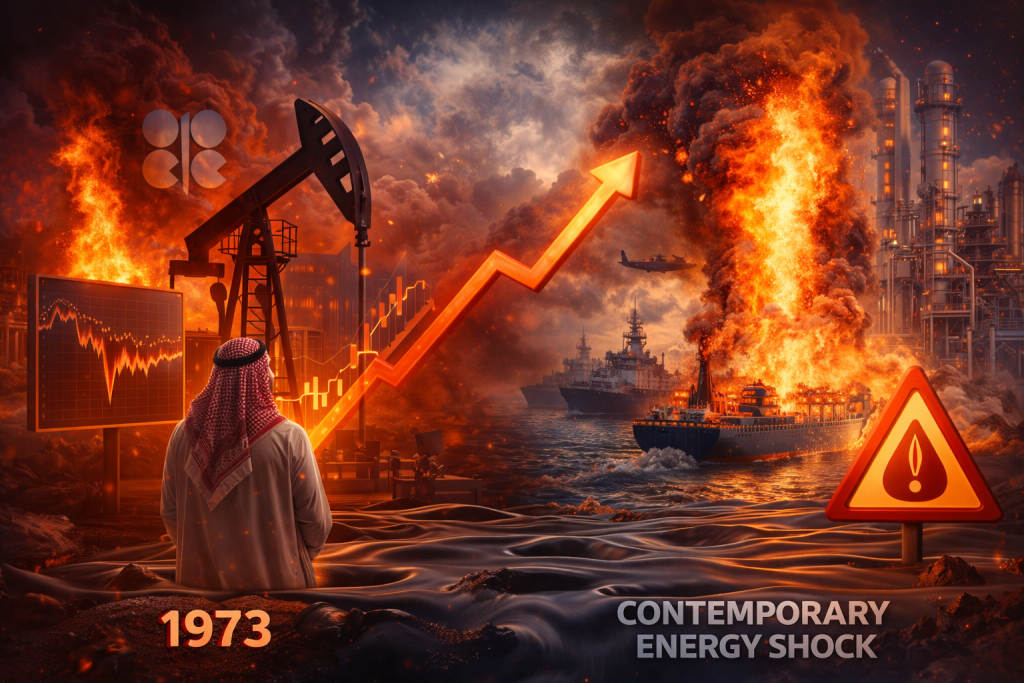
- The ongoing West Asia conflict has disrupted oil supply, blocking nearly 20 million barrels per day through the Strait of Hormuz.
- This has drawn comparisons with the 1973 oil crisis, which reshaped global economic and geopolitical structures.
- While the 1973 crisis was policy-driven, the current crisis is a physical disruption caused by warfare, making it potentially more severe.
The 1973 Oil Crisis: Background and Causes
- Nature of the Crisis
- The crisis was triggered when Arab OPEC nations imposed an oil embargo on countries supporting Israel.
- It marked the first use of oil as a geopolitical weapon, leading to a fourfold rise in prices.
- Structural Background
- Industrial economies were operating at high capacity, creating strong energy demand pressures.
- OPEC countries had gained significant control over global oil production and pricing power.
- Inflation was already high, with commodity prices rising by over 10% annually.
- The United States lacked spare production capacity, increasing dependence on imports.
- Immediate Triggers
- US support to Israel during the Yom Kippur War provoked Arab nations to impose the embargo.
- Arab countries aimed to regain territories lost in the 1967 Six-Day War.
- The US decision to delink the dollar from gold in 1971 led to monetary distrust among oil producers.
- OPEC imposed production cuts to assert control over global oil pricing.
Key Impacts of the 1973 Crisis
- Global Economic Impact
- Oil prices increased by nearly 400% within months, triggering global inflation.
- Countries faced fuel rationing, industrial shortages, and economic slowdown.
- Impact on India
- India’s oil import bill surged sharply between 1973 and 1974, worsening balance of payments.
- Inflation rose significantly, leading to decline in real wages and living standards.
- Economic distress triggered labour unrest, including the 1974 railway strike involving two million workers.
- Political instability increased, contributing to events culminating in the Emergency (1975).
- India sought assistance from World Bank and IMF, leading to pressures for economic reforms.
- Long-Term Global Changes
- Emergence of the petrodollar system (1974 US–Saudi agreement) ensured oil trade in dollars.
- Strengthened the global dominance of the US dollar and financial system.
- Oil-rich West Asian economies generated surplus revenues, boosting remittances to countries like India.
Contemporary Crisis
- Similarities
- Both crises highlight the strategic role of energy as a geopolitical tool.
- Global economies remain vulnerable due to dependence on fossil fuels and supply chains.
- Differences
- The 1973 crisis was driven by policy decisions (embargo), whereas the current crisis is due to physical disruption of supply routes.
- Current disruption is larger, with 20 million bpd affected, nearly five times the earlier scale.
- Modern globalisation makes current shocks more likely to cause widespread supply chain disruptions.
Way Forward: Building Energy and Economic Resilience
- Accelerate transition to renewable energy to reduce dependence on volatile oil markets.
- Expand Strategic Petroleum Reserves (SPR) to manage supply disruptions.
- Strengthen diplomatic engagement to ensure stability in critical chokepoints like Strait of Hormuz.
- Develop policies to manage inflationary pressures and fuel price shocks.
- Diversify energy sources and import partners to enhance energy security.
Conclusion
- The 1973 oil crisis demonstrated that energy can reshape global power structures and domestic economies. The current crisis reinforces the need for long-term energy transition, strategic preparedness, and resilient economic systems.
