

Exercise Pragati 2026

Context: India hosted the maiden multilateral military exercise Pragati 2026 at Umroi, Meghalaya.
About Exercise
- It was the first edition of this multilateral military exercise, bringing together 13 countries.
- Participating nations include Bhutan, Cambodia, Indonesia, Laos, Malaysia, Maldives, Myanmar, Nepal, Philippines, Seychelles, Sri Lanka, Vietnam, and India.
- Over 400 soldiers participated, including approximately 20 women from the member nations.
- The exercise focused on countering insurgency and building mutual trust among Indian Ocean region nations.
- Key drills included rock craft, special heliborne operations, IED detection, and tactical operations.
BrahMos Missile

Context: India signed a BrahMos missile deal with Vietnam, while a similar agreement with Indonesia is in its final stages. The Philippines was the first foreign buyer of the BrahMos missile system from India.
About BrahMos Missile
- BrahMos is an Indo-Russian joint venture and the world’s fastest cruise missile.
- It is named after the Brahmaputra River of India and the Moskva River of Russia.
- It has a range of 290 km and a top speed of Mach 2.8, nearly three times the speed of sound.
- It is a two-stage missile using a solid propellant engine in the first stage and a liquid ramjet in the second stage.
- It is a multiplatform missile that can be launched from land, air, and sea.
- It operates on the “fire and forget” principle, requiring no guidance after launch.
- It is capable of operating during day and night and in adverse weather conditions.
Amolops Kamal
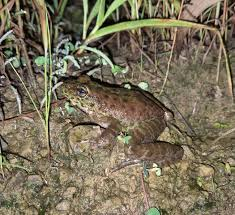
Context: A new cascade frog species named Amolops kamal was discovered in Kiphire district, Nagaland, bordering Myanmar.
Key Facts
- The species was recorded by a team of six Zoological Survey of India (ZSI) scientists in August 2024.
- It was found near Singrep village in hill-stream habitats during a field survey.
- Its common name is Nagaland cascade frog and it belongs to the genus Amolops.
- The study was published in the journal Records of the Zoological Survey of India.
About the Genus Amolops
- The genus Amolops currently comprises 90 recognised species globally.
- Out of these, 20 species are reported from India, classified into 10 species groups.
- Indian Amolops species are categorised under three main groups: Amolops marmoratus, Amolops monticola, and Amolops viridimaculatus.
- The Amolops marmoratus group is the most diverse, represented by eight species in India.
Samadhan Didi

About the Initiative
- Samadhan Didi is an AI-enabled multilingual chatbot for lodging grievances against government departments online.
- Citizens can raise grievances by speaking in their own language without knowing the relevant ministry or department.
- The chatbot automatically identifies the appropriate ministry, department, category, and sub-category and files the grievance.
- Launched by: DARPG (Department of Administrative Reforms and Public Grievances).
- It is launched in collaboration with Bhashini, an AI-powered language tool, within secure government infrastructure.
- It operates through the CPGRAMS (Centralised Public Grievance Redress and Monitoring System) portal.
- Significance: Annual grievances registered through CPGRAMS grew from 2 lakh (2014) to over 25 lakh at present.
Cotton
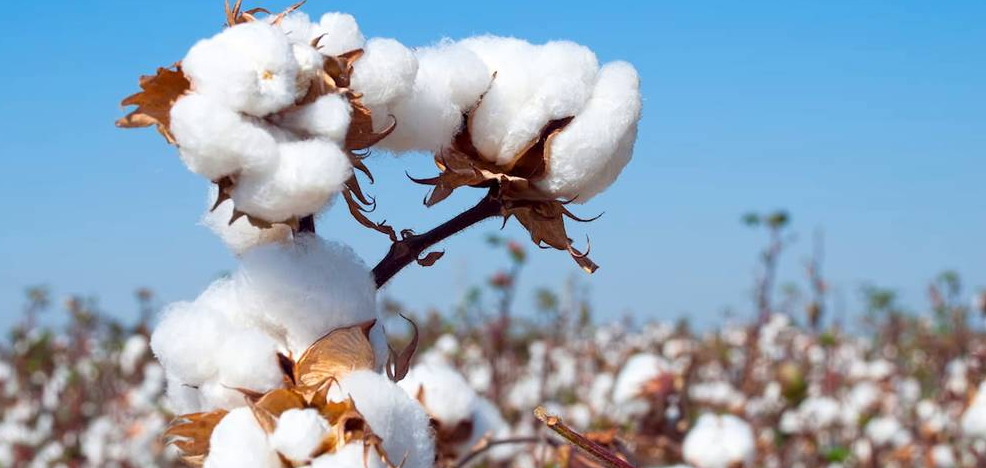
Context:
- The Ministry of Finance suspended the 11% import duty on cotton from June 1 to October 31 to provide relief to the textile industry.
- Cotton production in 2025-26 is expected to be 290 lakh bales against a domestic requirement of 320 lakh bales.
Growing Conditions
- Cotton is a Kharif crop that requires 6 to 8 months to mature.
- It thrives in hot, sunny climates with a minimum of 210 frost-free days annually.
- It requires high temperatures, light rainfall or irrigation, and bright sunshine for optimal growth.
- Cotton grows well in black cotton soil of the Deccan Plateau, deep alluvial soils, and mixed black and red soils.
- It is highly vulnerable to waterlogging and frost is its biggest natural enemy.
- Growth is retarded below 20°C and heavy rainfall during boll-opening damages cotton fibres.
Distribution in India
- Cotton is grown across three agro-ecological zones in India.
- Gujarat is the largest producer of cotton, followed by Maharashtra and Telangana.
- About 65% of cotton area in India is rainfed, making it vulnerable to erratic rainfall.
- India imports superior-quality long-staple cotton mainly from USA, Russia, Sudan, and Kenya.
Sea Cucumber
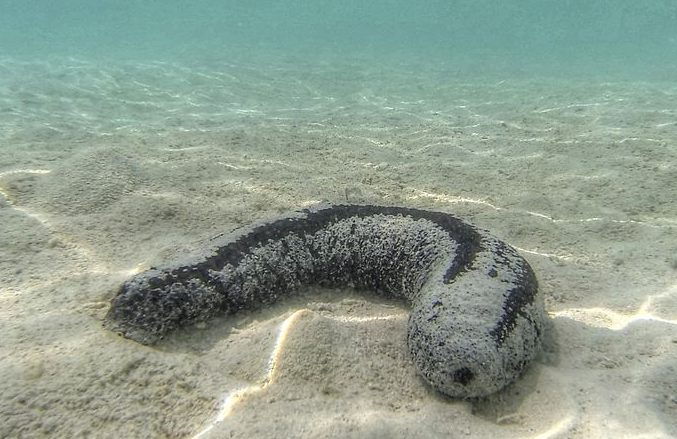
Context: Scientists found that sea cucumber tissues can survive and grow independently for over three years without supplements in natural seawater.
About Sea Cucumber
- Sea cucumbers belong to the class Holothuroidea of the phylum Echinodermata.
- They are found in saltwater environments worldwide, primarily on or near the seabed.
- They are referred to as the “janitors of tropical seas” for their role in cleaning the seafloor.
- They consume bacteria and decaying organic matter, reducing microbial pathogen growth on the seafloor.
- They lack eyes and a brain but have evolved ways to navigate, defend, and forage.
- Their size ranges from 0.75 inches to 10 feet in length.
Ecological Role and Threats
- Over 70 species of sea cucumbers are commercially exploited, making overfishing a significant threat.
- Some species share a symbiotic relationship with the star pearlfish, which uses the sea cucumber’s body as shelter.
Beaufort Castle

Context: Israeli troops captured the Beaufort Castle in southern Lebanon near the city of Nabatiyeh, marking Israel’s deepest incursion in over 25 years. Israel previously captured the castle from the Palestine Liberation Organisation (PLO) in 1982 and held it until 2000.
About Beaufort Castle
- Beaufort Castle was originally built by Crusaders in the 12th century on top of earlier fortifications.
- It is situated atop hills in southern Lebanon, overlooking the Litani River.
- In Arabic it is known as Al-Shaqif Castle or Qalaat al-Shakif, derived from a Syriac word describing the area’s rocky landscape.
- The name Beaufort is an Old French term meaning “beautiful fortress.”
- UNESCO Protection: During the 2024 Israel-Hezbollah conflict, UNESCO granted protection status to 34 cultural sites in Lebanon, including Beaufort Castle.
James Webb Space Telescope

Context: NASA’s James Webb Space Telescope (JWST) successfully captured weather patterns on exoplanet WASP-94A b, located nearly 700 light-years away.
Key Findings
- WASP-94A b is a Hot Jupiter, a gas giant nearly twice the size of Jupiter but with half its mass.
- It completes one revolution around its star in just four days, orbiting extremely close to it.
- The planet is tidally locked, meaning the same side always faces its host star.
- Its mornings have clouds of magnesium silicate, iron, and magnesium sulphide while evenings have clear skies.
- Scientists used the transit method and spectroscopy to study the planet’s atmospheric composition and weather.
About James Webb Space Telescope (JWST)
- JWST is named after James Webb, a former NASA administrator and one of the architects of the Apollo Moon landings.
- It serves as the successor to the Hubble Space Telescope.
- It was launched by NASA in December 2021 as the most powerful space telescope ever built.
- It is an international collaboration between NASA, European Space Agency (ESA), and Canadian Space Agency (CSA).
- Technical Features
- JWST is a large infrared telescope with a primary mirror of approximately 6.5 metres.
- It has 18 mirrors made of ultra-lightweight beryllium.
- It operates at minus 233 degrees Celsius to avoid emitting infrared radiation that would interfere with observations.
- Scientific Objectives
- It studies the earliest stars and galaxies formed after the Big Bang.
- It examines the formation of solar systems capable of supporting life on planets similar to Earth.
- It studies every phase of the history of the Universe, from the Big Bang to our own Solar System’s evolution.
