

Status of Indian Prisons
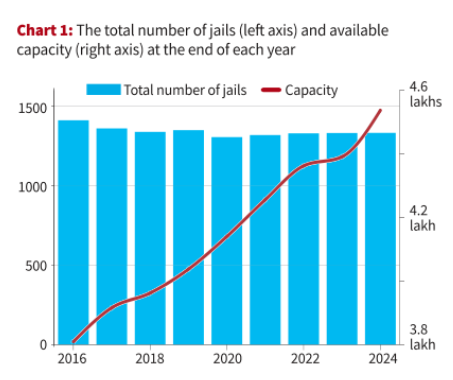
- India had about 1,333 jails with a capacity of 4.53 lakh inmates at the end of 2024.
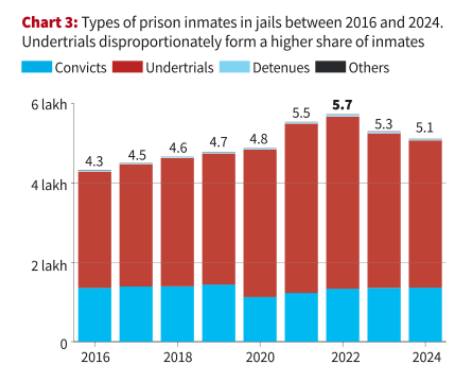
- With an inmate population of over 5.11 lakh, the overall occupancy rate stood at 112.7% — a decade low.
- More than half of all States and UTs continued to operate prisons beyond their sanctioned capacity.
- Delhi recorded the highest occupancy rate at 194% in 2024, down from 200% in the previous year.
- Jammu and Kashmir’s occupancy rate rose sharply from 78% in 2015 to over 148% in 2024.
- Prison capacity has increased by 24% between 2015 and 2024 through renovations across 2,268 prisons and construction of over 120 new prisons.
Structural Causes of Prison Overcrowding
- Undertrial Dominance:
- Undertrials account for approximately 73% of the total inmate population in 2024.
- In Delhi and Bihar, undertrials constitute over 87% of the inmate population — far above the national average.
- The share of convicts in prisons has fallen from 32% in 2016 to 26.6% in 2024 showing courts are imprisoning fewer convicts but more undertrials.
- The undertrial crisis reflects systemic failures in bail access, legal aid and speedy trial delivery.
- Judicial and Legal Gaps:
- Many undertrials are imprisoned simply because they cannot arrange surety for bail despite being granted bail.
- Adjournments and prolonged trials keep undertrials in prison for periods exceeding their likely sentence upon conviction.
- The lawyer-to-prisoner ratio remains far below the recommended standard of one lawyer for every 30 prisoners.
Prison Conditions and Administrative Challenges
- Overcrowding strains resources, compromises living standards and increases tensions among the inmate population.
- It limits inmates’ access to healthcare, rehabilitation facilities and legal assistance as noted by the Parliamentary Committee report.
- Staff vacancies have become the most neglected part of prison administration across India.
- In Delhi and Jammu and Kashmir, at least 60% of sanctioned prison staff positions remain vacant.
- In about 8 States and UTs, nearly half of all sanctioned posts remained unfilled as of 2024.
- States with higher occupancy rates and higher undertrial shares also tend to have higher staff vacancies creating compounded institutional failures.
Prison Reforms: Justice Amitava Roy Committee Recommendations:
- Speedy trials remain the most effective remedy for the unwarranted phenomenon of prison overcrowding.
- Special fast-track courts should be set up exclusively for petty offences pending for more than five years.
- Accused charged with petty offences unable to arrange surety should be released on Personal Recognizance (PR) Bonds.
- Adjournments must be avoided when witnesses are present and plea bargaining must be actively promoted.
- Video-conferencing for trials must be institutionalised to reduce unnecessary physical production of prisoners.
- Courts must use discretionary powers to award fines and admonition instead of imprisonment wherever possible.
- Every new prisoner must be allowed a free phone call daily to family members during the first week.
- Recruitment against permanent vacancies must begin within three months and be completed within one year.
Law Commission Recommendation (2017):
- Undertrials who have completed one-third of their maximum sentence for offences attracting up to seven years of imprisonment should be released on bail.
Other Structural Reforms:
- Free and effective legal aid must be provided to all undertrials especially from marginalised communities.
- Vocational skills and education programmes must be scaled up within prisons to support rehabilitation.
- Modern cooking facilities and canteen access must be ensured to maintain basic dignity of prison life.
Data Points
NFHS-6
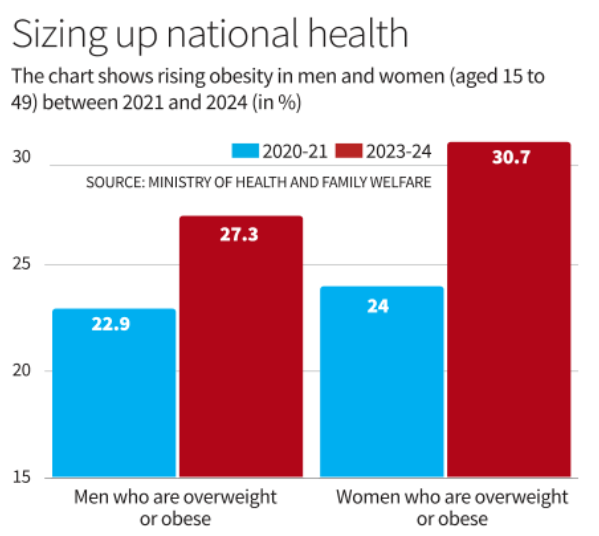
- Obesity: Obesity in women (15–49 years) rose from 24% to 30.7% and in men from 22.9% to 27.3%.
- Diabetes: Diabetes prevalence rose to 17.8% in women and 20.9% in men.
- C-Section Births:
- National C-section rate rose from 21.5% to 27.2%
- Private hospitals recorded 54.1% versus 16.9% in public hospitals.
- Highest state rates: Telangana (62.2%), Andhra Pradesh (52.2%), Tamil Nadu (46.9%), far above WHO’s recommended threshold of 10–15%.
- Child Nutrition:
- Only 15.3% of children aged 6–23 months receive an adequate diet, up from 11% in NFHS-5.
- Exclusive breastfeeding under six months declined from 63.7% to 55.8%.
