

White Gut Disease (WGD) in Shrimp: UPSC Prelims Notes
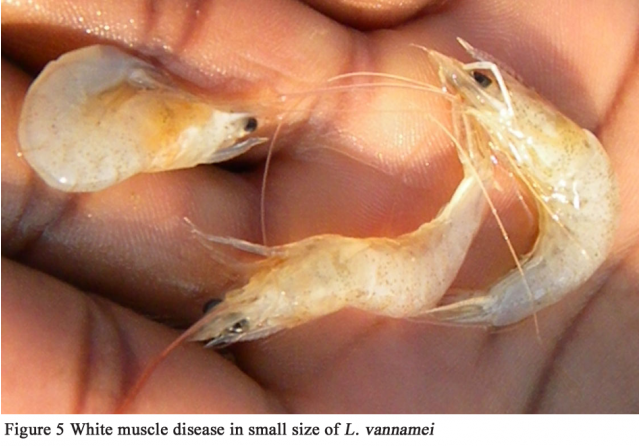
In News: Andhra Pradesh Issues Alert on White Gut Disease (WGD) in Shrimp Farms
What is White Gut Disease (WGD) in Shrimp?
- White Gut Disease is a condition where shrimp excrete whitish or opaque faeces instead of normal dark faeces.
- It is also known as White Feces Disease and indicates underlying health or pond ecosystem problems.
- The Fisheries Department reported symptoms of the disease in shrimp ponds of Andhra Pradesh.
- Officials collected shrimp samples, water, feed and faeces for laboratory examination from affected ponds.
Causes and Symptoms of White Gut Disease (WGD)
- Causes
- Poor pond management creates ecosystem imbalance and increases stress among shrimp populations.
- Poor water quality with high pollutants disrupts shrimp digestion and promotes disease.
- Algal blooms followed by plankton crashes alter water quality and affect shrimp health.
- Bottom sludge creates anaerobic conditions that favour harmful bacteria and pathogens.
- Overfeeding practices increase spoiled feed accumulation and cause gut infections in shrimp.
- Symptoms
- Affected shrimp consume less feed and show stunted growth during farming.
- The intestines turn brown and shrimp develop loose shells.
Prevention and Management of White Gut Disease (WGD)
- Proper pond management requires regular monitoring of water quality, aeration and circulation.
- Water quality should be improved through filtration and periodic water exchange.
- Algal growth should be controlled by maintaining balanced pond ecosystem conditions.
- Bottom management requires regular removal of sludge and organic debris from ponds.
- Proper feeding with controlled portions helps reduce waste and prevents gut infections.
Source: The Hindu
Can Bar Associations Refuse to Represent an Accused? UPSC Prelims Notes

In News: Faizabad Bar Association Resolution Against Representing the Accused
Right to Legal Representation under the Indian Constitution
- Article 22(1) guarantees every arrested person the right to consult and be defended by a legal practitioner.
- Article 14 ensures equality before law and equal protection of laws to every person.
- Article 21 includes the right to a fair trial as part of life and personal liberty.
- Article 39A directs the State to provide equal access to justice through free legal aid.
Supreme Court’s Stand on Bar Association Resolutions
- The Supreme Court has consistently held such Bar Association resolutions as illegal and unconstitutional.
- Bar resolutions denying legal representation violate professional ethics and the principles of fair trial.
- The Court declared such resolutions null and void and asked advocates to ignore them.
Key Judgments on the Right to Fair Trial and Legal Representation
- A.S. Mohammed Rafi v. State of Tamil Nadu (2010) declared Bar resolutions refusing representation as illegal.
- Kuldeep Agarwal v. State of Uttarakhand (2019) limited refusal of briefs to individual advocates only.
- J. Jayalalithaa v. State of Karnataka (2014) affirmed that every accused deserves a free and fair trial.
- Manikandan Nair v. State of Tamil Nadu (2025) held Bar Associations cannot prevent legal representation.
- The Karnataka High Court (2020) observed that obstructing legal representation could amount to criminal contempt.
Bar Council of India (BCI) Rules on Professional Conduct
- BCI Rules require advocates to accept briefs consistent with their standing and case nature.
- Special circumstances may justify refusal only by an individual advocate and not a Bar Association.
Constitutional Provisions Related to Fair Trial
- Article 14: Guarantees equality before law and equal protection of laws.
- Article 21: Protects the right to life, personal liberty and a fair trial.
- Article 22(1): Ensures legal consultation and defence through a lawyer of choice.
- Article 39A: Promotes equal justice and free legal aid for eligible citizens.
Important Judicial Precedents for UPSC Prelims
- A.S. Mohammed Rafi v. State of Tamil Nadu (2010) declared Bar Association boycott resolutions void.
- Kuldeep Agarwal v. State of Uttarakhand (2019) restricted refusal of briefs to individual advocates.
- J. Jayalalithaa v. State of Karnataka (2014) recognised fair trial as essential under criminal procedure.
- Manikandan Nair v. State of Tamil Nadu (2025) reaffirmed that every accused deserves legal representation.
Source: The Hindu
E-Rickshaw Battery Hack: UPSC Prelims Notes
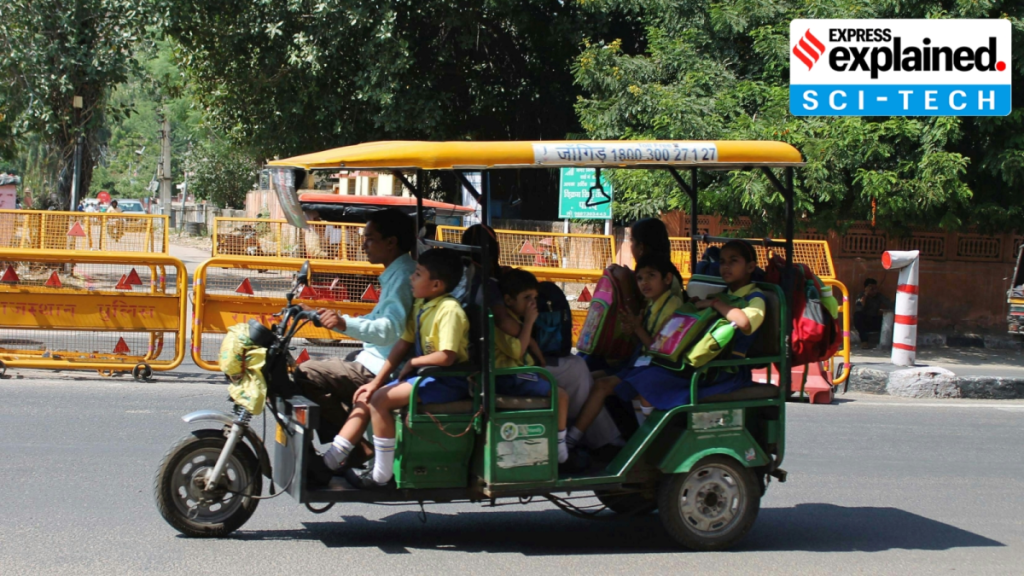
In News: E-Rickshaw Battery Hack: What is the Issue?
E-Rickshaw Battery Hack: What is the Issue?
- Mobile applications were misused to wirelessly disable e-rickshaw batteries through Bluetooth connectivity.
- The issue exposed security flaws in imported Battery Management System modules rather than the applications.
- The applications were originally developed for battery diagnostics and troubleshooting by fleet owners and technicians.
- The affected BMS modules lacked proper authentication, allowing unauthorised Bluetooth access.
Battery Management System (BMS): Working and Applications
- Battery Monitoring: Continuously monitors battery voltage and other diagnostic parameters.
- Bluetooth Connectivity: Enables wireless diagnostics without physically accessing the battery module.
- Diagnostic Applications: Displays battery information and supports basic debugging functions.
- Device Compatibility: Connects only with specific BMS modules advertising themselves through Bluetooth.
Bluetooth BMS Vulnerabilities and Cybersecurity Risks
- Authentication Flaw: Lack of authentication enabled unauthorised access to certain BMS modules.
- Bluetooth Exploitation: Vulnerable modules could be wirelessly accessed and misused through Bluetooth connectivity.
- Application Misuse: Diagnostic applications were misused despite being developed for legitimate maintenance purposes.
- Supply Chain Risk: Imported electronic components with weak security increased cybersecurity vulnerabilities.
E-Rickshaw Regulations and Supply Chain Security
- Regulatory Coverage: Existing rules prescribe standards for dimensions, tyres, brakes and vehicle identification.
- Electronic Standards: Current regulations lack detailed standards for electronic components.
- Supplier Audits: Vetting suppliers and auditing firmware can strengthen component security.
- Manufacturer Responsibility: Manufacturers should conduct due diligence before adopting imported electronic components.
- Security Framework: Standards should extend to all products containing electronic components.
Source: The Hindu
Vikram-1 Mission: India’s First Private Orbital Launch Vehicle: UPSC Prelims Notes
In News
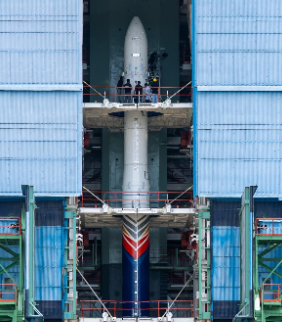
- Vikram-1 Mission is expected to be launched between July 12 and August 4. Skyroot Aerospace announced that Vikram-1 will carry six payloads during the mission.
- The mission includes technology demonstration payloads from Indian and international organisations.
- Mission Aagaman supports rapid testing of new space technologies through Vikram-1.
- Vikram-1 marks India’s first privately developed orbital-class launch vehicle.
Vikram-1 Launch Vehicle: Features and Capabilities
- Orbital-Class Rocket: Vikram-1 is India’s first privately developed orbital-class launch vehicle.
- Mission Aagaman: Provides a platform for rapid testing and demonstration of space technologies.
- Technology Demonstration: Carries multiple demonstration payloads to validate new space systems.
- Private Space Sector: Expands opportunities for emerging Indian space companies to test innovations.
Payloads of Vikram-1 Mission
- Technology Demonstration: Includes payloads from Grahaa Space, Dcubed, Skyroot SCOPE and Cosmoserve Space.
- SOLARAS Satellite: Grahaa Space’s nano-satellite will fly aboard the Vikram-1 mission.
- Robotic Arm: Cosmoserve Space’s Embrace payload will demonstrate soft robotic capture technology.
- Cosmic Bloom: Features diamond jewellery mounted on an aluminium base plate.
- Microart: Carries an 18K gold rocket with micro-sculptures of Indian scientific visionaries.
- International Payload: Dcubed GmbH of Germany will contribute one payload to the mission.
Source: The Hindu
British F-35 Intercepts Russian Aircraft over Norwegian Sea: UPSC Prelims Notes

In News: British F-35 Intercepts Russian Aircraft over the Norwegian Sea
- British F-35 jets intercepted a Russian Bear-F aircraft over the Norwegian Sea.
- The Russian Bear-F aircraft repeatedly approached HMS Prince of Wales during the incident.
- The aircraft dropped sonobuoys in close proximity to the aircraft carrier.
- British jets escorted the Russian aircraft until it departed the operational area.
- The Carrier Strike Group was deployed under NATO’s Arctic Sentry mission.
Norwegian Sea: Location and Geographical Significance
- Location: The Norwegian Sea is a marginal sea of the Atlantic Ocean.
- Boundaries: It is bounded by the Greenland Sea, Arctic Ocean, Barents Sea and North Sea.
- Bordering Countries: Norway, Iceland and Greenland surround the Norwegian Sea.
- Ocean Connection: It links the North Atlantic Ocean with the Arctic Ocean.
- Norwegian Current: A warm extension of the Gulf Stream flows northward along Norway’s coast.
- Ice-Free Waters: Warm currents keep much of the Norwegian Sea ice-free throughout the year.
Sonobuoys: Features and Military Applications
- Sonobuoys: They are sonar devices used to detect submarines underwater.
- Working: They use sonar technology to identify submarine movements beneath the sea surface.
- Anti-Submarine Warfare: They support surveillance and submarine detection during naval operations.
- Military Role: Aircraft deploy sonobuoys to monitor underwater activities near naval fleets.
Source: The Hindu
Vepdegestrant: First FDA-Approved PROTAC Cancer Drug: UPSC Prelims Notes

In News: FDA Approves Vepdegestrant for Breast Cancer
- The U.S. FDA approved vepdegestrant for advanced breast cancer on May 1. It is the first approved therapy based on PROTAC technology.
- The drug targets ESR1-mutated, ER-positive and HER2-negative advanced breast cancer.
- The approval marks a major advance in targeted protein degradation therapy.
Vepdegestrant: Mechanism, Applications and Advantages
- Mechanism: Vepdegestrant destroys the oestrogen receptor using PROTAC technology.
- Target Disease: It treats ESR1-mutated, ER-positive and HER2-negative advanced breast cancer.
- Clinical Benefit: It delayed disease progression longer than fulvestrant in clinical trials.
- Oral Drug: Patients take vepdegestrant orally once daily for greater convenience.
- Therapeutic Advantage: It offers new hope where hormone therapy becomes ineffective.
PROTAC Technology (Proteolysis-Targeting Chimera): Features and Working
- Definition: PROTACs are molecules designed to remove specific proteins from cells.
- Structure: One end binds the target protein while the other binds an E3 ligase.
- Mechanism: PROTAC brings both together and triggers targeted protein degradation.
- Catalytic Action: A single PROTAC molecule repeatedly degrades multiple copies of the same protein.
- Advantage: PROTAC removes the entire protein instead of only blocking one function.
PROTAC Technology: Potential Applications and Challenges
- Applications: More than 40 PROTAC candidates have entered clinical trials.
- Disease Areas: Researchers are studying cancer, neurodegenerative, inflammatory and muscle disorders.
- Absorption Issues: Large PROTAC molecules are harder for the body to absorb efficiently.
- Resistance: Cancer cells may develop mutations reducing drug effectiveness over time.
- Current Limitation: Most PROTACs depend mainly on only two E3 ligases.
Source: The Hindu
Indira Point: India’s Southernmost Point | UPSC Prelims Notes
In News: Development Project at Indira Point
- The Directorate of Lighthouses sought clearance for protection and development works at Indira Point. The proposal includes a convention centre, museum, viewing tower and eco-tourism facilities.
- The project requires approval from the Environment Ministry and Coastal Zone Management Authority. The proposal aims to protect the lighthouse from continuous erosion and shoreline changes.
Indira Point: Location, Geography and Key Features
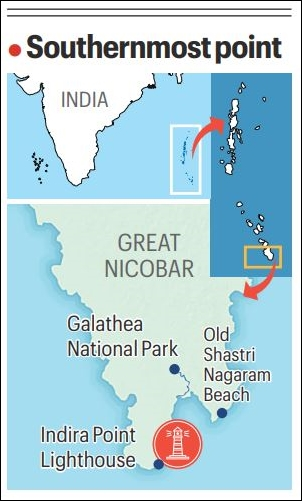
- Location: Indira Point is situated on Great Nicobar Island in the Andaman and Nicobar Islands.
- Southernmost Point: It forms India’s southernmost point near the Indian Ocean.
- Nearby Location: It lies south of Galathea Bay on Great Nicobar Island.
- International Proximity: It lies about 145 km from Indonesia’s Rondo Island.
- Lighthouse: A 35 metre cast iron lighthouse was established here in 1972.
- Tsunami Impact: The 2004 tsunami submerged surrounding land and damaged peripheral lighthouse structures.
- Administrative Status: It falls under Laxmi Nagar Panchayat in Great Nicobar tehsil.
- Connectivity: Access is available through Port Blair, helicopters, boats and a planned road.
Strategic Importance of Indira Point
- Its strategic location places India close to important international maritime boundaries.
- India and Indonesia are jointly upgrading Sabang Port near the surrounding maritime region.
- The lighthouse supports maritime navigation and coastal surveillance in the southern Indian Ocean.
- The proposed works include restoration of safe access to the lighthouse.
Source: Indian Express
Electric Vehicles (EVs) Infrastructure: UPSC Prelims Notes
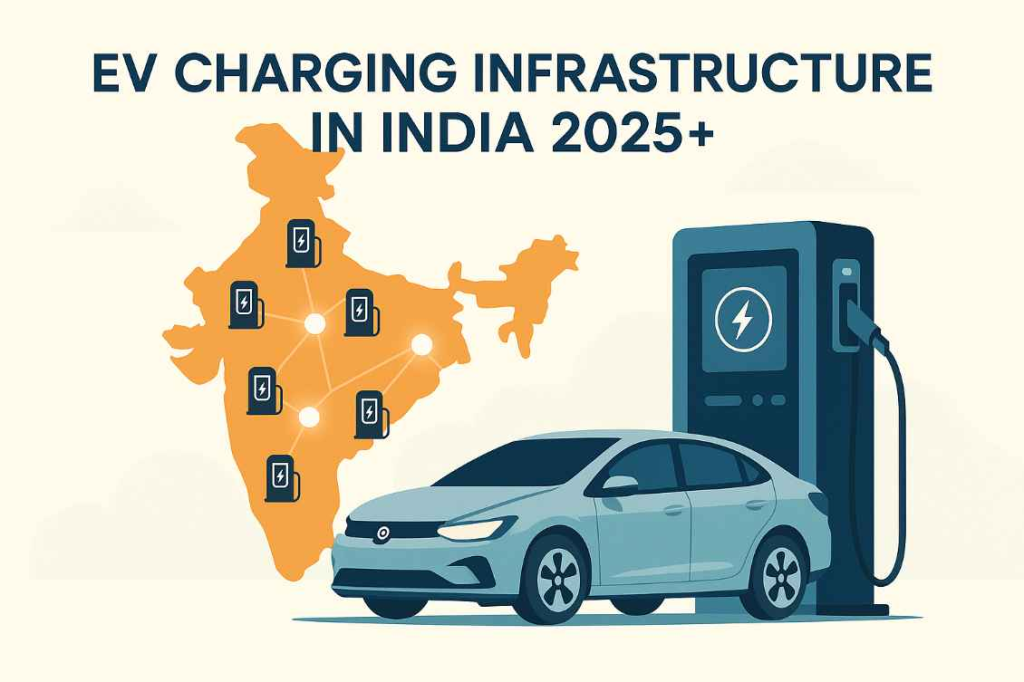
In News: Delhi Electric Vehicle (EV) Policy 2.0
- The Delhi EV Policy aims to electrify 30% of Delhi’s vehicle fleet by March 31, 2030. The policy seeks to reduce air pollution by promoting electric vehicle adoption.
- The CAQM identified vehicular emissions as Delhi’s largest source of air pollution.
- The policy noted two-wheelers constitute about 67% vehicle stock in Delhi.
Electric Vehicles (EVs): Features, Components and Working
- Electric Vehicle: EVs use a battery pack to power an electric motor.
- Battery Pack: It stores electrical energy and requires periodic charging.
- Electric Motor: It converts stored electrical energy into vehicle movement.
- Controller: Software and hardware regulate power delivery between the battery and motor.
- Regenerative Braking: It recovers braking energy and sends it back to the battery.
- ICE vs EV: ICE vehicles use fuel combustion, while EVs operate using stored electrical energy.
Advantages and Challenges of Electric Vehicles
- Energy Efficiency: EV drivetrains lose less energy because they have fewer transmission stages.
- Environmental Benefits: EVs eliminate tailpipe emissions and improve urban air quality.
- Charging Infrastructure: Limited charging points remain a major challenge for widespread EV adoption.
- Battery Recycling: Effective reuse, recycling and disposal systems are essential after battery life ends.
- Critical Minerals: India lacks lithium, cobalt and nickel required for battery production.
- Range Anxiety: Driving behaviour significantly affects the actual distance covered on one battery charge.
- Grid Capacity: The national electrical grid may struggle with future large-scale EV charging demand.
Battery Technology and Charging Infrastructure for EVs
- Lithium-ion Batteries: Battery production depends on imported raw materials such as lithium, cobalt and nickel.
- Charging Stations: Expanding charging infrastructure is essential for large-scale electric mobility.
- Battery Management System: It regulates battery performance during vehicle operation and charging.
- Battery Lifecycle: Reuse, recycling and safe disposal become important after battery performance declines.
- Battery Swapping: Efficient charging alternatives require supporting infrastructure for widespread adoption.
Government Initiatives for Electric Mobility in India
- Delhi EV Policy: It targets 30% vehicle electrification in Delhi by 2030.
- PM E-DRIVE: It supports the adoption of electric mobility across the country.
- FAME India Scheme: It promotes faster adoption and manufacturing of electric vehicles.
- ACC Battery PLI Scheme: It supports domestic manufacturing of advanced batteries.
- National Electric Mobility Mission Plan: It promotes long-term electric mobility development in India.
- CAQM Recommendations: The Commission identified vehicular emissions as Delhi’s largest pollution source.
Source: Indian Express
