India Meteorological Department (IMD)
About IMD
- IMD was established in 1875 as India’s National Meteorological Service and the principal government agency for meteorology and allied subjects.
- It functions under the Ministry of Earth Sciences (MoES) and is headquartered in Delhi.
- It operates hundreds of observation stations across India and Antarctica.
- The Director General of Meteorology serves as the head of IMD.
- Regional Structure
- IMD has 6 Regional Meteorological Centres, each under a Deputy Director General, located at Mumbai, Chennai, New Delhi, Kolkata, Nagpur, and Guwahati.
Key Functions
- Provides meteorological observations and forecasts for weather-sensitive sectors like agriculture, shipping, aviation, and offshore oil exploration.
- Issues warnings for severe weather including tropical cyclones, norwesters, dust storms, heavy rains and snow, cold and heat waves.
- Provides meteorological statistics for agriculture, water resource management, and industries.
- Conducts and promotes research in meteorology and allied disciplines.
IMD and WMO
- IMD is one of the six Regional Specialized Meteorological Centres (RSMCs) of the World Meteorological Organization (WMO).
- It is responsible for forecasting, naming, and issuing warnings for tropical cyclones in the Northern Indian Ocean region, covering the Straits of Malacca, Bay of Bengal, Arabian Sea, and Persian Gulf.
United Nations High Commissioner for Refugees (UNHCR)

About UNHCR
- UNHCR is the UN Refugee Agency dedicated to protecting refugees worldwide and facilitating their return home or resettlement.
- It was established by the UN General Assembly in 1950, in the aftermath of World War II, to assist millions displaced from their homes.
- Headquarters is located in Geneva, Switzerland.
Funding and Governance
- UNHCR is voluntarily funded through contributions from governments, private donors, and organisations.
- It is governed by the UN General Assembly and the Economic and Social Council (ECOSOC).
- The UNHCR Executive Committee approves the agency’s biennial programmes and budget.
- The High Commissioner is appointed by the UN General Assembly and presents programmes to the Executive Committee.
Awards and Recognition
- UNHCR was awarded the Nobel Peace Prize in 1954 and 1981.
- It instituted the Nansen Refugee Award in 1954 to recognise outstanding service to refugees, displaced, or stateless people.
Windfall Tax

Context: The government hiked windfall gains tax on exports of diesel (₹14/litre) and Aviation Turbine Fuel or ATF (₹12.5/litre), while retaining the levy on petrol exports at ₹1.5/litre, effective June 16.
About Windfall Tax
- A windfall tax is a higher-than-normal tax levied on industries that earn unexpected, above-average profits due to external global or geopolitical factors beyond their control.
- The term “windfall” refers to a dramatic and unanticipated surge in profits, not attributable to any business expansion or investment.
- It is commonly levied on oil, gas, and mining industries.
- It can also apply to individual gains such as inheritance, lottery winnings, and game-show prizes.
Objectives
- The primary objective is to appropriate a portion of extraordinary profits for public good, since such profits arise from external factors rather than the entity’s own efforts.
- It also serves as a supplementary revenue stream for the government.
- It is typically triggered by commodity shortages, wars, pandemics, or sudden policy changes.
Dancing Girl in Indus Valley Civilization
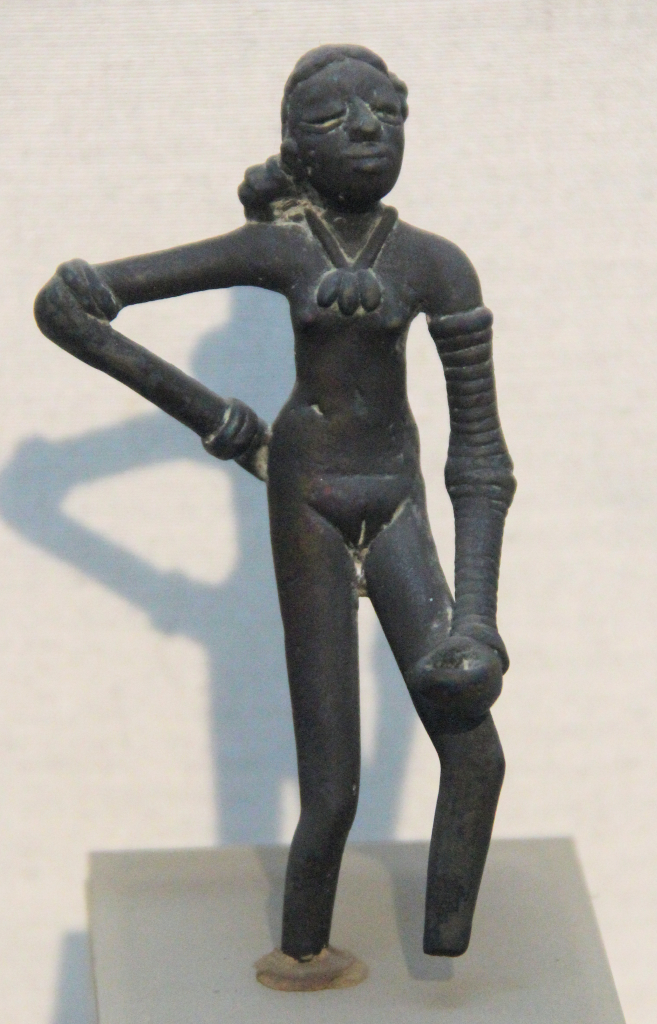
Context: NCERT faced criticism for depicting the iconic “Dancing Girl” figurine of Mohenjo-daro with a covered torso in its Class 9 Arts textbook (Madhurima) and agreed to restore the original image.
About the Dancing Girl
- The Dancing Girl is a bronze figurine from the Indus Valley Civilisation, dated to approximately 2500 BCE.
- It was discovered in 1926 by archaeologist Ernest Mackay at Mohenjo-daro.
- It is currently housed at the National Museum, New Delhi.
- The figurine depicts a young girl in a confident pose with a tilted head and long arms, combining realism with stylised exaggeration.
- Her posture and ornaments convey grace and rhythm, earning her the name “Dancing Girl.”
Craftsmanship
- The figurine was created using the Lost-Wax Casting Technique, a sophisticated metallurgical process.
- In this technique, a wax model is covered with a heat-resistant mould; the wax is melted out, molten metal is poured into the hollow cavity, and the mould is removed once the metal cools.
Slovakia
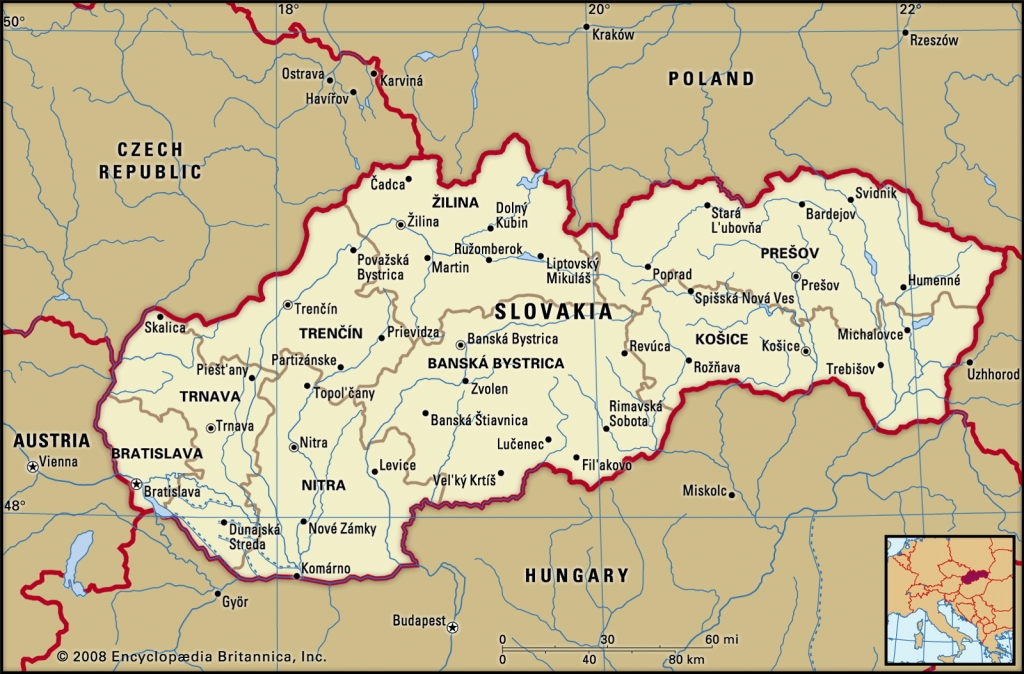
Context: India and Slovakia elevated their relationship to a “Comprehensive Partnership” during PM Narendra Modi’s visit to Bratislava. It is the first visit by an Indian PM since Slovakia’s founding in 1993.
About Slovakia
- Slovakia is a landlocked republic in Central Europe, with capital at Bratislava.
- It borders Poland, Ukraine, Hungary, Austria, and the Czech Republic.
- Slovakia was established as an independent nation on January 1, 1993, following the 1989 Velvet Revolution that ended communist rule.
- It was part of the Austro-Hungarian Empire for centuries and unified with Czechs from 1918 to 1992.
- Gerlachovský Peak (2,655 m) in the High Tatras is Slovakia’s highest point.
- Most rivers in Slovakia flow into the Danube basin, with key rivers being the Váh and Hron.