
Bio-Based Chemicals and Enzymes
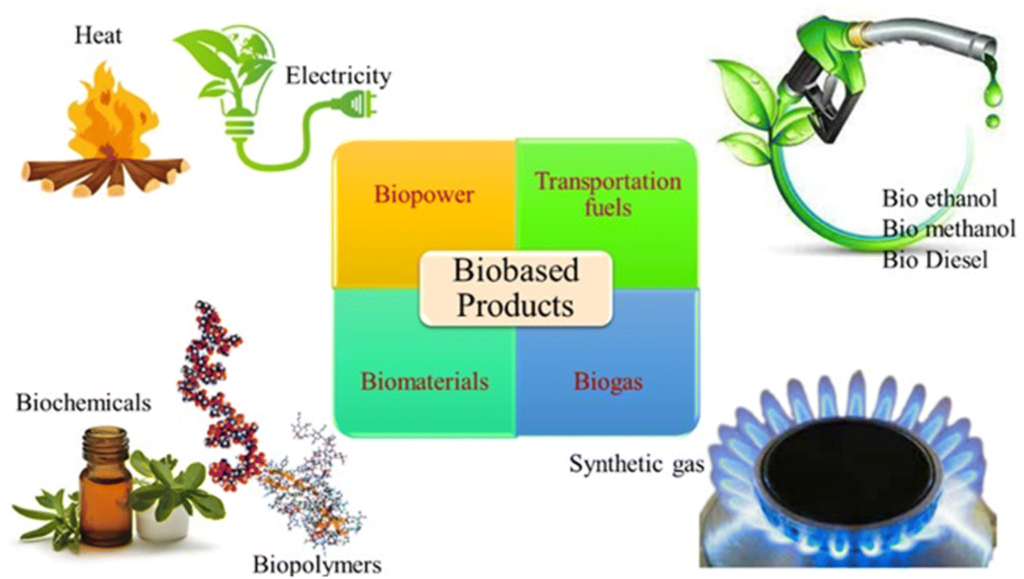
What are Bio-Based Chemicals and Enzymes?
- Bio-based chemicals: Industrial chemicals derived from biological feedstocks like sugarcane, corn, and biomass residues.
- Production process: Manufactured through fermentation and enzymatic bioprocesses instead of petrochemical refining.
- Product range: Includes organic acids, bio-alcohols, solvents, surfactants, and polymer intermediates.
- Industrial applications: Used in plastics, cosmetics, pharmaceuticals, textiles, and specialty manufacturing.
- Enzymes: Biological catalysts that accelerate chemical reactions in industrial and biological processes.
- Sectoral use: Widely applied in detergents, food processing, textiles, pulp, paper, and pharmaceuticals.
- Energy efficiency: Function effectively at lower temperatures and pressures, reducing industrial energy demand.
- Environmental value: Lower emissions and greener processing make them climate-friendly industrial inputs.
Need for Bio-Based Chemicals in India
- Agricultural strength: India’s vast agricultural base ensures abundant renewable feedstock supply.
- Fermentation expertise: Experience from vaccine and pharmaceutical sectors supports biomanufacturing scale-up.
- Import substitution: Sector growth can reduce dependence on petrochemical imports.
- Trade example: India imported nearly $479.8 million worth of acetic acid in 2023.
- Farmer income: Biomass utilisation creates new revenue streams for agricultural communities.
- Rural industrialisation: Bio-processing industries can generate decentralised employment opportunities.
- Global positioning: India can emerge as a supplier of sustainable industrial raw materials.
- Policy push: Department of Biotechnology prioritises this sector under the BioE3 policy framework.
Challenges Involved
- Cost competitiveness: Bio-based chemicals remain costlier than petrochemical alternatives at early scale.
- Investment barriers: High capital requirements discourage private sector participation.
- Feedstock reliability: Consistent biomass supply chains remain underdeveloped.
- Infrastructure gaps: Large-scale fermentation, processing, and storage facilities are limited.
- Market adoption: Downstream industries hesitate to shift from established petrochemical inputs.
- Standards ecosystem: Certification, quality assurance, and procurement frameworks remain evolving.
- Technology scale-up: Commercialisation of lab innovations requires pilot plants and biofoundries.
- Transition risks: Industry awaits cost parity and performance certainty before large adoption.
Winter Olympics 2026

Context: The 2026 Winter Olympics, officially the 25th Winter Olympic Games, will be held in northern Italy under the title Milano Cortina 2026.
Host & Venue
- Hosted by Italy.
- Co-hosted by Milan and Cortina d’Ampezzo, famous winter sports centres.
- Italy’s fourth Olympic event:
- 1956: Cortina d’Ampezzo Winter Olympics
- 2006: Turin Winter Olympics
- 1960: Rome Summer Olympics
Motto & Mascot
- Official Motto: “IT’s Your Vibe” (IT symbolises Italy).
- Mascot: Tina, a white stoat.
- Branding also features “The Flo”, inspired by the snowdrop flower.
Events & Participation
- Total 116 medal events spread across 16 winter sports.
- Around 2,900 athletes expected from nearly 90 countries.
- New Sport Added
- Ski Mountaineering (Skimo) introduced for the first time.
- Combines uphill climbing and downhill skiing on mountain terrain.
- Russia & Belarus Participation
- Athletes allowed under “Individual Neutral Athletes” status. This policy continues from Paris Olympics 2024 due to the Russia–Ukraine conflict.
- India’s Presence
- Abhinav Bindra chosen as Olympic torchbearer.
- Arif Khan qualified in Slalom event.
| About Winter OlympicsGlobal multi-sport event for snow and ice sports.Held once every four years.First Winter Olympics: Chamonix, France (1924).Governing body: International Olympic Committee (IOC). |
PM RAHAT Scheme
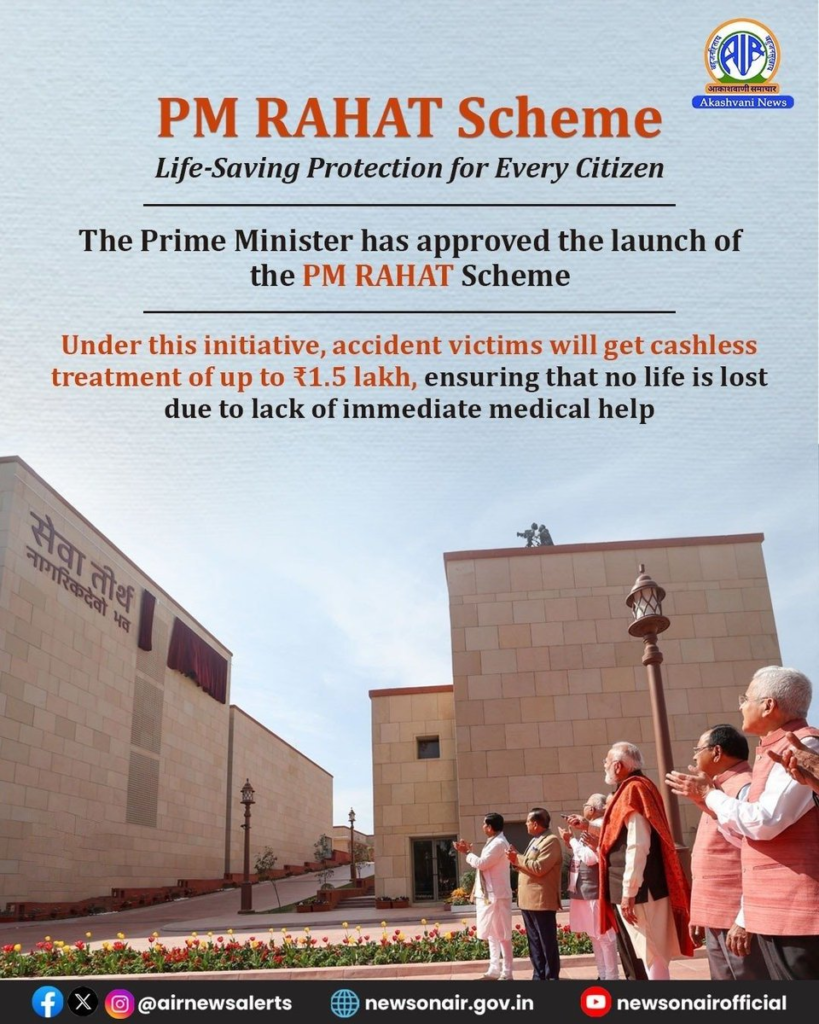
Context: The Government of India recently launched the PM RAHAT Scheme to ensure immediate and cashless treatment for road accident victims across the country.
What is PM RAHAT?
- A national scheme focused on saving lives after road accidents.
- Ensures assured emergency medical care without financial delay.
- Covers victims on all categories of roads.
- Core Objective
- Provide life-saving treatment in golden hour.
- Reduce deaths due to delayed hospitalization.
- Offer financial clarity to hospitals treating accident victims.
Key Features of the Scheme
- Cashless Treatment
- Every eligible victim gets cashless treatment up to ₹1.5 lakh.
- Applicable at designated hospitals.
- Emergency Response Linkage
- Integrated with Emergency Response Support System (ERSS) – 112.
- Victims or Good Samaritans can dial 112.
- Helps locate nearest hospital and ambulance quickly.
- Digital Integration
- Linked with:
- eDAR (Electronic Detailed Accident Report): Ministry of Road Transport & Highways.
- TMS 2.0: National Health Authority.
- Ensures fast claim processing and transparency.
- Linked with:
- Funding & Reimbursement
- Payments made through Motor Vehicle Accident Fund (MVAF).
- Funding sources:
- Insured vehicle cases: Paid via General Insurance Companies’ contributions.
- Uninsured / Hit-and-Run cases: Funded by Government budget support.
- Grievance Redressal
- Complaints handled at district level.
- Managed by a Grievance Redressal Officer.
- Works under District Road Safety Committee chaired by DM/DC.
Cheer Pheasant
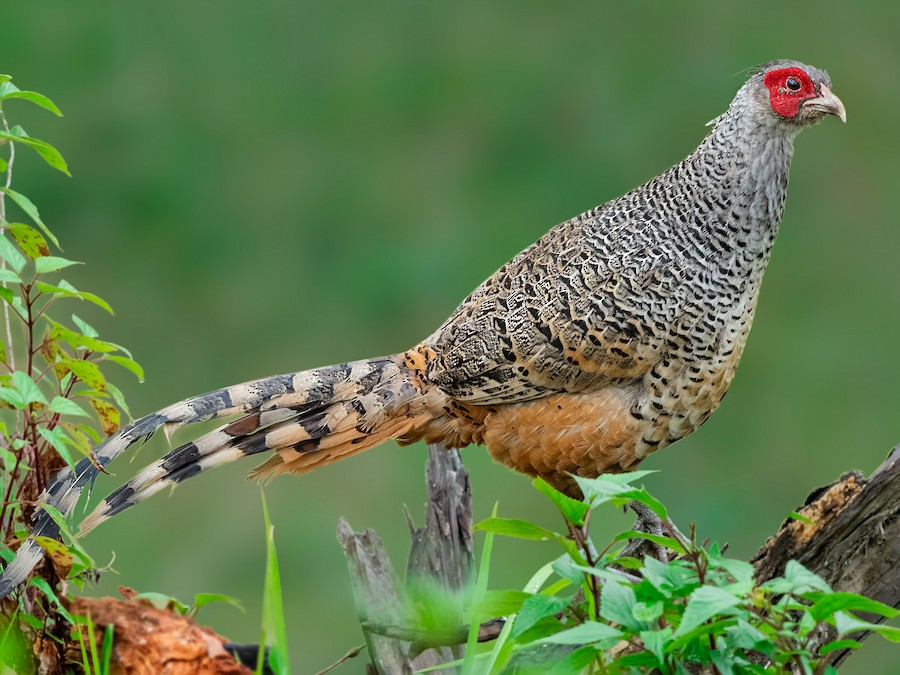
Context: Recent observations highlight that hunting and habitat degradation continue to be the biggest threats to the ground-dwelling Cheer Pheasant.
About Cheer Pheasant
- Also known as Wallich’s pheasant or Chir pheasant.
- Belongs to the pheasant family- Phasianidae (Ground-dwelling Himalayan bird species)
- Habitat
- Found on steep, rocky hillsides with scrub vegetation.
- Prefers grassy slopes with scattered stunted trees.
- Occurs at elevations between 1,200–3,350 metres.
- Geographical Distribution
- Native to the Western Himalayas.
- Range extends from:
- Northern Pakistan
- Kashmir
- Himachal Pradesh
- Uttarakhand
- Up to central Nepal
- Key Characteristics
- Builds a simple ground nest, hidden under grass or rocks.
- Shows strong site fidelity. Birds often breed near birthplace.
- Depends on grasslands shaped by traditional practices like grass cutting and controlled burning.
- Diet
- Feeds mainly on roots, tubers, bulbs, and buried seeds.
- Also consumes insect larvae and earthworms.
Conservation Status
- IUCN: Vulnerable
- CITES: Appendix I
- Wildlife (Protection) Act, 1972: Schedule I
PM-DAKSH Scheme

Context: Recent data placed in the Lok Sabha showed that less than half of trainees under PM-DAKSH (2021–2024) secured placements.
About PM-DAKSH Scheme
- Full Form: Pradhan Mantri Dakshata Aur Kushalata Sampanna Hitgrahi Yojana.
- A Central Sector Scheme launched in 2020-21.
- Focuses on skill development for socially and economically disadvantaged groups.
- Aim
- To provide quality skill training through recognised institutions.
- To improve employability and livelihood opportunities of beneficiaries.
- Target Beneficiaries
- Scheduled Castes (SCs)
- Other Backward Classes (OBCs)
- Economically Weaker Sections (EWS)
- Denotified Tribes (DNTs)
- Safai Karamcharis / Waste pickers
- Types of Training Programmes
- Up-skilling / Re-skilling programmes
- Short-term skill training
- Long-term training courses
- Entrepreneurship Development Programmes
- Eligibility Criteria
- Age group: 18–45 years.
- Income limit:
- OBC & EWS: Family income below ₹3 lakh annually.
- No income limit for SCs, DNTs, Safai Karamcharis.
- Institutional Convergence
- Scheme has been merged with Pradhan Mantri Kaushal Vikas Yojana (PMKVY).
- Aligns training with the broader national skill development framework.
