

Prelims Pinpointer Key Highlights
Hindu law of Succession
Basic Concept
- The Mitakshara and Dayabhaga are the two major schools governing Hindu law of succession in a Hindu Undivided Family (HUF).
- Mitakshara is followed in most parts of India.
- Dayabhaga is followed mainly in West Bengal and Assam.
- The core difference lies in the basis of ownership of property i.e. whether it arises by birth or after death.
Mitakshara School
- The Mitakshara school is the dominant system across India and is based on the principle of ownership by birth.
- A son acquires a right in ancestral property by birth.
- Property is jointly held by coparceners (up to three generations).
- Share is not fixed and becomes definite only after partition.
- Property devolves by survivorship within the joint family.
- Based on blood relationship.
- It is further sub-divided into Benares, Mithila, Maharashtra and Dravida schools.
Dayabhaga School
- The Dayabhaga school is followed in Bengal and Assam and is based on the principle of ownership after death.
- A son gets rights in property only after the father’s death.
- There is no birthright in ancestral property.
- Share of each heir is clearly defined.
- Property devolves by inheritance, not survivorship.
- Gives relatively more importance to religious considerations.
Bandipur Tiger Reserve (BTR)
Basic Overview
- The Bandipur Tiger Reserve (BTR) is located in southern Karnataka (Mysuru & Chamarajanagar districts). It lies at the tri-junction of Karnataka, Tamil Nadu, and Kerala.
- The reserve forms an ecological confluence of the Western and Eastern Ghats.
- It is part of the Nilgiri Biosphere Reserve (UNESCO-recognised).
- Location & Surroundings
- North-West: Nagarahole Tiger Reserve (separated by Kabini Reservoir)
- South: Mudumalai Tiger Reserve
- South-West: Wayanad Wildlife Sanctuary
Rivers & Climate
- Kabini River flows along the northern boundary.
- Moyar River flows along the southern boundary.
- Climate: Tropical, with distinct wet and dry seasons.
Flora (Vegetation) and Fauna (Wildlife)
- Dominated by dry deciduous and tropical mixed deciduous forests.
- Important floralspecies:
- Sandalwood
- Rosewood
- Indian kino tree
- Indian laurel
- Bamboo (including giant clumping bamboo)
- One of the largest populations of wild Asian elephants in South Asia.
- Key faunal species:
- Bengal tiger
- Gaur (Indian bison)
- Sloth bear
- Dhole (Indian wild dog)
- Golden jackal
- Four-horned antelope
Herpes Simplex Virus (HSV)
Context: A recent outbreak of Herpes Simplex Virus (HSV) in Jalpaiguri Central Correctional Home infected 92 inmates and led to 7 deaths, highlighting serious gaps in prison healthcare.
About the Virus
- Herpes Simplex Virus (HSV) is a common viral infection causing painful blisters or ulcers.
- It establishes a lifelong infection, as the virus remains dormant in the body and can reactivate periodically.
Types and Clinical Manifestations
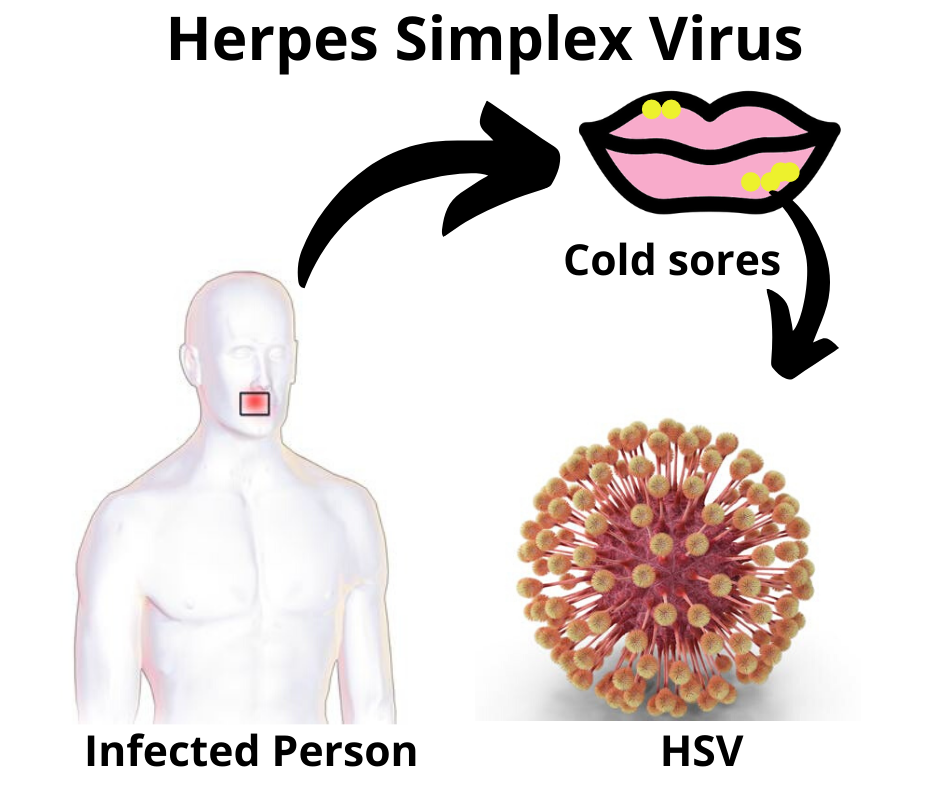
- HSV-1 (Oral Herpes): Causes cold sores or fever blisters around the mouth and face.
- HSV-2 (Genital Herpes): Causes lesions in the genital and surrounding regions.
- Symptoms:
- Many individuals remain asymptomatic or mildly symptomatic.
- Symptomatic cases show fluid-filled painful blisters, which may rupture and crust.
- Initial infection may present with fever, body aches, and swollen lymph nodes.
- Rare complications: Meningitis and encephalitis (neurological involvement).
Transmission and Nature of Infection
- Transmitted through direct skin-to-skin contact with an infected individual.
- Highly contagious, even in the absence of visible symptoms.
- Characterised by latency and periodic reactivation, enabling recurrent episodes.
Treatment
- No definitive cure is available.
- Antiviral therapy helps reduce symptom severity and frequency of recurrences.
Maternity Leave for Adoptive Mothers
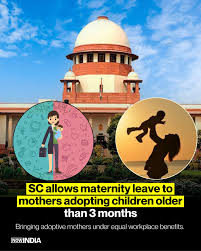
Context: The Supreme Court has extended 12 weeks of paid maternity leave to all adoptive mothers, irrespective of the age of the child at adoption. The Court struck down restrictive provisions under the Code of Social Security, 2020 (Section 60(4)) as unconstitutional and discriminatory.
Key Legal Principle
- The Court recognised maternity leave as a basic human right.
- It held that adoptive mothers have the same rights and responsibilities as biological mothers.
- Adoption was described as an expression of reproductive autonomy.
- Earlier Provision
- Earlier law allowed maternity benefit only if the adopted child was below 3 months of age.
- The Court noted that the legal adoption process itself often exceeds three months, making the provision impractical and exclusionary.
- Social and Gender Dimensions
- Denial of maternity leave may force mothers to return to work early, affecting child care.
- It can indirectly lead to gender inequality, such as withdrawal of girl children from school to take care of siblings.
Observation on Paternity Leave
- The Court urged the government to recognise paternity leave as a social security measure.
- It emphasised that parenthood is a shared responsibility, not limited to the mother alone.
Petroleum and Natural Gas Regulatory Board (PNGRB)
About PNGRB
- The Petroleum and Natural Gas Regulatory Board (PNGRB) is a statutory regulatory body established under the PNGRB Act, 2006.
- It functions as a quasi-judicial authority, with powers similar to a Civil Court.
Objectives and Role
- Protect consumer interests in the petroleum and natural gas sector.
- Regulate activities related to refining, storage, transportation, distribution and marketing (excluding crude oil production).
- Promote competition and ensure uninterrupted supply of petroleum and natural gas across India.
Powers and Functions
- Acts as a dispute resolution authority for issues between entities in the sector.
- Can address complaints related to:
- Retail obligations
- Price display
- Pipeline access and terms
- City gas distribution networks
- Has the power to issue orders, directions and initiate investigations.
Appeal Mechanism
- Appeals against PNGRB decisions lie with the Appellate Tribunal for Electricity (APTEL). This tribunal is established under the Electricity Act, 2003.
Public Insurance Registry (PIR)

Context: IRDAI has proposed setting up a Public Insurance Registry (PIR) to modernise the insurance data ecosystem in India.
What is PIR?
- PIR is a digital, consent-based registry that will consolidate insurance data across stakeholders.
- It will function as a legally compliant and interoperable information system.
- Covers the entire lifecycle of insurance policies—from issuance to claims and dispute resolution.
- Objectives and Functions
- Reduce information asymmetry in the insurance sector.
- Improve fraud detection through better data integration.
- Enable data-driven regulatory oversight.
- Strengthen data governance and cybersecurity standards.
- Significance
- Acts as a key step in modernising insurance infrastructure.
- Improves transparency, efficiency and service delivery.
- Works in alignment with Bima Sugam, aiming for seamless access to insurance services and better customer experience.
About IRDAI
- The Insurance Regulatory and Development Authority of India (IRDAI) is a statutory body established under the IRDAI Act, 1999.
- It functions as an autonomous authority under the Ministry of Finance to regulate and develop the insurance sector in India.
- Headquarters: Hyderabad
- Composition
- Chairman + 5 full-time members + 4 part-time members
- All appointed by the Government of India
Powers and Functions of IRDAI
- Regulatory Role
- Grants registration/licensing to insurers, reinsurers and intermediaries.
- Prescribes eligibility, qualifications and capital requirements.
- Supervisory Functions
- Regulates investment of funds and ensures solvency of insurers.
- Specifies financial reporting norms.
- Conducts inspection, audit and investigation of insurance entities.
- Policyholder Protection
- Ensures proper conduct in matters like claims settlement, nomination and policy conditions.
- Approves insurance product terms and conditions.
- Sector Development
- Promotes insurance penetration, especially in rural and vulnerable sections.
- Regulates intermediaries by setting codes of conduct and training standards.
Kurds
Who are the Kurds?
- The Kurds are a large ethnic group, predominantly Muslim.
- They speak a language related to Farsi (Persian).
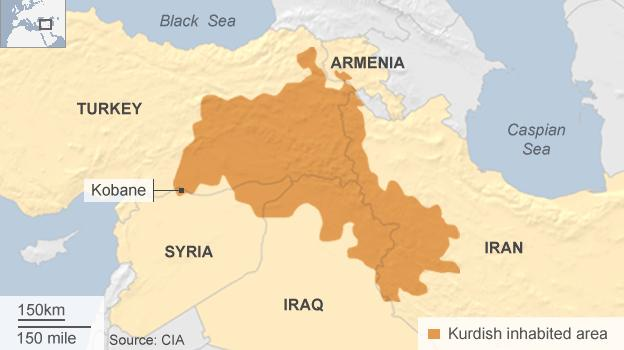
- They mainly inhabit a mountainous region spread across: Turkey, Iraq, Iran, Syria, and Armenia
Historical Background
- After World War I, the Treaty of Sèvres proposed a separate homeland for the Kurds. However, this promise was not realised.
- The Treaty of Lausanne (1924) divided Kurdish populations among newly formed Middle Eastern states.
Present Distribution
- Total population: Over 30 million.
- Around half of the Kurdish population lives in Turkey.
- They remain one of the largest stateless ethnic groups in the world.
Political Status
- Iraq is the only country with a recognised autonomous Kurdish region (Iraqi Kurdistan).
- The Kurdish Parliament in Iraq was established in 1992.
Navroz
Basic Concept
- Navroz (Nowruz) is the Persian New Year, meaning “new day” (now = new, roz = day).
- It marks the beginning of spring and is widely celebrated by the Parsi community.
Historical and Cultural Background
- Associated with the Persian king Jamshed, linked to the Shahenshahi calendar.
- In India, the celebration was popularised by Nusservanji Kohyaji, an 18th-century trader from Surat.
- Recognised as UNESCO Intangible Cultural Heritage.
- Celebration in India
- Celebrated by Parsis around 16–17 August.
- Based on the Shahenshahi calendar, which does not account for leap years, causing the date shift from the global spring celebration.
| ZoroastrianismZoroastrianism is one of the oldest monotheistic religions.Founded by Prophet Zoroaster (Zarathustra) in ancient Iran around 3500 years ago. |
E-Transmission Duty

Context: India is set to oppose a US-led proposal at WTO MC14 to make the moratorium on customs duties on electronic transmissions permanent, citing concerns of revenue loss and policy constraints for developing countries.
What is E-Transmission Duty?
- It refers to customs duties on electronic transmissions, such as:
- Digital products (software, e-books, music, videos)
- Data flows and digitally delivered services
- Since 1998, WTO members have followed a moratorium, meaning:
- No customs duties are imposed on such digital transmissions.
- The moratorium is renewed every two years and is now under debate for permanent extension.
Why India is Opposing
- Revenue Loss: India is estimated to lose about $1 billion annually due to zero duties.
- Unequal Benefits: Gains mainly accrue to developed countries and big tech firms, while costs are borne by developing countries.
- Policy Space: A permanent moratorium would restrict India’s ability to tax digital trade and support domestic industry.
- Digital Divide: India argues that instead of duty exemptions, focus should be on technology transfer and digital capacity building for developing nations.
