

India-China Border Talks
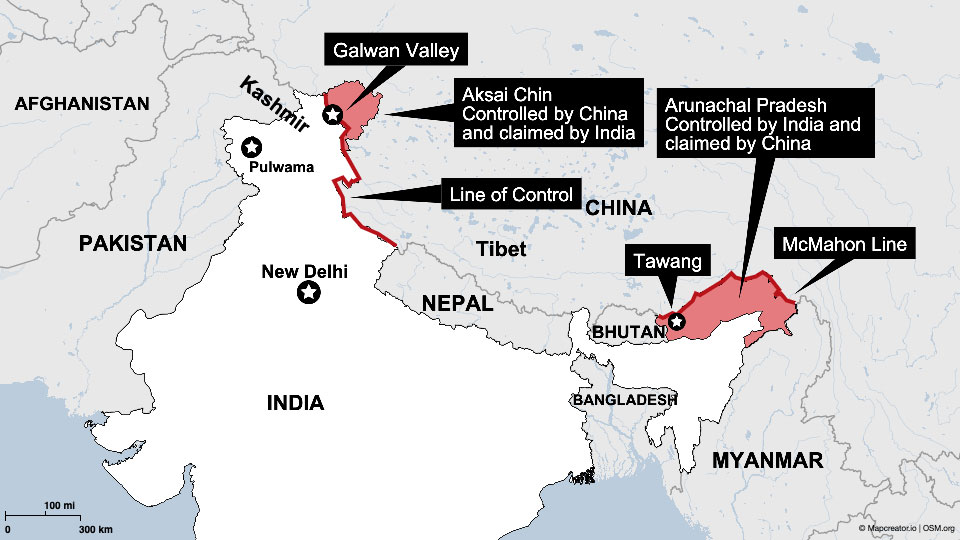
Context: The 35th WMCC (Working Mechanism for Consultation and Coordination) meeting on India-China Border Affairs was held in Beijing.
More in News
- Both sides discussed border delimitation, border management, mechanism building, and cross-border cooperation.
- India stressed the need for an early meeting of the Expert Level Mechanism on Trans-border Rivers.
- Both sides agreed to prepare for the 25th round of Special Representatives (SR) Talks, to be held in China.
- Discussions were held in follow-up to the consensus reached during the 24th Special Representatives Talks on the boundary question.
India-China Border
- India and China share a 3,488 km de facto boundary called the Line of Actual Control (LAC).
- The LAC is divided into three sectors — Western, Middle, and Eastern.
- Sector-wise Breakdown
- Western Sector (Ladakh): Most heavily militarised area, covering Galwan Valley, Pangong Tso Lake, and Depsang Plains.
- Middle Sector (Himachal Pradesh and Uttarakhand): Most stable sector with a relatively well-defined boundary.
- Eastern Sector (Sikkim): Mostly agreed-upon boundary; sensitive near the tri-junction of Bhutan, Tibet, and Sikkim.
- Eastern Sector (Arunachal Pradesh): Follows the McMahon Line, which China strongly contests.
- States and UTs Sharing Border with China
- Five Indian states and UTs share the LAC with China — Ladakh, Himachal Pradesh, Uttarakhand, Sikkim, and Arunachal Pradesh.
CISF and Coastal Security
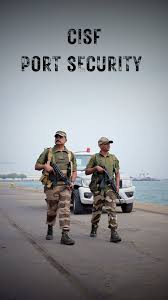
Context: The Union Home Ministry plans to bring nearly 1,200 fishing harbours and landing sites under CISF oversight for coastal security.
More in News
- CISF was earlier designated as the security regulator for over 250 seaports to strengthen coastal security.
- CISF will design security templates and guide local administration rather than deploy personnel at every site.
- Security measures will include biometric attendance systems and smart ID cards for fisherfolk.
- There are currently 1,547 notified fish landing centres and fishing harbours across 13 coastal states and UTs.
- The 13 coastal states and UTs are West Bengal, Odisha, Andhra Pradesh, Tamil Nadu, Puducherry, Kerala, Karnataka, Goa, Maharashtra, Gujarat, Daman and Diu, Andaman and Nicobar Islands, and Lakshadweep.
About Central Industrial Security Force (CISF)
- CISF is a Central Armed Police Force (CAPF) functioning under the Ministry of Home Affairs.
- Headquarters are in New Delhi and its motto is “Protection and Security.”
- CISF was established in 1969 under the CISF Act, 1968.
- The CISF Act was amended in 1983, declaring it an Armed Force of the Union.
- Current strength of the force is more than 1,88,000 personnel.
- Key Functions
- CISF protects nuclear installations, space establishments, airports, seaports, and power plants.
- Airport security was assigned to CISF in 2000 following the hijacking of Indian Airlines Flight IC-814 to Kandahar.
- After the Mumbai terror attack of 2008, CISF’s mandate was extended to private corporate establishments.
- CISF is the only CAPF with a dedicated Fire Wing and daily public interface at airports, Delhi Metro, and heritage monuments.
- It is a compensatory cost force, meaning it bills its clients for services rendered.
Andal and Srivilliputhur Palkova

Context: A book titled “Srivilliputhur: Divine Realm of Andal” was released as part of The Hindu Group’s Shrine Series.
About Andal
- Andal was an 8th-century female poet-saint and a key figure of the Bhakti movement in South India.
- She is the only female among the twelve Alvars, who were Tamil Vaishnava saints.
- She is revered as the “Mira of the South” and considered an avatar of Bhumi (earth goddess).
- Her philosophy emphasises absolute surrender (Prapatti) to the divine, foundational to Sri Vaishnavism.
- Literary Contributions
- She authored two major works in Tamil language.
- Thiruppavai is a collection of 30 pasurams (verses) dedicated to Lord Vishnu, recited during the month of Margazhi.
- Nachiyar Tirumozhi is a mystical collection of 143 verses expressing her longing to marry Lord Ranganatha, an avatar of Vishnu.
About Srivilliputhur Palkova
- Srivilliputhur Palkova is a traditional milk sweet from Tamil Nadu.
- It received a Geographical Indication (GI) Tag in 2019 to protect its regional authenticity.
- It is a sacred offering at the Srivilliputhur Andal Temple.
- It is produced by local artisans and the Srivilliputhur Co-operative Primary Milk Producers Society.
Banni Grasslands
About
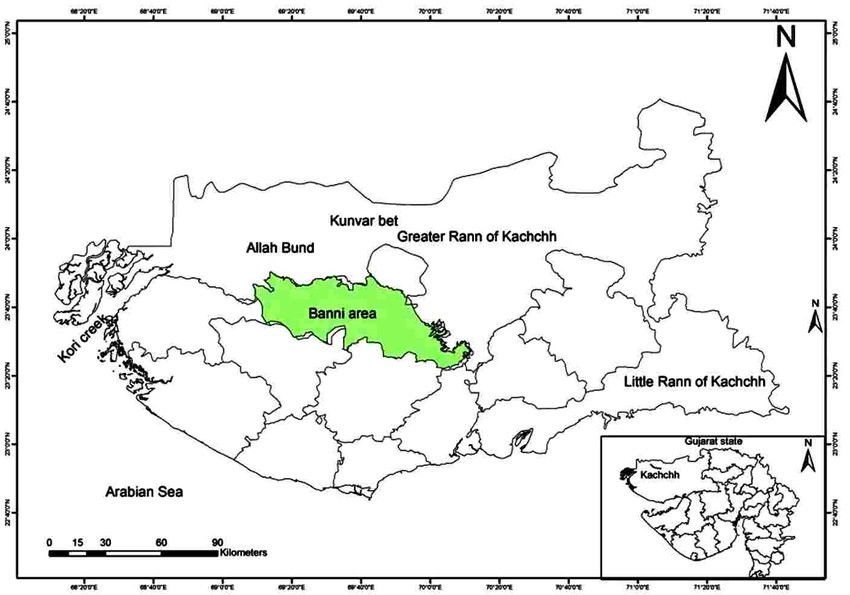
- Banni is Asia’s largest grassland, located near the Great Rann of Kutch, Gujarat.
- The grasslands emerged from the sea due to tectonic activities.
- Vegetation is largely rainfall-dependent and dominated by halophytic (salt-tolerant) plants.
- Ecosystem and Key Species
- Banni features a unique blend of wetlands and grasslands coexisting side by side.
- Key species include Banni buffalo, Kankrej cattle, Indian wild ass, camel, and horse.
- Cultural Significance
- Banni is home to Maldharis, a semi-nomadic tribal herdsmen community.
- Maldharis also inhabit the Gir Forest region and rear sheep, goats, cows, buffaloes, and camels.
Chhari Dhand Wetland
About Chhari Dhand
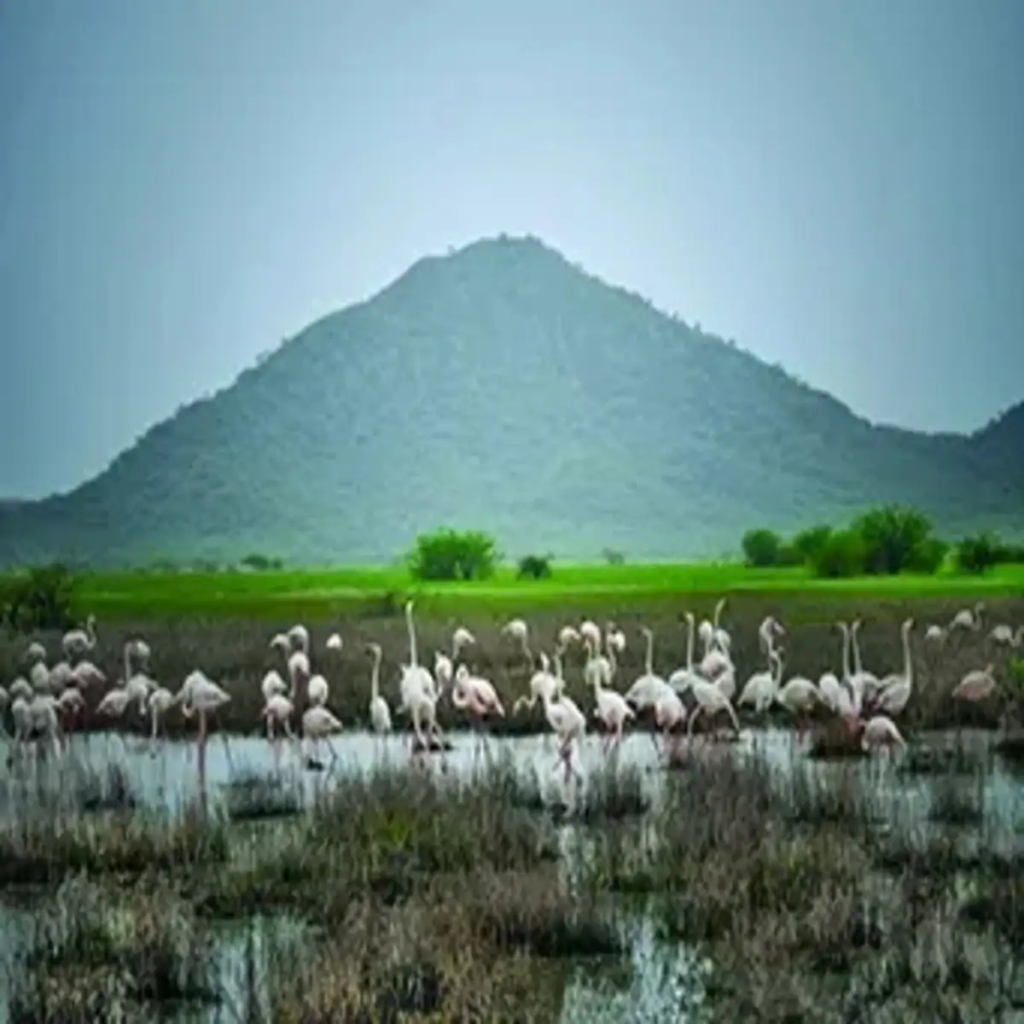
- Chhari Dhand has been officially designated as a Ramsar Site of international importance.
- It is the 5th Ramsar site in Gujarat and the first in the Kutch ecosystem.
- Gujarat’s other Ramsar sites are Nalsarovar, Thol, Wadhwana, and Khijadiya.
Location and Ecology
- It is located on the edge of Banni Grasslands in the Kutch region of Gujarat.
- It acts as a buffer between the salty desert and the grasslands.
- It is a seasonal wetland that gets submerged during the monsoon season.
- It lies on the Central Asian Flyway (CAF), serving as a critical stop for migratory birds from Siberia.
- It hosts over 40,000 Common Cranes and the rare Grey Hypocolius.
Legal Status
- Chhari Dhand was notified as a Conservation Reserve in 2008 under the Wildlife Protection Act, 1972.
- A Conservation Reserve acts as a connector or buffer between National Parks and sanctuaries.
- Unlike National Parks, Conservation Reserves are managed through community consultation, allowing local livelihoods.
Chandrayaan-2
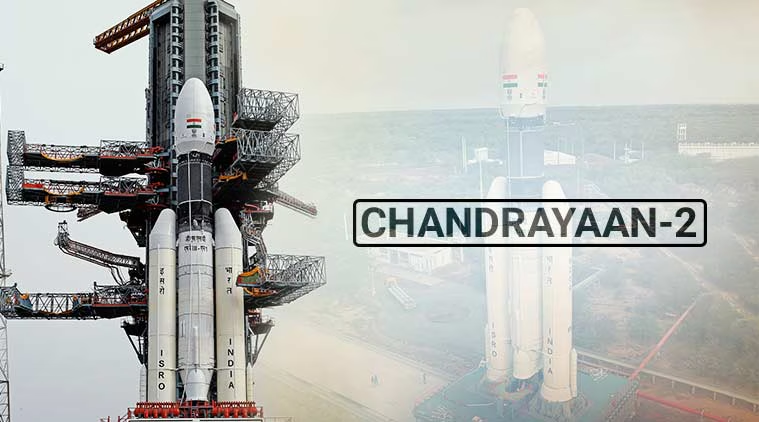
Context: Scientists have found possible presence of sub-surface ice in the Lunar South Polar Region using Chandrayaan-2 data.
More in News
- The study was conducted by scientists from the Physical Research Laboratory (PRL).
- Data was obtained from Chandrayaan-2’s Dual Frequency Synthetic Aperture Radar (DFSAR) payload.
- Scientists focused on doubly shadowed craters located within Permanently Shadowed Regions (PSRs) of the Moon.
- PSRs remain extremely cold at temperatures of around -25 Kelvin due to continuous shielding from sunlight.
- Radar signatures consistent with sub-surface ice were identified beneath four doubly shadowed craters.
About Chandrayaan-2
- Chandrayaan-2 is India’s second lunar mission, launched in 2019.
- Its DFSAR payload is used for advanced radar polarimetric analysis of the lunar surface.
- The mission continues to provide valuable scientific data even six years after launch.
El Niño
Context: IMD forecast a “below normal” southwest monsoon with India likely to receive only 92% of normal rainfall during June-September.
About El Niño
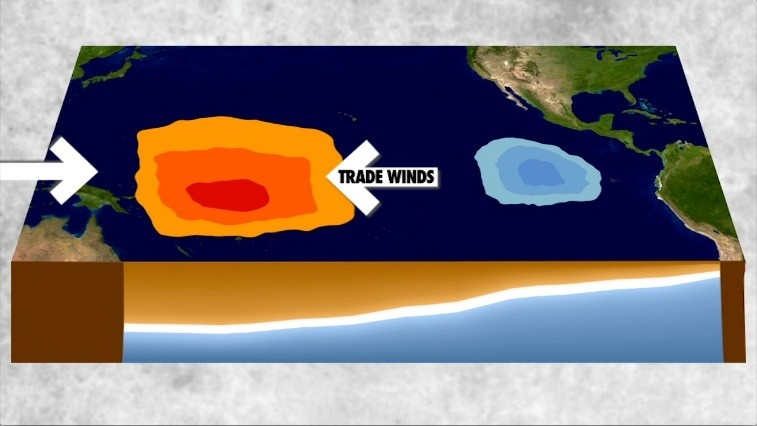
- El Niño is the warm phase of the El Niño–Southern Oscillation (ENSO).
- It is marked by abnormal warming of surface waters in the eastern and central equatorial Pacific Ocean.
- It occurs irregularly every 2 to 7 years and tends to raise global average temperatures.
- Formation
- Trade winds weaken along the equator, allowing warm surface waters to shift eastward toward South America.
- The thermocline deepens in the eastern Pacific, suppressing upwelling of cold, nutrient-rich water.
- This alters atmospheric circulation, linking oceanic warming with pressure changes called the Southern Oscillation.
- Key Indicator
- Oceanic Niño Index (ONI) measures SST anomalies of at least +0.5°C for five consecutive three-month periods.
Implications
- El Niño years are often among the hottest on record globally.
- For India, it increases the risk of weaker monsoons and droughts.
- South America experiences heavy rainfall and floods.
- Australia and Southeast Asia face droughts, heatwaves, and wildfires.
Coal Gasification
Context: Union Coal Minister stated that coal gasification can help substitute imports worth up to ₹3 lakh crore annually.
More in News
- The Union Cabinet approved a scheme for surface coal and lignite gasification projects with an outlay of ₹37,500 crore on May 13.
- The government is working to include urea produced via coal gasification within the broader urea policy framework.
- India is nearly 90% import-dependent for many industrial chemicals, making gasification strategically important.
- Geopolitical tensions in West Asia have disrupted India’s chemical supply chains, adding urgency to coal gasification plans.
About Coal Gasification
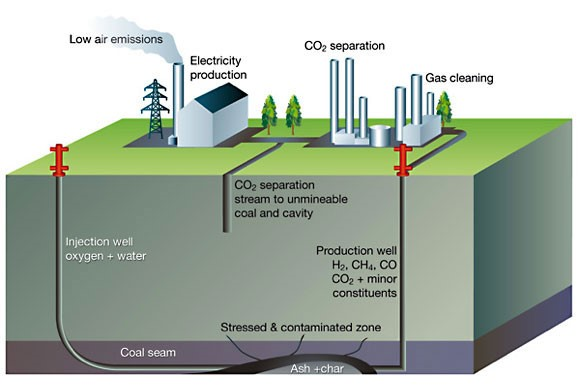
- Coal gasification converts coal into Syngas (Synthetic Gas) through high-temperature chemical reactions.
- Syngas is a mixture of Carbon Monoxide (CO), Hydrogen (H2), Carbon Dioxide (CO2), Methane (CH4), and Water Vapour.
- Coal reacts at temperatures of 1,000 to 1,400°C with controlled amounts of oxygen and steam.
- Syngas can be used to produce fertilisers, fuels, chemicals like ammonia and methanol, and hydrogen.
- It is considered a cleaner alternative to direct coal combustion as pollutants are captured before energy generation.
NATO
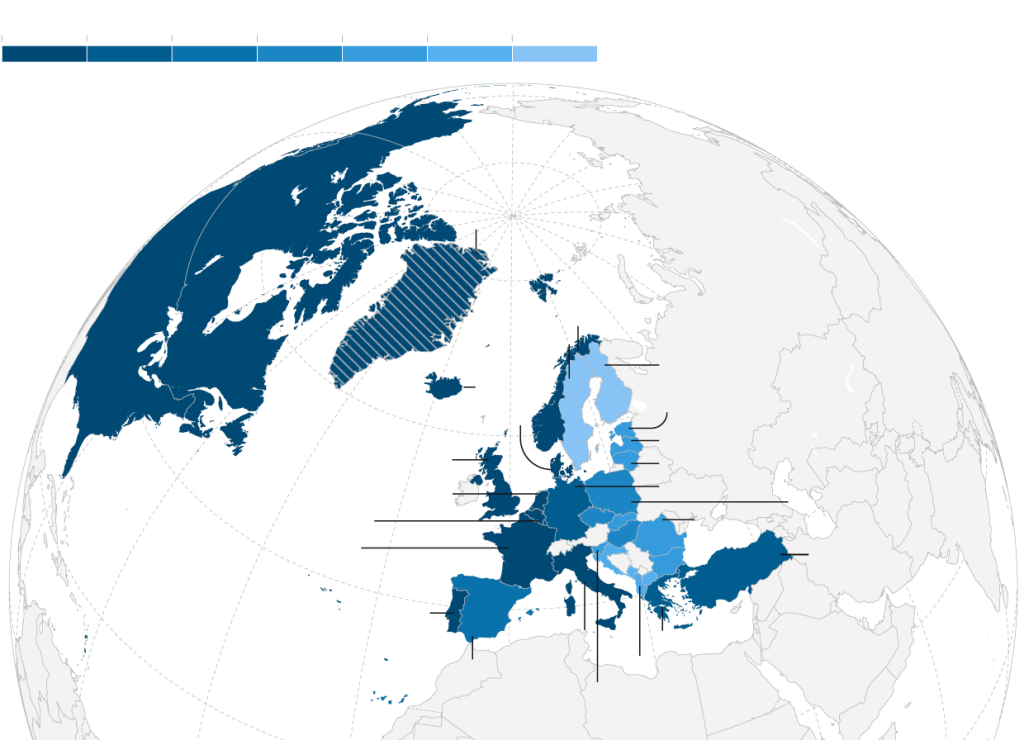
Context: Germany and the Netherlands will set up a joint tactical command centre (1GNC) in the Baltic region to deter Russia.
More in News
- The 1GNC command centre will assume command in Estonia and Latvia on NATO’s eastern flank.
- It can control up to 50,000 troops and is headquartered in Muenster, Germany.
- Currently, NATO forces in the Baltic region are commanded from Szczecin, Poland.
About NATO
- NATO was founded in 1949 through the North Atlantic Treaty (Washington Treaty) to deter Soviet expansion after World War II.
- Headquarters are located in Brussels, Belgium.
- It is a political and military alliance of 32 countries from Europe and North America.
- Article 5 of the treaty guarantees collective defence, meaning an attack on one ally is an attack on all.
- Article 5 has been invoked only once, in response to the 9/11 terrorist attacks.
- The 12 founding members include Belgium, Canada, Denmark, France, Iceland, Italy, Luxembourg, Netherlands, Norway, Portugal, the UK, and the US.
- Finland joined NATO in 2023.
- EU members not part of NATO are Austria, Cyprus, Ireland, and Malta.
- Partnership for Peace (PfP) is NATO’s bilateral cooperation programme with 18 Euro-Atlantic partner countries.