


International Committee of the Red Cross
Background
- The International Committee of the Red Cross (ICRC) is a global humanitarian organisation dedicated to protecting human life and dignity during conflicts and crises.
- It was established in 1863 by Henry Dunant, a Swiss humanitarian, after the Battle of Solferino (1859).
- The organisation is headquartered in Geneva, Switzerland.
- It operates on the principles of neutrality, impartiality, and independence, providing humanitarian assistance in armed conflicts and disasters.
- It also works to ensure compliance with International Humanitarian Law (IHL).
Structure and Components
- The Red Cross Movement consists of three main components:
- ICRC (International Committee of the Red Cross): Focuses on conflict zones, protection of detainees, assistance to refugees, and ensuring adherence to international humanitarian law (IHL).
- IFRC (International Federation of Red Cross and Red Crescent Societies): Coordinates global disaster response and supports community resilience, comprising 191 National Societies.
- National Red Cross and Red Crescent Societies: Operate within countries to support domestic and international humanitarian efforts.
Key Features and Functions
- The Red Cross Movement uses protective emblems such as the Red Cross, Red Crescent, and Red Crystal (added in 2005).
- It provides medical aid, shelter, and emergency relief during conflicts and disasters.
- It plays a crucial role in protecting civilians, detainees, and displaced persons.
- It facilitates restoration of family links through tracing and reunification services.
- It promotes adherence to the Geneva Conventions and International Humanitarian Law (IHL).
- It acts as a neutral intermediary, facilitating humanitarian negotiations, ceasefires, and exchanges.
Carpet Export Promotion Council

Institutional Framework
- The Carpet Export Promotion Council (CEPC) was established in 1982 by the Ministry of Textiles.
- It is a non-profit organisation set up under the Companies Act (now Companies Act, 2013).
- CEPC functions under the administrative control of the Ministry of Textiles, Government of India.
- It acts as an apex body for promotion of handmade carpet exports from India.
Objectives and Functions
- The Council aims to promote and develop exports of handmade carpets, rugs, and floor coverings.
- It provides support to artisans, weavers, and exporters, strengthening the value chain.
- It organises international trade fairs, exhibitions, and Buyer-Seller Meets (BSMs) for market expansion.
- It acts as a link between industry and government, assisting in policy formulation and implementation.
- It undertakes skill development initiatives to improve artisan capabilities.
- It promotes quality control and research, ensuring global standards and timely delivery.
Significance
- CEPC supports over 2,600 member exporters and more than 2 million artisans.
- India accounts for approximately 35% of global handmade carpet imports, highlighting its global leadership.
- The Council contributes to promoting Indian craft heritage and strengthening the “Make in India” brand globally.
Mumbai–Ahmedabad High-Speed Rail Corridor
Key Features
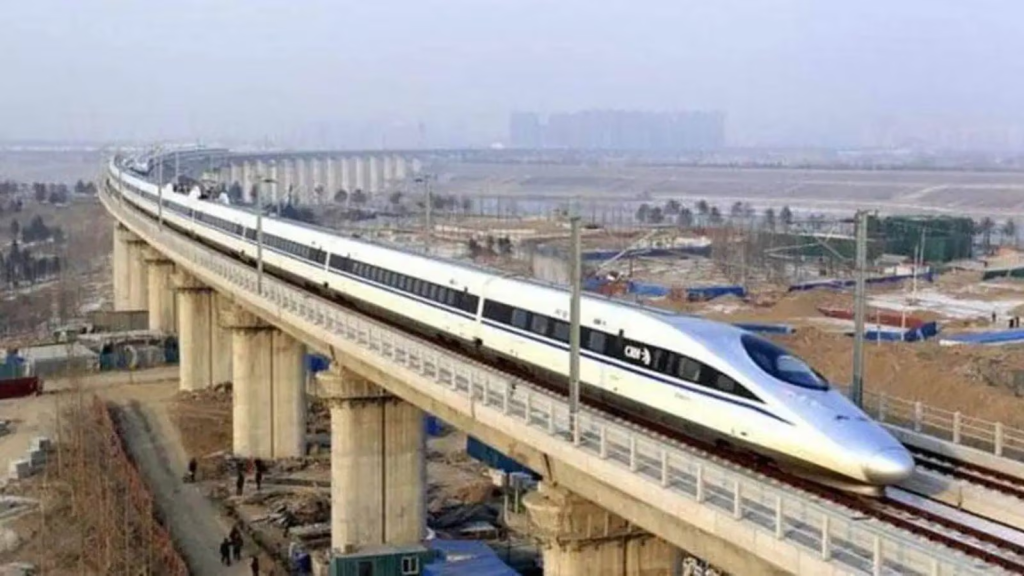
- The Mumbai–Ahmedabad High-Speed Rail Corridor (MAHSR) is an under-construction high-speed rail project connecting Mumbai and Ahmedabad, two major economic centres of India.
- It will be India’s first high-speed rail (bullet train) corridor.
- The corridor has a total length of about 508 km and is expected to reduce travel time to around 2 hours 58 minutes.
- The train will operate at a speed of about 320 km/h, with a maximum speed of 350 km/h.
- The route will include 8 stations in Gujarat and 4 stations in Maharashtra.
- A key segment between Surat and Bilimora (50 km) is expected to be completed by 2026.
Technology and Infrastructure
- The project uses High-Speed Rail (HSR) technology, including the slab track (ballastless track) system, developed in Japan.
- Construction is being carried out using the Full Span Launching Method, a modern bridge construction technique.
Ballasted vs Non-Ballasted Track
- Ballasted Track:
- Consists of rails, sleepers, and a gravel (ballast) bed.
- It is cheaper and easier to construct, but requires frequent maintenance, has lower speed limits, and produces higher noise and dust.
- Non-Ballasted (Slab) Track:
- Uses a concrete slab instead of ballast, providing greater stability and durability.
- It allows higher speeds, smoother rides, lower maintenance, and has a longer life (50–60 years).
- However, it involves higher initial cost and has limited adaptability in certain terrains.
- The slab track system is widely used in the Japanese Shinkansen, first operational in 1964 (Tokyo–Osaka).
Funding and Institutional Framework
- Around 80% of the project funding is provided by Japan at a concessional interest rate of 0.1%, with a repayment period of 50 years.
- The project is implemented by the National High-Speed Rail Corporation Limited (NHSRCL):
- Established in 2016 under the Companies Act, 2013.
- Functions as a Special Purpose Vehicle (SPV).
- Jointly owned by the Central Government (Ministry of Railways) and the State Governments of Gujarat and Maharashtra.
- Responsible for financing, construction, operation, and maintenance of high-speed rail projects.
Ways and Means Advances
About WMA
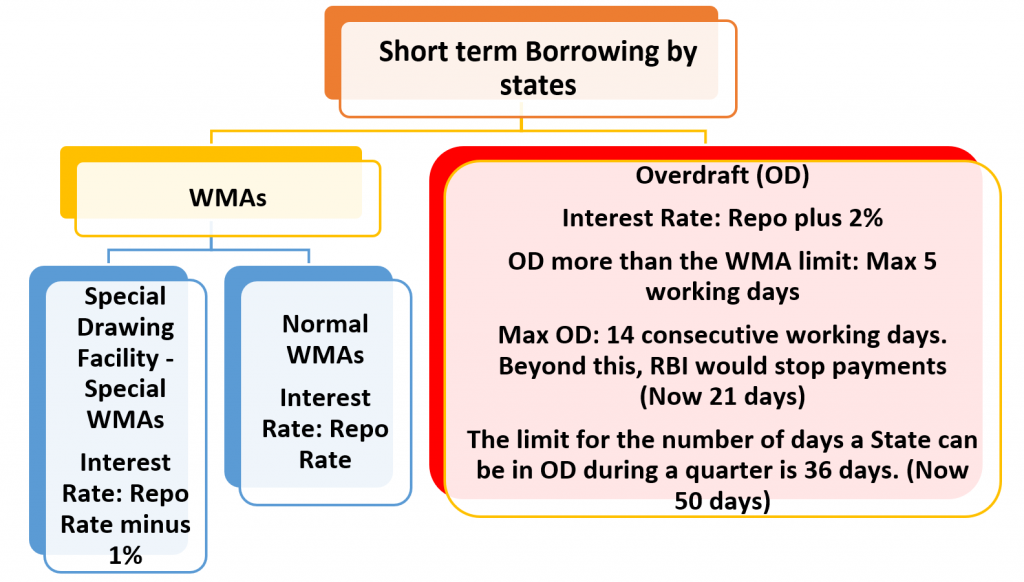
- Ways and Means Advances (WMA) are short-term advances provided by the Reserve Bank of India (RBI) to the Union Government, States, and Union Territories.
- They are designed to bridge temporary mismatches between receipts and expenditure.
- The facility ensures smooth government functioning without disruption due to short-term liquidity shortages.
Types and Features
- Normal WMA:
- It is the standard form of advance provided to meet temporary liquidity shortfalls.
- Special Drawing Facility (SDF) (earlier Special WMA):
- It is provided at a lower interest rate than Normal WMA.
- It is extended first to States/UTs before availing Normal WMA.
- It is granted against collateral, such as:
- Consolidated Sinking Fund (CSF)
- Guarantee Redemption Fund (GRF)
- Auction Treasury Bills (ATBs)
- Interest Rate:
- The interest rate on WMA and SDF is linked to the Repo Rate, hence it varies with monetary policy changes.
Overdraft Facility and Governance
- If borrowing exceeds WMA and SDF limits, the government may resort to the Overdraft (OD) Facility.
- States/UTs can avail overdraft for a maximum of 14 consecutive days.
- Any extension beyond this period is subject to RBI’s relaxation.
- The overdraft facility is considered a last resort after exhausting other options.
- The entire framework of WMA, SDF, and OD is governed under the Reserve Bank of India Act, 1934.
Foreign Contribution (Regulation) Act, 2010
About the Act
- The Foreign Contribution (Regulation) Act, 2010 (FCRA) is a law to regulate acceptance and utilisation of foreign contributions by individuals and organisations in India.
- It was first enacted in 1976 (during Emergency) and later replaced by the FCRA, 2010.
- The primary objective is to ensure that foreign funds are used for legitimate purposes and do not affect sovereignty, integrity, and democratic values of India.
- The Ministry of Home Affairs (MHA) is the nodal authority for implementation, registration, and monitoring.
Key Features and Provisions
- Mandatory Registration:
- Any individual or organisation receiving foreign funds must obtain FCRA registration or prior permission.
- Registration is valid for 5 years and requires renewal within 6 months before expiry.
- Banking Requirement:
- Foreign contributions must be received only through a designated account at State Bank of India, New Delhi.
- Prohibition on Transfer:
- Registered entities are not allowed to transfer foreign funds to any other person or organisation, ensuring direct utilisation.
- Prohibited Categories:
- The Act bars receipt of foreign contributions by:
- Election candidates
- Journalists and media organisations
- Judges and government servants
- Members of Legislature
- Political parties and their office-bearers
- Organisations of political nature
- The Act bars receipt of foreign contributions by:
- Exemption for Relatives (2022 Amendment):
- Limit for receiving funds from relatives abroad without prior intimation increased from ₹1 lakh to ₹10 lakh.
- Delay in reporting within 90 days attracts only a monetary penalty (5%), not prosecution.
- The Ministry of Home Affairs has the power to cancel FCRA registration under conditions such as:
- False information or misrepresentation
- Violation or misuse of foreign funds
- Inactivity for two consecutive years
- Action required in public interest
Heatwaves
Definition
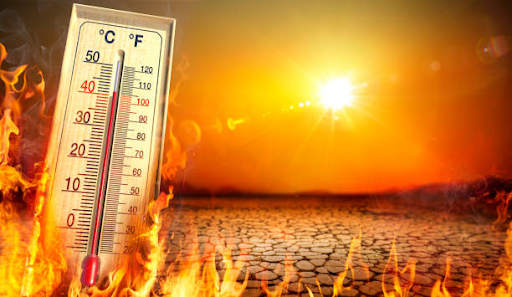
- A Heatwave is defined based on temperature thresholds or deviation from normal temperature over a region.
- In some contexts, it may also be defined using the heat index (temperature + humidity).
Criteria for Declaration (IMD)
- Basic Temperature Threshold
- Plains: Maximum temperature should be 40°C or more.
- Hilly regions: Maximum temperature should be 30°C or more.
- Based on Departure from Normal
- Heatwave: Temperature is 4.5°C to 6.4°C above normal.
- Severe Heatwave: Temperature is more than 6.4°C above normal.
- Based on Actual Temperature
- Heatwave: Maximum temperature is 45°C or more.
- Severe Heatwave: Maximum temperature is 47°C or more.
- Duration Condition
- The criteria must be satisfied in at least two stations within a meteorological subdivision.
- The condition should persist for two consecutive days, and the heatwave is officially declared on the second day.
- Special Condition for Coastal Areas
- A heatwave is declared when:
- Temperature departure is 4.5°C or more above normal, and
- Actual temperature is 37°C or higher.
- A heatwave is declared when:
Causes and Favourable Conditions
- Heatwaves are caused by:
- Shift in Jet Streams (Rossby waves) leading to formation of heat domes
- Hot local winds such as loo in northern India
- Global warming and anthropogenic factors
- Urbanisation intensifies heatwaves through the Urban Heat Island effect.
- Favourable Conditions:
- Presence of hot, dry air masses
- Absence of moisture in the upper atmosphere
- Clear, cloudless skies
- Anti-cyclonic circulation over the region
Impacts of Heatwaves
- Health Impacts: Sunstroke (body temperature > 40°C) and possible organ failure
- Economic Impact: Increased use of cooling devices, leading to higher energy demand and emissions
- Energy Sector: Grid instability, power outages, and reduced efficiency of power plants
- Agriculture: Crop failure, reduced yields, and increased pest activity
- Water Resources: Water scarcity due to higher evaporation and demand
- Ecology: Reduced biological activity and carbon sequestration
- Disasters: Increased risk of forest fires and wildfires
Policy and Disaster Status in India
- Heatwaves are not classified as a notified disaster at the national level.
- Reasons:
- Finance Commissions’ reluctance to include heatwaves in the notified disaster list.
- States can use up to 10% of State Disaster Response Fund (SDRF) for local disasters, including heatwaves.
- Some states such as Haryana, Uttar Pradesh, Odisha, and Kerala have classified heatwaves as local disasters.
- Practical Challenges:
- Difficulty in attributing deaths directly to heatwaves.
- Inclusion would impose financial burden due to compensation requirements.
Insider Trading and Front Running

Context
- The Securities and Exchange Board of India (SEBI) imposed a penalty of ₹51 crore on Elite Con International and barred it from the securities market. The action was taken for alleged stock price manipulation and dumping of shares on retail investors, leading to unlawful gains of about ₹51.2 crore.
Insider Trading
- Insider trading refers to the buying or selling of securities using material non-public information (MNPI).
- It gives an unfair advantage to certain individuals and compromises market fairness.
- Insiders may include:
- Company executives, directors, and employees
- Relatives and associates
- Professionals such as lawyers, auditors, and bankers
- In India, insider trading is prohibited under the SEBI Act, 1992 and governed by the SEBI (Prohibition of Insider Trading) Regulations, 2015.
Front Running
- Front running is an illegal practice where brokers or traders use advance knowledge of large client orders to profit from expected price movements.
- It differs from insider trading as it involves misuse of order information, not company-specific confidential information.
- It is also prohibited under SEBI regulations.
Artemis II Mission

About and Objective
- Artemis II is the first crewed mission under NASA’s Artemis programme, involving a lunar flyby without landing.
- The mission will use the Orion spacecraft to test deep-space systems with astronauts onboard.
- It aims to validate human-rated systems in real space conditions and prepare for future missions like Artemis III (lunar landing) and Mars exploration.
- The mission also seeks to enable a sustained human presence beyond Earth orbit.
Key Features
- The mission will carry four astronauts on a lunar flyby trajectory, orbiting the far side of the Moon.
- It follows a free-return trajectory, allowing the spacecraft to return to Earth using gravitational forces without major propulsion.
- The mission will test critical systems such as life support, navigation, communication, radiation protection, and manual piloting.
- Astronauts will travel over 230,000 miles from Earth, marking one of the farthest human space journeys.
- The mission duration is about 10 days, ending with a splashdown in the Pacific Ocean.
Organisations and Significance
- NASA is the lead agency, with participation from the Canadian Space Agency (CSA).
- Artemis II serves as a bridge between Artemis I (uncrewed test flight) and Artemis III (planned lunar landing).
- It marks a renewed phase of human lunar exploration after more than 50 years.
- The mission highlights growing international cooperation in space exploration.
Maternal Mortality in India
Context and Key Findings
- A recent study published in The Lancet highlights that India faces challenges in achieving the 2030 maternal mortality targets.
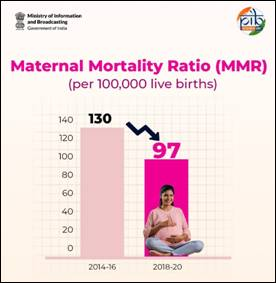
- The Maternal Mortality Ratio (MMR) in India declined from 508 (1990) to 103 (2019–21), showing significant progress.
- India accounts for about one-tenth of global maternal deaths, with an estimated 24,100 maternal deaths annually.
- The global MMR declined from 508 (1990) to 216 (2016) and further to 203 (2023).
- The SDG target is to reduce MMR to below 70 per 100,000 live births by 2030.
- Despite progress, India remains among countries with a substantial maternal mortality burden, alongside nations like Nigeria.
About Maternal Mortality
- Maternal death is defined as the death of a woman during pregnancy or within 42 days of termination, due to causes related to or aggravated by pregnancy.
- The Maternal Mortality Ratio (MMR) is calculated as the number of maternal deaths per 100,000 live births.
- In India, MMR estimates are derived from the Sample Registration System (SRS).
Causes and Challenges
- Major causes include:
- Haemorrhage and severe bleeding
- Infections and complications during childbirth
- Anaemia and other comorbidities
- High mortality is often linked to:
- Limited access to quality maternal healthcare
- Delays in treatment and referral systems
- Unequal health infrastructure across regions
- Countries with large populations tend to report higher absolute maternal deaths, complicating comparisons.
Government Initiatives and Interventions
- Janani Suraksha Yojana (JSY): Provides financial incentives to promote institutional deliveries.
- Janani Shishu Suraksha Karyakram (JSSK): Ensures free delivery, transport, and diagnostic services.
- First Referral Units (FRUs): Aim to provide specialist care and blood storage facilities at district level.
- Maternal Death Reviews (MDRs): Conducted under National Health Mission (NHM) to identify and correct systemic gaps.
- Kerala Model: Uses confidential maternal death reviews and targeted clinical interventions, achieving low MMR (~20).
