

Context
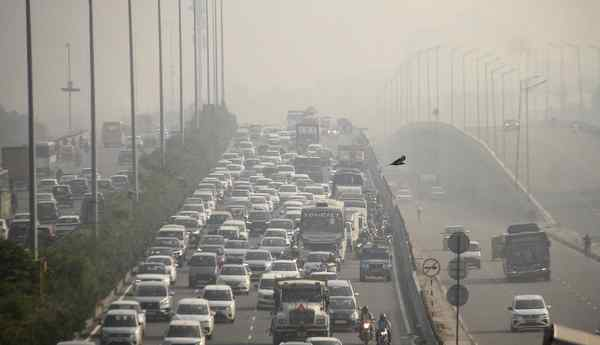
- The Commission for Air Quality Management (CAQM) reimposed Stage 1 of GRAP in summer 2026 to combat rising pollution.
- Delhi recorded 54 days between April 1 and May 31, 2026 where PM10 levels exceeded the 24-hour NAAQS standard of 100 µg/m³.
- On 40 days, at least one monitoring station recorded a breach in the hourly ozone standard of 180 µg/m³.
- Summer pollution is not a Delhi-only problem — Mumbai, Chennai, Hyderabad, Bengaluru and Kolkata also recorded significant spikes.
Summer vs Winter Air Pollution
| Parameter | Winter | Summer |
| Dominant Pollutant | PM2.5 | PM10 and Ozone |
| Key Driver | Biomass burning, low winds, cold temperatures | Dust storms, heat and sunlight |
| Meteorology | Traps pollutants near ground | Stronger winds disperse pollutants upward |
| Additional Sources | Heating fires, stubble burning | Construction dust, loo winds, andhi storms |
Causes of Summer Air Pollution
- PM10 Spikes:
- Hot conditions over the Indian subcontinent create a low-pressure area extending towards Iran producing hot, windy conditions.
- These winds stir up loo dust storms carrying dust from West Asia and the Thar Desert across India.
- Shorter localised storms called andhi form when thunderstorm downdraughts lift loose dust at high speed.
- Construction activity resumes after winter GRAP restrictions are lifted without adequate site-level dust controls.
- Vehicles moving over broken roads resuspend loose dry dust into the air during dry summer months.
- Ozone Formation:
- Ozone is not directly emitted but forms when NOx and Volatile Organic Compounds (VOCs) react under strong sunlight.
- NOx comes primarily from vehicles while VOCs come from industrial emissions, vehicle exhaust, paints and solvents.
- Hotter and sunnier days create ideal conditions for ozone formation causing respiratory illnesses in urban populations.
Institutional Mechanisms
- Delhi’s Air Quality Early Warning System (AQEWS) was created after severe dust storms in 2018 and now provides three-day AQI forecasts for 140 Indian cities.
- IMD publishes national weather forecast bulletins multiple times daily to support air quality management.
- BMC’s Air Quality Decision Support System (AQDSS) developed with CEEW has taken action against more than 1,000 construction sites since October 2025 in Mumbai.
- A CEEW study found that reducing heavy-vehicle movement at construction sites can meaningfully lower local particulate matter levels.
- Delhi has maintained a Summer Action Plan since 2022 combining forecasting, dust control and ozone management.
Way Forward
- Construction sites must enforce active dust management even outside the winter GRAP restriction period.
- Cities must use AQEWS and IMD forecasts to issue timely local alerts on dust storms and ozone episodes.
- Reducing ozone requires cutting NOx and VOC emissions through cleaner transport, better compliance and fuel combustion standards.
- Behavioural campaigns like Delhi’s “Red Light On, Gaadi Off” must be scaled up across all major Indian cities.
- All major cities need Summer Action Plans combining forecasting, public health advisories and construction dust control.
- Indian cities must treat summer and winter pollution with equal seriousness as both create distinct and dangerous pollution chemistry.
